Key points
- TeraWulf (WULF) signed a 20-year lease with Anthropic at its Justified Data campus in Hawesville, Kentucky, expected to generate about $19 billion in contracted revenue and covering roughly 401 megawatts of capacity.
- The same day, TeraWulf sold its 50.1% stake in the Abernathy, Texas joint venture to an investor group led by Fluidstack for about $530 million total, a premium over the roughly $450 million it had invested.
- WULF stock jumped as much as 18%, adding roughly $1.5 billion in market value and reversing a seven-session, 26% slide it had taken into July 2, with the stock heavily shorted at about 28% of float.
- It's the second Anthropic infrastructure headline in two days, after a reported $15 billion, 1.4 gigawatt data center plan in Australia.
TeraWulf (WULF) started life as a bitcoin miner. On July 6, it landed one of the largest single infrastructure contracts any former crypto miner has signed with an AI lab: a 20-year lease with Anthropic, the AI company behind Claude, worth roughly $19 billion in contracted revenue. The stock jumped as much as 18% on the news. Here's what actually got signed. TeraWulf also sold off a different project the same day, and both moves fit into Anthropic's broader push to lock up computing capacity around the world.
What TeraWulf and Anthropic actually agreed to
The lease covers TeraWulf's Justified Data campus in Hawesville, Kentucky. Anthropic is taking roughly 401 megawatts of critical IT load there, phased in over time, with initial capacity expected to come online in the second half of 2027 and the full 401 megawatts ramping by early 2028.
The base term runs 20 years, and Anthropic holds an option to extend it twice more, five years at a time, for up to 10 additional years. That means the relationship could run for three decades if Anthropic exercises both renewals. TeraWulf said the lease is expected to be supported by investment-grade credit, which matters for a company financing a data center build of this size: it makes the roughly $19 billion revenue stream easier to borrow against.
CEO Paul Prager called the deal validation of TeraWulf's shift from bitcoin mining into AI infrastructure, saying it "establishes a long-duration revenue stream with one of the world's leading AI companies."
TeraWulf also cashed out of a different project, on the same day
The Anthropic lease wasn't the only news. TeraWulf simultaneously sold its 50.1% ownership stake in the Abernathy joint venture, a 168 megawatt data center project in Abernathy, Texas, to an investor group led by Fluidstack, for about $530 million total, paid in three installments: $250 million within 14 days of signing, $150 million by the end of 2026, and roughly $130 million more by April 30, 2027. TeraWulf had about $450 million invested in Abernathy, so the sale locks in a premium of roughly $80 million over its cost.
Selling a working project the same week it signed its biggest lease yet fits a pattern: TeraWulf wants its money in sites it owns outright, not joint ventures where it shares control. Prager said monetizing Abernathy "generates significant capital for redeployment into infrastructure platforms where we maintain direct ownership, customer relationships, and operational control." Strip the corporate phrasing and it's a simple trade: TeraWulf gave up a minority stake in someone else's build to help fund a campus where it owns the building and Anthropic just pays rent.
Why the stock moved so much
WULF shares jumped as much as 18% on the news, adding roughly $1.5 billion in market capitalization in a single session. A $19 billion revenue figure is large on its own next to TeraWulf's size, but the reaction reads bigger still against what came right before it. The stock had fallen for seven straight sessions into July 2, down 26% from its June 23 close, after Reuters reported that Meta was building its own in-house cloud business to sell spare AI computing capacity, a report that hit the whole neocloud group, including CoreWeave and Nebius, on fears that hyperscalers building for themselves would need less capacity from outside AI-infrastructure landlords. A signed, 20-year lease with a named AI lab cuts directly against that fear. About 28% of the float was also sold short heading into the announcement, and a move this size usually forces some of those shorts to cover, stacking buying on top of what the news itself already caused.
The bigger pattern: bitcoin miners becoming AI landlords
TeraWulf isn't the only former crypto miner making this pivot; we've covered the same shift at HIVE Digital (HIVE), and the wider group, including IREN and CleanSpark (CLSK), tends to move together on both AI-buildout headlines and bitcoin price swings. The overlap makes sense once you look at what these companies already owned: power contracts, land, and cooling infrastructure built for mining rigs, which happens to be most of what an AI data center needs too. TeraWulf's lease stands out from the rest of the group on two counts. It runs 20 years, and the counterparty is Anthropic itself, a named AI lab, rather than a joint venture with a partner nobody's identified.
Anthropic's Australia possibilities
This is also the second major Anthropic infrastructure story in two days. On July 5, we covered a report that Anthropic is weighing a $15 billion, 1.4 gigawatt data center buildout in Australia, tied to a confidential tender document and a March memorandum of understanding Anthropic signed with the Australian government. That plan is still roughly six weeks from a final investment decision, and no site operator or builder has been named yet.
Read together, Kentucky and Australia look like the same strategy showing up on two continents. Anthropic already buys cloud capacity through Microsoft Azure, Amazon, and Google, but these two deals reach further, toward gigawatts of dedicated capacity secured directly with whoever owns the land and the power. Only one has actually closed. The TeraWulf lease is signed and running on a clock; Australia is still a tender with no name attached. If Anthropic keeps signing deals like this one, direct leases with infrastructure operators are turning into as big a piece of its growth plan as anything it buys from the major cloud providers.
What to watch next
The initial Hawesville capacity is due online in the second half of 2027, with the full 401 megawatt buildout ramping by early 2028. Fluidstack's investor group now owns the majority of Abernathy, so how quickly it moves on that project is one thing to track. Whether TeraWulf puts the sale proceeds into new leases at other sites is another. Anthropic's Australia tender could also produce a named partner within weeks. None of this is investment advice. TeraWulf landed one of the largest AI infrastructure leases signed this year, and the stock got re-rated for it in a single session. Twenty years is also a long time for both sides to hold up their end of it.
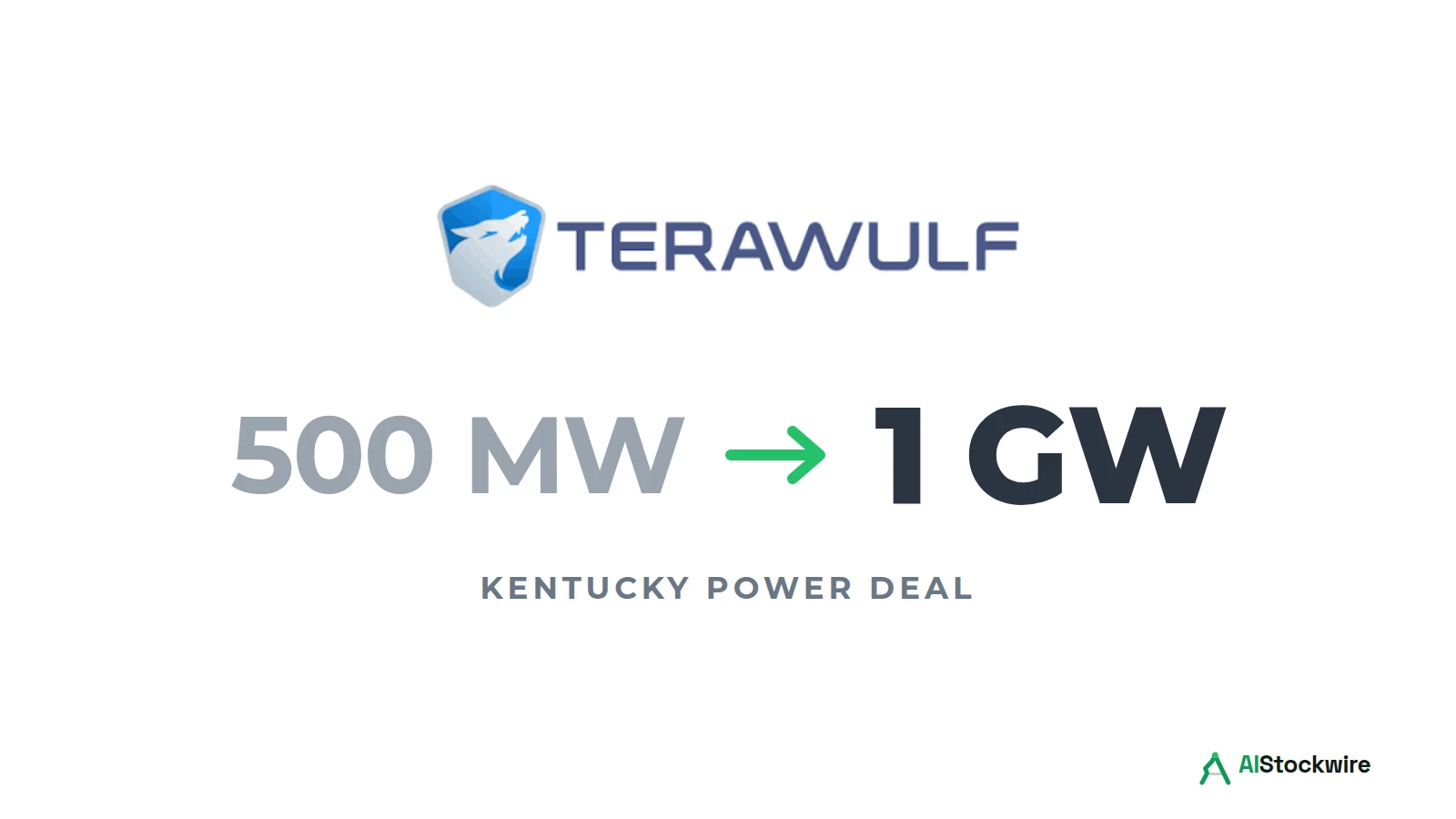
In October, TeraWulf signed an amended power agreement that would double contracted power at its separate Muskie campus in Grayson, Kentucky, to 1 gigawatt, pending state regulatory approval.
This is general market commentary and opinion, not investment advice. Markets can go down as well as up, and you can lose money. Always do your own research and consider speaking with a licensed financial professional before making any investment decision.