Key points
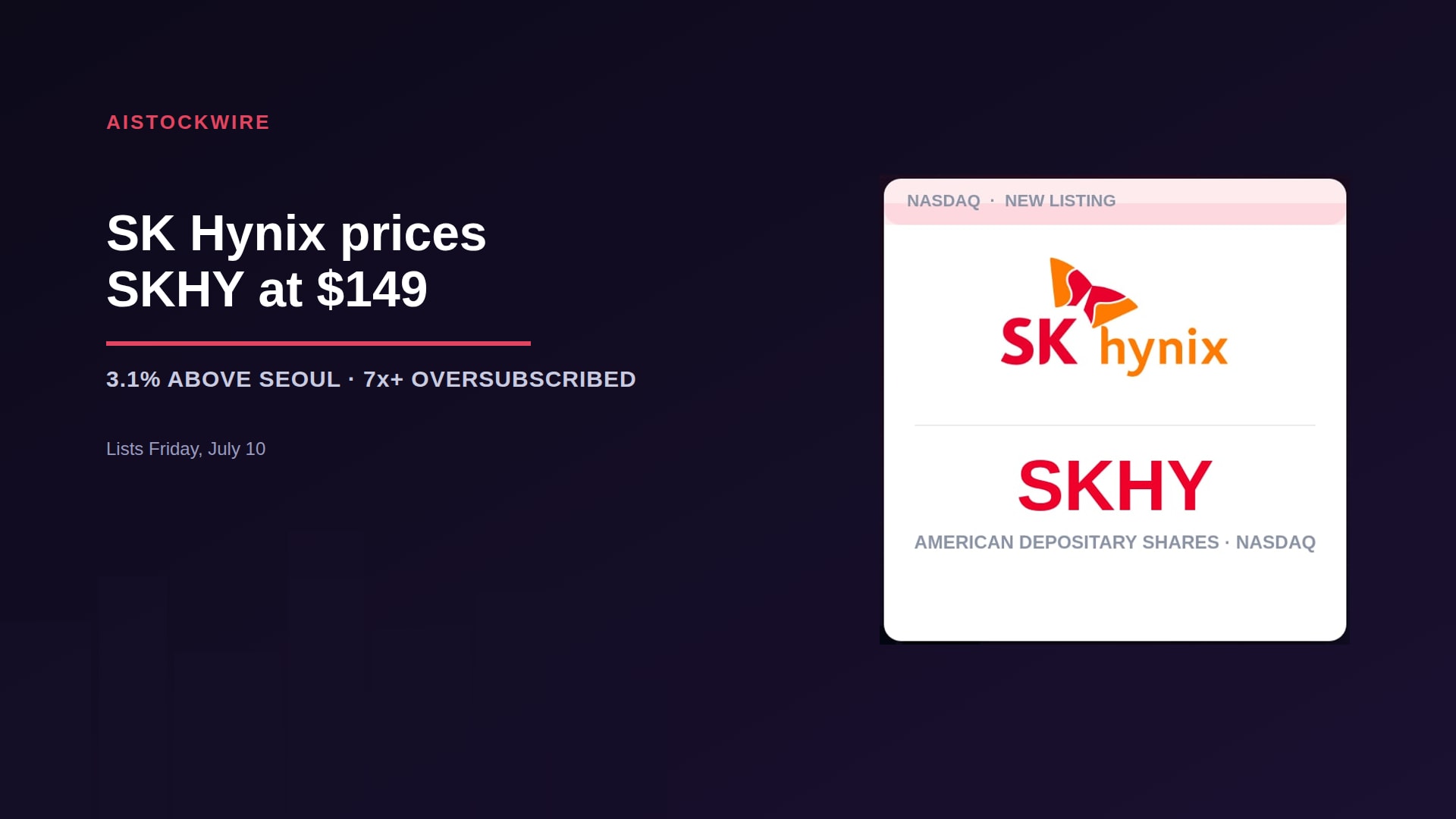
- SK Hynix guided its Nasdaq ADR offering to $149 each, a 3.1% premium to Thursday's Seoul close of 2,186,000 won, about $1,445 per common share once you adjust for the exchange ratio.
- The deal covers 177.9 million ADRs, worth about $26.5 billion at the guided price, and was more than 7 times oversubscribed.
- Three anchor investors, Baillie Gifford, Coatue, and Leopold Aschenbrenner's Situational Awareness Partners, committed up to $7 billion combined.
- Shares began trading today, Friday, July 10, under the temporary ticker SKHYV on a when-issued basis. The symbol converts to SKHY for regular-way trading on Monday, July 13, with settlement due July 14.
SK Hynix just told investors it plans to price its Nasdaq debut at $149 per depositary receipt, according to Bloomberg. The interesting part is the direction of the move. That's a 3.1% premium to Thursday's close in Seoul, above the home-market price rather than below it. Deals usually get priced at or below where the stock already trades, to make sure the new shares actually sell. Pricing above it is what happens when a book is running hot.
Prices, the exchange code and our full file on the company are on the SK Hynix page.
Our ADR premium tracker carries the current spread between SKHY and the Seoul line, updated through the day.
The math behind the premium
Each SK Hynix ADR represents one-tenth of a common share, so $149 a piece works out to $1,490 per full share. Thursday's close in Seoul was 2,186,000 won, close to $1,445 at Thursday's exchange rate. That gap, $1,490 versus $1,445, is the 3.1% premium Bloomberg is reporting.
The offering itself covers 177.9 million ADRs. At $149 each, that's roughly $26.5 billion raised, on top of the roughly $28 billion figure SK Hynix gave when it confirmed the listing on July 6. It's still on track to be the largest first-time US fundraising any foreign company has done, ahead of Alibaba's 2014 debut.
Who's actually buying
Bank of America, Citigroup, Goldman Sachs, and JPMorgan led the offering, joined by nine more underwriters. The book pulled in long-only funds, dedicated tech investors, sovereign wealth funds, and Asia-focused money managers. By Thursday, total orders reportedly reached about $171.5 billion, more than 7 times the shares on offer.
Three names anchored the deal specifically: Baillie Gifford, Coatue, and Leopold Aschenbrenner's Situational Awareness Partners, together good for up to $7 billion. We wrote about that last group's involvement on July 7, since Situational Awareness's own 13F shows its biggest disclosed position is a bet against semiconductor stocks broadly, plus a separate bet against Micron (MU) specifically. A fund leaning against chips elsewhere in its book just helped anchor one of the largest chip offerings in history. Oversubscription at this level suggests that tension didn't scare off the rest of the book.
Why it's trading as SKHYV today, not SKHY
Nasdaq's own listing notice lays out the mechanics: shares trade today under the temporary ticker SKHYV, marked "when-issued," meaning the shares are trading ahead of their official settlement date of July 14. The symbol converts to SKHY for regular-way trading on Monday, July 13. We covered the mechanics of buying SKHY once it lists here.
That when-issued structure is likely why some readers are seeing SKHY blocked or erroring out on retail platforms like Fidelity and Robinhood today. When-issued securities trade under a different, temporary symbol and often aren't enabled for ordinary retail orders the same way a fully settled listing is, since the shares underlying them haven't formally settled yet. If your brokerage won't let you place an order, or throws an unfamiliar error, that's consistent with why: the stock you can actually buy today is SKHYV, not SKHY, and full regular-way access should follow once the symbol converts Monday.
The real test either way is where the stock trades relative to the $149 guide. An price significantly above that would confirm the demand this pricing already implies. A soft print would suggest the book got pushed further than real demand wanted to go.
This is general market commentary, not investment advice. Pricing details are based on Bloomberg's reporting ahead of Thursday's final terms and can still change before the deal formally closes.