Key points
- The US military launched new "powerful strikes" against Iran late Tuesday, US Central Command said, in retaliation for Iranian attacks on commercial ships in the Strait of Hormuz.
- Oil jumped hard on the news. Brent crude rose more than 5% to above $76 a barrel and WTI added more than 5% to above $72, after the US also revoked the license that had let Iran sell oil.
- The Dow fell 0.25% to 52,925.15, the S&P 500 fell 0.45% to 7,503.85, and the Nasdaq Composite dropped 1.16% to 25,818.69, as Samsung's earnings reaction and new reports about a DeepSeek AI chip revived worries about AI spending.
- By tonight, Nasdaq 100 futures were already up about 0.3% and clawing back some of the day's losses, while crude oil kept climbing, up nearly 3% more in the futures market.
Tuesday had a bit of everything: a new round of US strikes on Iran, oil's sharpest jump in weeks, and a tech selloff that traced back to Samsung's earnings reaction half a world away. By the time the closing bell rang, all three of the major US indexes were lower. A few hours later, once the futures market reopened for the night, some of that damage was already being undone.
The US strikes Iran again
US Central Command said late Tuesday that the US military had carried out new "powerful strikes" against Iran, describing the wave as bigger than earlier rounds of retaliation. CENTCOM said the strikes targeted air defenses, coastal surveillance sites, surface-to-air missile sites, anti-ship cruise missile sites, drone launch sites, and port facilities, using Air Force jets and Navy tactical aircraft. The US said the action was a response to Iranian attacks on three commercial vessels transiting the Strait of Hormuz, including a Qatar-flagged tanker, which CENTCOM described as a violation of the existing ceasefire.
This is not an isolated flare-up. We wrote about this same pattern in late June, when Iran struck over a weekend and traders spent Monday morning trying to price in the fallout. Tuesday's exchange follows that same shape: an Iranian attack on shipping, a US military response, and a market left to figure out how much of it actually matters for prices.
Oil's sharpest move in weeks
Crude oil had its biggest move of the past few weeks. Brent crude futures rose more than 5% to above $76 a barrel, and US West Texas Intermediate futures added more than 5% to above $72. Two things drove it. First, Iran's attacks on commercial shipping happened in the Strait of Hormuz, the narrow waterway between Iran and Oman that the US Energy Information Administration calls the world's most important oil chokepoint. Roughly a fifth of global oil and petroleum product consumption, and more than a quarter of all seaborne oil trade, passes through it. Second, a US official told CNBC that the Treasury Department is revoking the license that had permitted Iran to sell oil, tightening the supply picture further on top of the shipping risk.
Wall Street's other headache: Samsung and DeepSeek
Even without Iran, tech stocks had their own reason to sell off. Samsung Electronics posted a preliminary second-quarter operating profit of 89.4 trillion won, about $58.4 billion, roughly 18 times what it earned a year earlier and above what analysts had modeled. The stock fell anyway, dropping as much as 10% intraday in Seoul before settling 6.9% lower at the close, extending the memory-stock selloff we covered as it was unfolding in the after-hours and preliminary session. A new detail added to the pressure Tuesday: reports that China's DeepSeek is developing its own AI chip, which revived the broader question hanging over the whole AI trade lately, whether the current pace of chip and memory spending can actually be sustained.
By the close, the Dow Jones Industrial Average was down 130.76 points, or 0.25%, to 52,925.15. The S&P 500 fell 0.45% to 7,503.85. The Nasdaq Composite took the hardest hit, down 1.16% to 25,818.69, concentrated in the same memory and chip names that have been whipsawing all week.
Futures start clawing it back
A few hours after the close, the picture looked a little calmer. Nasdaq-100 futures were up about 0.3%, the best performer among the major index futures, while S&P 500 futures were roughly flat and Dow and Russell 2000 futures were both down slightly, less than 0.1%. Crude oil futures, meanwhile, kept climbing even after the day's big move, up almost 3% more on top of the regular session's gain. Gold futures were the odd one out, down almost 1%, not the reaction you would expect from a safe-haven asset on a night like this.
Separately, in the stock market's own after-hours session, health care names caught a modest bid, with the sector broadly higher by less than half a percent, the kind of quiet rotation that shows up when money looks for shelter without fleeing stocks altogether. As we explained earlier today, futures like these are a real-time sentiment read, not a promise. Thin overnight volume means a move like this can just as easily fade by the time Wednesday's opening bell actually rings.
The bottom line
This is still a fast-moving situation on two fronts at once, a live military conflict and an AI-spending debate that keeps resurfacing every time a chip or memory name reports earnings. The numbers in this piece are accurate as of Tuesday evening. Both the Iran story and the futures market can move quickly from here, so treat tonight's bounce as exactly that, tonight's bounce, not a forecast for how Wednesday actually opens.
Sources
- CNBC, U.S. resumes 'powerful strikes' on Iran after Hormuz Strait ship attacks, CENTCOM says
- Bloomberg, US Launches Strikes on Iran After Attacks on Ships in Strait of Hormuz
- CNBC, Oil prices rise after attacks on tankers in Strait of Hormuz
- U.S. Energy Information Administration, Amid regional conflict, the Strait of Hormuz remains critical oil chokepoint
- CNBC, Samsung posts 1,800% jump in profit, but AI spending concerns spook investors
- Yahoo Finance, Stock market today: Dow, S&P 500, Nasdaq fall as Samsung, DeepSeek spark chip sell-off and oil rises
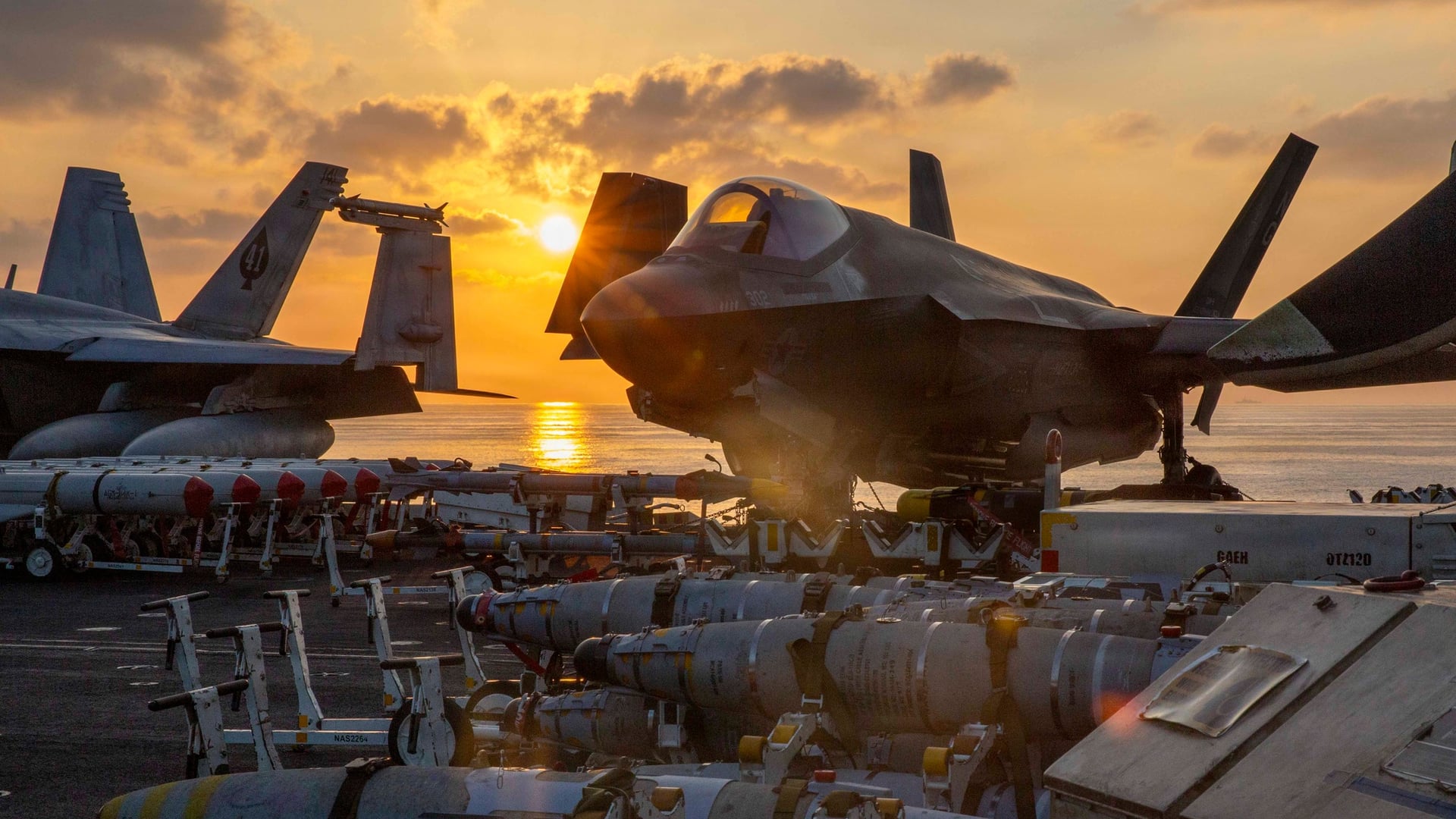
- Cover photo: U.S. Navy, an F-35C Lightning II aboard USS Abraham Lincoln (CVN 72) during Operation Epic Fury, March 2, 2026. Public domain via DVIDS. This is a file photo from that deployment, not an image of Tuesday's specific strikes.
This is general market commentary and opinion, not investment advice. This is a developing story involving an active military conflict, and prices, especially in oil and futures markets, can move quickly and unpredictably from here. Always do your own research and consider speaking with a licensed financial professional before making any investment decision.