Key points
- Cross 5% ownership of a public company and the SEC requires a disclosure. Two forms exist for it: Schedule 13D for investors who may seek influence over the company, Schedule 13G for those who won't.
- A 13D is due within 5 business days and requires the filer to state the purpose of the stake in writing.
- Passive investors lose access to the lighter 13G at 20% ownership. That cutoff is why so many disclosed stakes sit at exactly 19.9%.
- Amendments matter as much as the original filing. A stake quietly dropping below 5% shows up as one last amendment, and then the fund goes silent on that name.
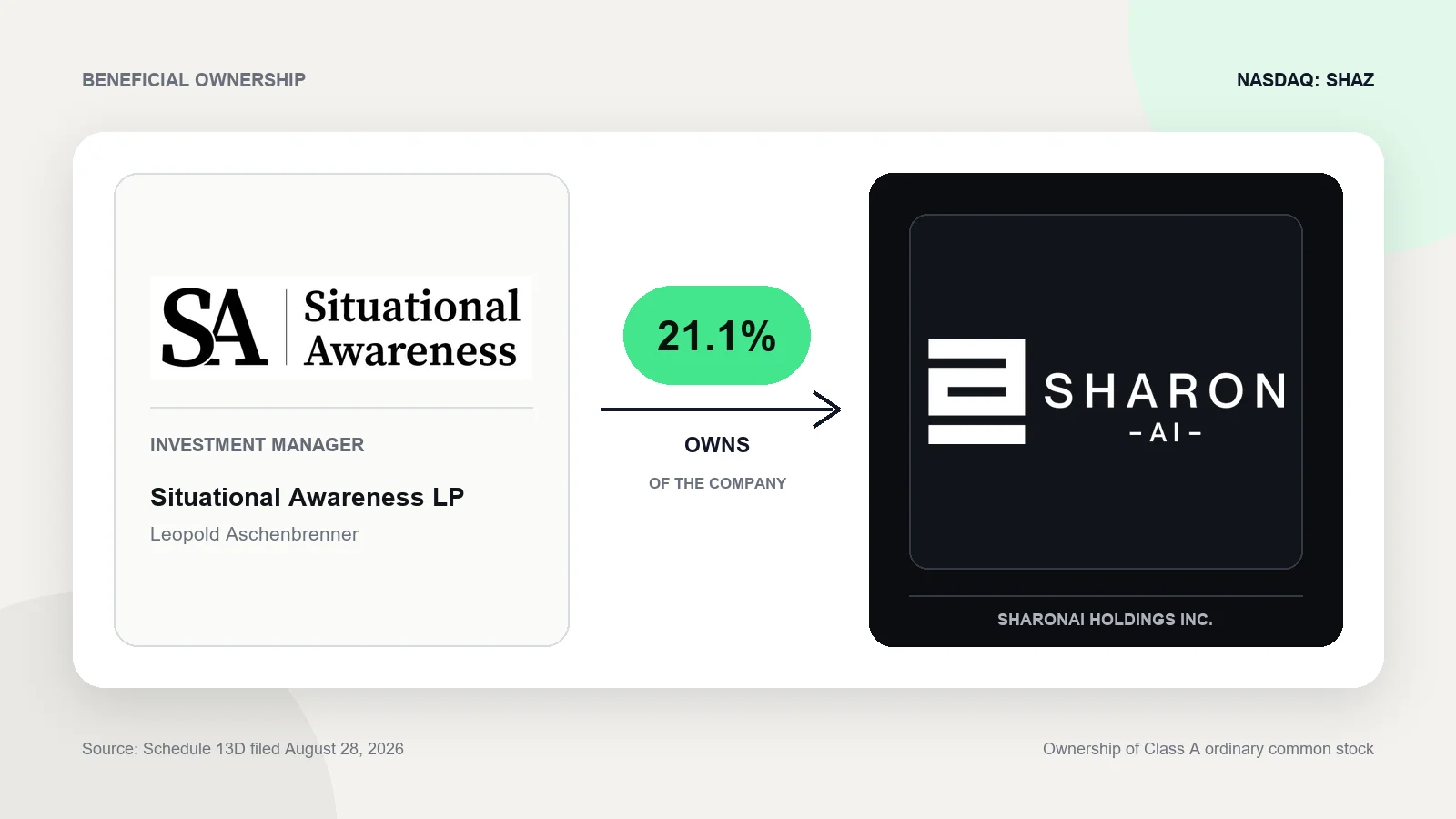
In June, a fund run by a well-known AI researcher disclosed a stake in SharonAI of exactly 19.9%. A tenth of a point below 20. I've read enough of these filings to know that decimal never happens by accident, and the reason it keeps showing up is the quickest way I know to teach the difference between the SEC's two big ownership forms.
The rule underneath both forms is short. Buy your way past 5% of a public company's stock, and you have to tell the SEC, publicly, on a schedule. What you file depends on what you intend to do with the stake.
| Schedule 13D | Schedule 13G | |
|---|---|---|
| Who files it | Investors who may seek influence over the company, plus anyone who doesn't qualify for the 13G | Institutions, exempt investors, and passive holders with no control intent |
| Deadline | 5 business days after crossing 5% | 5 business days to 45 days after quarter-end, depending on filer type |
| What it demands | Source of funds and a written statement of purpose | Far less. Ownership details and a certification of passive intent |
| Ownership ceiling | None | Passive filers must switch to 13D at 20% |
Why the 13D moves markets
Item 4 of the Schedule 13D is titled "Purpose of Transaction," and the filer has to actually answer it. Board seats. A push to sell the company. Whatever the plan is, it goes on the record with a federal regulator, which is why a 13D landing on a stock often moves the price the same day. Someone with real money just declared, in writing, that they want something to change.
The 13G carries no such declaration. An index fund that owns 6% of a company because it owns 6% of everything files a 13G, certifies it has no control intent, and the market mostly shrugs. When I skim a day's filings, the 13Ds are the ones I open first.
The 19.9% tell
Here is where that SharonAI decimal comes back. Passive investors only keep their 13G eligibility while the stake stays under 20% of the company. From 20% up, the SEC treats the sheer size as influence and requires the full 13D, whatever the investor claims to intend.
So a fund that wants a huge position without the activist paperwork stops buying a tenth of a point short of the line. That's exactly what we found in the SharonAI filing: 19.9%, on a 13G, from a fund that clearly wanted the biggest stake it could hold while staying classified as passive. Once you know the rule, you'll spot that decimal in filings for the rest of your life.
The updates tell the rest of the story
Stakes change after the first filing, and the amendments carry real information. A 13D filer has to update promptly when anything material changes. Most 13G filers amend within 45 days of quarter-end, and certain filers owe a faster update, 5 business days, if the stake crosses 10% or moves more than 5 percentage points in a month. The SEC tightened all of these deadlines in rule amendments that took effect in 2024; the SEC's own fact sheet has the full schedule.
Crossing 10% also makes the holder an insider under a separate rule, which means reporting each trade on Form 4 within two business days. Berkshire Hathaway reached that line in Lennar in September 2026, and its first two Form 4s showed about $349 million of purchases.
My favorite filings are the quiet ones at the end of a position's life. A fund sells below 5%, files one final amendment saying so, and never has to mention the company again. No announcement goes out. The story just stops. Catching those exits is one of the main reasons our fund tracker ingests these filings the day they land.
Reading them without overreading them
A filing records ownership and stated intent. It doesn't grade the idea. Activists with 13Ds get proven wrong all the time, and plenty of passive 13G stakes quietly bleed money for years. What the forms give you is a dated, signed paper trail of who owns what and how they described their own plans to a regulator. Watching whether a stake creeps toward that 20% line tells you more about what happens next than any interview the investor gives.
Politician trades and insider filings run on their own disclosure rules entirely. Our guide to tracking politician stock trades covers those rules.
Sources
- SEC, Fact sheet: modernization of beneficial ownership reporting
- Skadden, Amended beneficial ownership rules effective, upcoming filing deadlines
- Related coverage: SharonAI (SHAZ) and the Situational Awareness 19.9% stake
- Related coverage: How to track politician stock trades (Congress + president)
- Related coverage: AIStockWire hedge fund tracker
This is general market commentary and opinion, not investment advice. Always do your own research and consider speaking with a licensed financial professional before making any investment decision.