Key points
- Pasqal hired Mark Armstrong, a nearly 30-year HPE veteran, as Chief Commercial Officer for EMEA and APAC, to lead its push to sell quantum computing to businesses.
- Pasqal, a French neutral-atom quantum computing company founded by 2022 Nobel laureate Alain Aspect, announced back in March it is merging with SPAC Bleichroeder Acquisition Corp. II (BBCQ).
- The deal values Pasqal at $2.0 billion pre-money, with about $500 million in expected proceeds, including a $250 million convertible bond raise.
- The merger is still pending, targeted to close in the second half of 2026, with the combined company set to list on Nasdaq as Pasqal Holding SA.
- Hedge fund Millennium Management disclosed a small 2.8% stake in BBCQ ahead of the deal.
Most people have never heard of Pasqal, a French company that builds quantum computers, founded by a Nobel Prize winner. It just made a hire worth paying attention to: Mark Armstrong, who spent nearly 30 years at HPE, is joining as Chief Commercial Officer for Europe, the Middle East, Africa and Asia-Pacific. The hire lands as Pasqal works through a $2 billion SPAC deal it announced back in March, one that is still pending and not new news on its own, but Armstrong's arrival is a fresh signal about how seriously the company is staffing up to actually sell this technology.
The SPAC taking Pasqal public is Bleichroeder Acquisition Corp. II (BBCQ). A 13G filing earlier this year showed the hedge fund Millennium Management holds a 2.8% stake in it. That alone would not be worth a headline. Millennium runs one of the largest multi strategy funds in the world, and holding a sliver of a SPAC ahead of a merger vote is routine portfolio activity, not a bold call on the company. What is worth a headline is what BBCQ is actually about to become, and now, who Pasqal just hired to run its commercial side.
A new commercial chief, straight from HPE
Armstrong joined HPE in 1997 and spent close to three decades there, most recently as vice president and general manager of its high-performance computing and AI business across EMEA. He helped shape HPE's go-to-market approach for AI while leading its HPC efforts. At Pasqal, his job is to drive commercial strategy, sales execution and customer expansion across EMEA and APAC, essentially turning a research-heavy quantum computing company into one that can close enterprise deals at scale.
The hire comes as Pasqal points to recent commercial wins, including deals with Aramco and OVHcloud, as evidence that quantum computing is moving past the pure research phase and into paying customers. Armstrong's own stated goal is to "move fast to scale the commercial engine, deepen partnerships and help customers across EMEA and APAC turn quantum capability into competitive advantage." Hiring a career HPC and AI sales executive, rather than another physicist, is itself a signal of what Pasqal thinks it needs most right now: people who can sell.
What Pasqal actually does
Pasqal builds quantum computers using a technique called neutral atom computing. Instead of the superconducting circuits that companies like IBM and Google use, or the trapped ions that power IonQ's machines, Pasqal traps individual neutral atoms in place with lasers and uses them as qubits, the basic unit of quantum information. It is a different physical approach to the same goal: building a computer that can solve certain problems classical computers cannot handle efficiently.
Pasqal was founded in 2019 by five co-founders: physicists Alain Aspect and Antoine Browaeys, along with Georges-Olivier Reymond, who serves as CEO, Thierry Lahaye and Christophe Jurczak. Aspect won the 2022 Nobel Prize in Physics for his work on quantum entanglement. Browaeys is one of the researchers credited with inventing the neutral atom approach itself. The company is based in France and has more than 275 employees. Its client list includes IBM, NVIDIA and Aramco, among others. It already has seven quantum processors deployed in the field, with three more in production, built across two of its own manufacturing facilities.
One deployment stands out. Pasqal and Aramco built a 200-qubit quantum computer inside a standard data center in Dhahran, Saudi Arabia, which the companies describe as the first quantum computer installed in a normal commercial data center for business use, rather than a specialized lab. Separately, Pasqal has been deepening its integration with NVIDIA's CUDA-Q platform, aimed at letting its machines work alongside ordinary GPUs and CPUs in existing data centers instead of requiring an entirely separate setup.
The deal terms
Bleichroeder and Pasqal announced their merger agreement back in early March 2026, so the deal itself is not new. What has changed since is the size of the financing behind it: a group of investors led by Inflection Point Asset Management increased its commitment to buy senior unsecured convertible bonds from an original $200 million to $250 million in late May. The deal values Pasqal at $2.0 billion before the transaction, and is expected to hand the company roughly $500 million in cash, assuming BBCQ's shareholders do not redeem their shares for cash instead of rolling into the merged company. Pasqal has also left the door open to raising more through a separate private placement before the deal closes.
If the merger goes through, the combined company plans to list on Nasdaq under the name Pasqal Holding SA. The deal still needs Bleichroeder shareholders to approve it, along with regulatory sign off and Nasdaq's own listing approval, and the companies are targeting a close sometime in the second half of 2026.
What BBCQ's stock is actually telling you
Here is the part that connects back to Millennium. BBCQ, like almost every SPAC before it completes a deal, trades close to the roughly $10 a share sitting in its trust account, the cash raised in its original IPO that gets held for shareholders until a merger closes or the SPAC liquidates. As of its most recent quarterly filing, that trust held about $289.7 million. Shares have moved in a tight band between about $9.90 and $11.30 over the past year, on volume some days under 15,000 shares, nothing like the swings you would see in a stock trading purely on a story.
That is why Millennium's stake is not the real story here. A large fund holding shares priced near guaranteed trust value, with the option to redeem for cash if it does not like the deal, is a low risk way to park money while waiting to see how a merger plays out. It says very little about whether Millennium believes in Pasqal's technology or its prospects as a public company.
The part worth watching
Quantum computing as an industry is still mostly a bet on the future. We have written before about how government money is pouring into the space while a real commercial payoff stays years away for most players, and Pasqal is not exempt from that pattern. A SPAC merger raises real cash, but it does not fast forward a hard physics and engineering problem. The company's own public roadmap targets 10,000 or more physical qubits per processor and more than 200 logical qubits, the more error resistant kind needed for serious computing, by the end of 2029. That is an ambitious target, and the distance between where Pasqal is now and where it wants to be is the entire risk in this story.
The deal itself carries the usual SPAC risks too. Shareholders could redeem enough shares that Pasqal ends up with far less than the $500 million currently projected, and the merger still needs a shareholder vote and regulatory approval before anything closes.
For more on how SPAC deals like this actually work, see our explainer on what a SPAC is. We also covered a similar situation recently in Point72's stake in Freenome's SPAC merger, and wrote more broadly about the quantum computing race in why the payoff there is still years away. More on Pasqal's hardware is on the company's own site, pasqal.com.
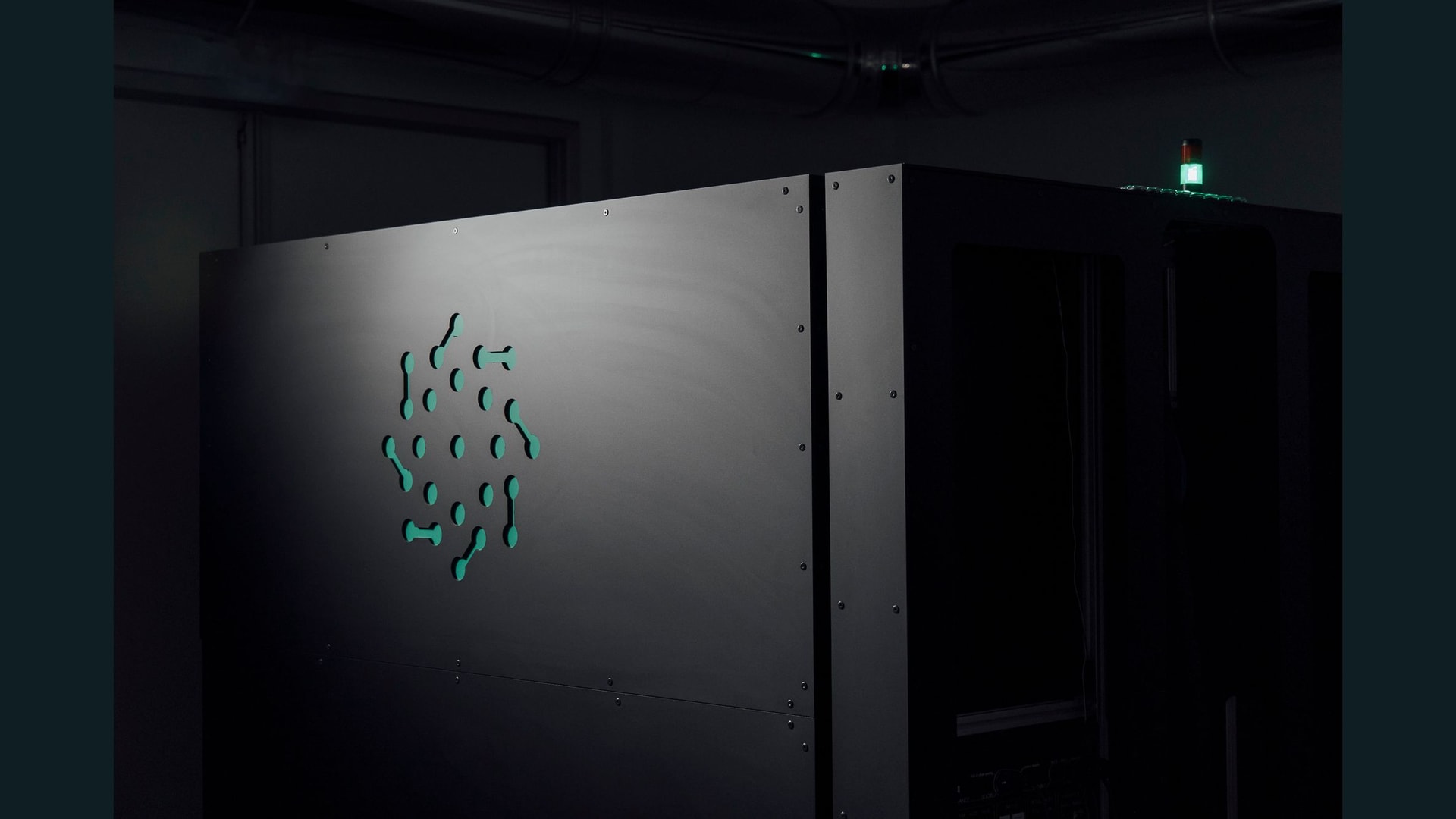
Cover photo: Pasqal quantum processing unit. Credit: Agence Oblique, Cyril Marcilhacy, courtesy of Pasqal's media kit.
This is general market commentary and not investment advice. Proposed mergers, including this one, can be delayed, restructured or terminated before closing. Always do your own research and consider speaking with a licensed financial professional before making any investment decision.