Key points
- Washington has placed a historic bet: about $2 billion to nine quantum companies under the CHIPS and Science Act, back in May, with the government taking a minority equity stake in each.
- IBM (IBM) lands the biggest slice, around $1 billion, while pure-plays like D-Wave (QBTS) and Rigetti (RGTI) get roughly $100 million each.
- The payoff is still years out. Company roadmaps and most experts point to genuinely useful, fault-tolerant machines in the late 2020s to early 2030s, and quantum timelines have a long history of slipping.
- The pure-play stocks are already priced for that future: IonQ (IONQ) carries a valuation around $18 billion on under $200 million of revenue, with no profit. Treat them as speculative.
The US government is now a quantum-computing investor, and not in a small way. Back in May, the Commerce Department signed letters of intent to hand about $2 billion to nine quantum companies, and in a twist from the usual federal grant, it is taking an ownership stake in each one. Pair that with a White House order in June and another $625 million from the Energy Department, and Washington has planted a very large flag in a technology that, by almost everyone’s own admission, will not pay off for years.
That gap, between the money going in now and the payoff arriving much later, is the whole story for investors. So here is what actually happened, when the technology is realistically expected to work, and why the stocks built around it are some of the most speculative names on the market.
What Washington actually did
On May 21, the Commerce Department announced signed letters of intent to provide roughly $2 billion in incentives, drawn from the same CHIPS and Science Act money that built new chip plants, to a group of nine quantum companies. The catch that made headlines: as a condition of the money, the government takes a minority, non-controlling equity stake in each one. The federal government is now a shareholder in the quantum industry.
IBM (IBM) is set to receive the largest share, about $1 billion. GlobalFoundries (GFS), the chip manufacturer, gets around $375 million, and the smaller pure-play names, including D-Wave (QBTS), Rigetti (RGTI) and Infleqtion, are in line for roughly $100 million apiece. Several recipients are still private, including PsiQuantum, Quantinuum, Atom Computing and Diraq. Quantum stocks jumped on the news.
This is part of a bigger pattern. Over the past year the government has taken equity stakes or direct positions across industries it considers strategic, from semiconductors to steel to nuclear to rare earths. Quantum is the newest addition. On top of the Commerce money, the Energy Department is putting $625 million into renewing its five national quantum research centers, and it has floated a program, nicknamed Quantum Genesis, that dangles a prize for the first team to build a fault-tolerant machine by 2028. The CHIPS Act money is the same well that funded the chip foundries we explained in our foundry breakdown.
Why the urgency? Two reasons. National security, because a powerful enough quantum computer could one day crack the encryption that protects banking, defense and basically the entire internet, a worry the field calls “Q-Day.” And a straight technology race, mostly with China, to get there first.
The catch: this will not pay off for years
Here is the part that gets lost when a stock doubles on a grant headline. Quantum computers do exist today, but they are noisy, error-prone, and for almost every real-world problem they still cannot beat a regular supercomputer reliably. The machine everyone is racing toward is a fault-tolerant one, a quantum computer stable enough to correct its own errors and run long, trustworthy calculations. That is the milestone that unlocks the big promised uses in drug discovery, materials, logistics and cryptography.
When does that arrive? The honest answer is the late 2020s to early 2030s. IBM, which has the most detailed public roadmap, is targeting verified “quantum advantage” by the end of 2026 and a large fault-tolerant system it calls Starling by 2029. Google is aiming for a fault-tolerant machine by the end of the decade. The Energy Department’s 2028 goal is the aggressive end of the range. Most independent forecasts land on genuinely useful systems showing up around 2030.
And now the caveat that matters most. Quantum computing has a long, well-documented history of timelines that proved too optimistic. “Five years away” has been the answer for a couple of decades now. The progress in 2024 through 2026 has been real and the field has more reason for confidence than ever, but these dates are targets, not guarantees, and the safe assumption is that the payoff is years out, with a real chance it takes longer. A government check does not change the physics.
The stocks: real science, speculative prices
This is where it gets dangerous for investors, because the share prices have run far ahead of the business. The pure-play quantum stocks, IonQ (IONQ), Rigetti (RGTI), D-Wave (QBTS) and Quantum Computing Inc (QUBT), generate almost no revenue and lose money, yet carry enormous valuations.
Some numbers, as of mid-2026. IonQ is the biggest by revenue and still did only about $187 million over the past year, against losses, yet the stock still carries a market value around $18 billion. Rigetti booked roughly $7 million of revenue for all of 2025, and D-Wave around $25 million. Put those together and the group trades at price-to-sales ratios in the hundreds, a level that assumes a commercial windfall that is, again, still years away. Insiders at these companies have mostly been sellers, not buyers. The stocks routinely swing 10 or 20 percent in a day on a single headline. It is the same “priced for a future that has not arrived yet” problem we wrote about with software in the SaaS selloff.
There is a calmer way to get exposure. The big, diversified players, IBM (IBM), Alphabet (GOOGL), Microsoft (MSFT) and Nvidia (NVDA), all have serious quantum programs, but quantum is a tiny slice of each. You get the upside if it works without betting an entire company on a technology that might be a decade out. That is the same logic behind the government’s own strategic-tech bets, like the ones we covered in AI’s power problem.
The bottom line: the government money and the scientific progress are both real, and they validate that quantum matters. But a grant is not a product. The technology is still years from paying off, the timelines could easily slip, and the pure-play stocks are already priced as if the future has arrived. Treat quantum as a long-term, speculative theme, money in now and a payoff that is, at best, years away, not a sure thing for the core of a portfolio.
Nothing here is investment advice. Quantum computing stocks are pre-profit, richly valued and highly volatile, and they can move double digits in a day. Do your own research.
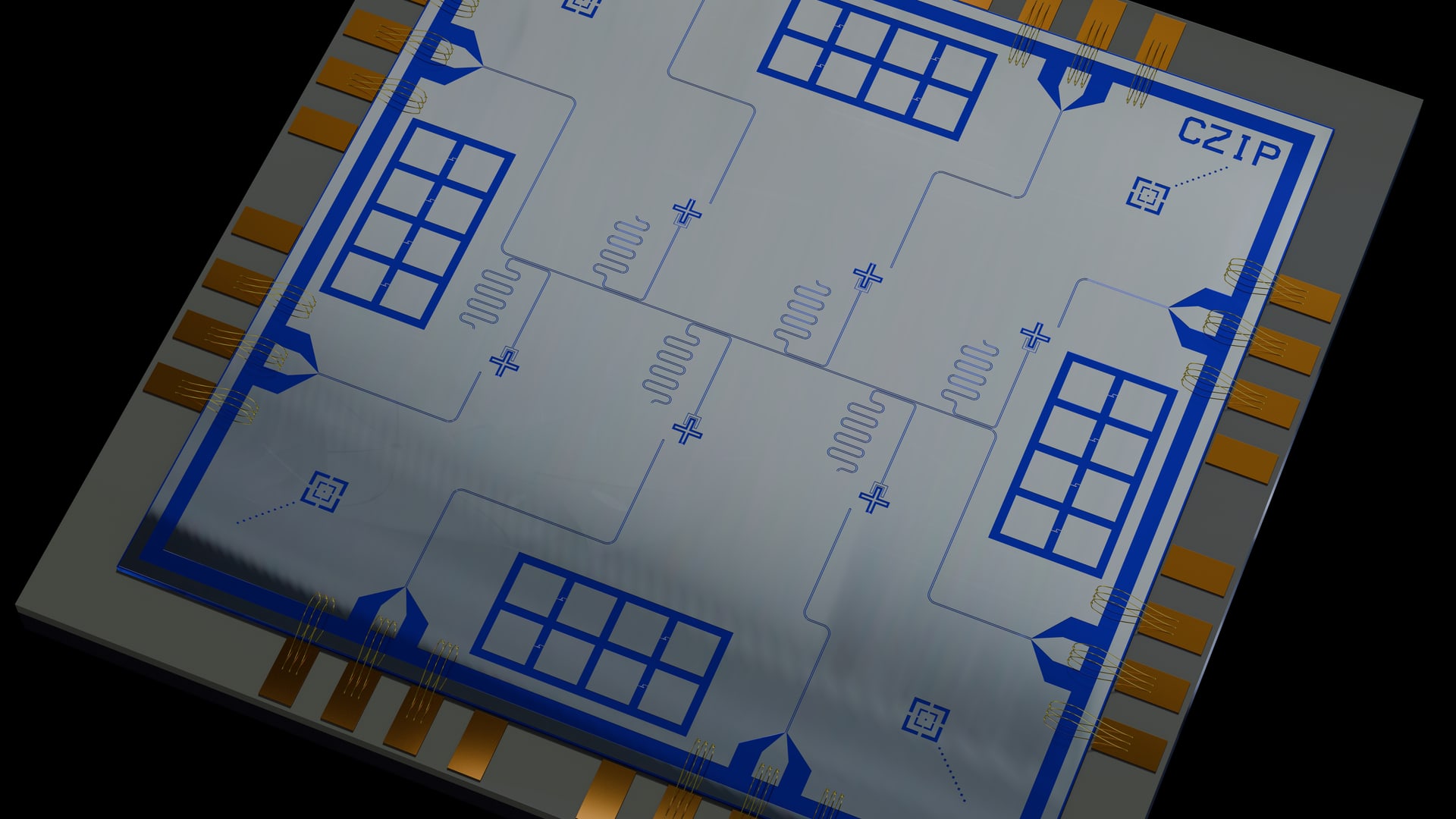
Cover illustration: superconducting quantum processor chip, render by Onri Jay Benally (OJB Quantum) / Wikimedia Commons, CC BY 4.0.
This is general market commentary and opinion, not investment advice. Markets can go down as well as up, and you can lose money. Always do your own research and consider speaking with a licensed financial professional before making any investment decision.