Key points
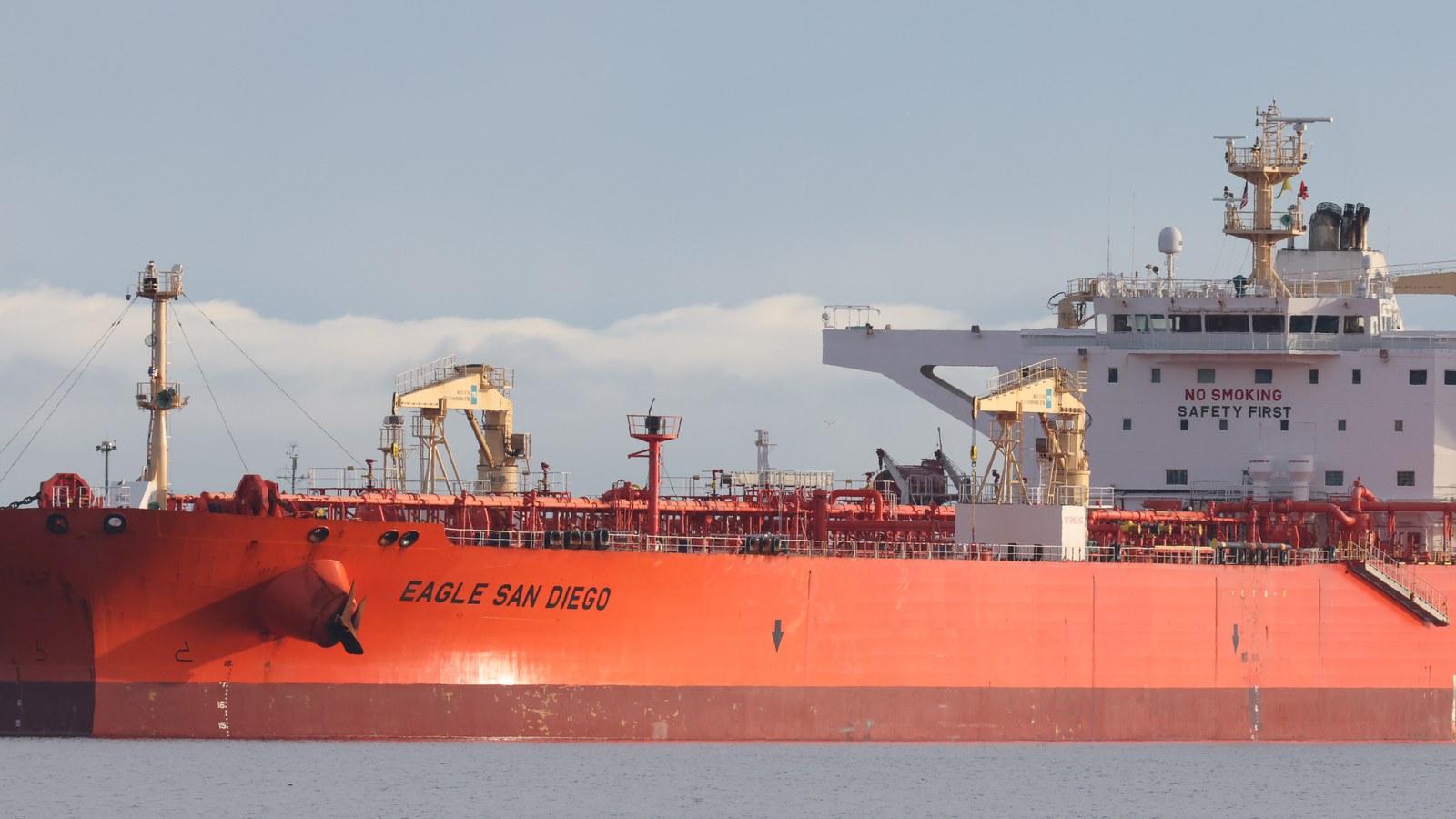
- Iran's Revolutionary Guard declared the Strait of Hormuz closed "until further notice" this weekend after disabling the container ship GFS Galaxy. One crew member is missing and ten were rescued, according to US Central Command.
- The US answered with its third round of strikes this week, hitting roughly 140 Iranian military targets including anti-ship missile batteries, air defense systems and fast attack boats around Qeshm Island, according to reports. The UAE and Qatar said they intercepted Iranian missiles fired toward the Gulf.
- S&P 500 futures were down about 0.3% in early Sunday evening trading, Nasdaq 100 futures fell about 0.5%, and Dow futures lost roughly 110 points. WTI crude rose about 3.1% to near $74 a barrel and Brent traded near $78.
- The muted oil reaction is the story. When this war began in March, Brent spiked past $100 and peaked at $126. Sunday's move says traders are pricing harassment of shipping, not a lasting shutdown.
Futures reopened at 6 p.m. ET Sunday with a lot of war to digest and, at least in the first stretch of trading, not much panic to show for it. S&P 500 futures were down about 0.3%, the Nasdaq 100 was off about 0.5%, and Dow futures had shed roughly 110 points as of 6:35 PM ET. The real action was in oil, where West Texas Intermediate jumped about 3.1% to $73.61 a barrel and Brent crude rose to $78.40. Even that move, though, is a lot smaller than the headline behind it.
The weekend: a disabled ship, 140 targets, and a "closed" strait
The sequence started Saturday, when US Central Command said Iran's Revolutionary Guard "blatantly attacked" the GFS Galaxy, a Cyprus-flagged container ship transiting the Strait of Hormuz. The ship took what CENTCOM described as significant damage to its engine room. One crew member is still missing and ten others were rescued. Iran followed by declaring the strait closed until further notice, its broadest closure claim since the spring.
The US response came in waves through Sunday. American forces hit roughly 140 Iranian military targets in their third round of strikes this week, according to the Washington Post, going after the hardware Iran uses to threaten shipping: anti-ship missile batteries, air defense systems and fast attack boats around the strait and Qeshm Island. Iran fired back toward US-allied Gulf states, and both the UAE and Qatar reported intercepting incoming missiles.
That makes three straight weekends of exchanges since President Trump declared the ceasefire with Iran over at the start of the week. We covered that first round and the oil spike that came with it last week.
The Sunday night scoreboard
As of about 6:35 PM ET, here is where things stood against Friday's close:
- S&P 500 futures: down about 0.3% at 7,599
- Nasdaq 100 futures: down about 0.5% at 29,895
- Dow futures: down about 0.2%, roughly 110 points, at 52,800
- Russell 2000 futures: down about 0.4% at 2,981
- WTI crude: up 3.1% at $73.61, after touching $74.03
- Brent crude: up 3.1% at $78.40, after touching $78.90
- Gold: down about 0.5% at $4,092 an ounce
Gold is the odd line on that board. The classic fear trade slipped on a weekend of open war, and it has been sliding since late January, when it peaked near $5,320. When headlines this loud cannot pull money back into gold, it usually means the fear premium got paid months ago.
Why oil is up 3.1% and not on its way to $126
In early March, when Iran first closed the strait and started hitting tankers, Brent surged past $100 a barrel within days, its first trip above $100 in four years, and peaked at $126 in the biggest energy supply shock since the 1970s. On Sunday night, a full closure declaration bought less than $3 a barrel.
The market has reasons for the skepticism. Iran has declared the strait closed several times since March, and each time shipping slowed but did not stop, helped since May by US Navy escort convoys. Sunday's American target list was aimed at exactly the tools a real closure would require: the anti-ship missiles, air defenses and fast attack boats doing the damage. And the strait still matters as much as it ever did. The US Energy Information Administration calls it the world's most important oil chokepoint, carrying roughly a fifth of global oil consumption. The tail risk is real. The market is just charging less for it each time the same threat gets repeated.
None of that makes the situation mild. By one running tally, 14 seafarers have been killed in ship attacks since March, and traffic through the strait has slowed considerably even without a true blockade. And the equity market has its own history here: the Nasdaq fell 8% when this war started, then blew past its old record high. Sunday's shallow dip fits that same pattern of fading war headlines faster each round.
What's on deck this week
The war is not the only thing Monday's session has to price. June CPI lands Tuesday, July 14, the same day Fed Chair Kevin Warsh testifies before Congress, and second-quarter earnings season opens with JPMorgan Chase, Goldman Sachs, Wells Fargo and Citigroup among the big banks reporting during the week. Oil is the tell to watch overnight. If crude holds in the mid $70s, Monday is probably a CPI and banks week that happens to have a war in it. If Brent pushes through the low $80s, the war trade takes over. We flagged the rest of the week's setups in our watch list for the week of July 13.
Futures numbers in this story are from early Sunday evening trading, which is thin and can move fast. This is a live, developing military conflict. This is general market commentary, not investment advice.