Key points
- Chip stocks fell hard Thursday (SOXX down 4.5% at the close) even after TSMC posted its best quarter in years.
- Memory names got hit hardest: SK Hynix's Nasdaq shares closed down 13.7%, SanDisk 12.6%, Seagate 10%, Western Digital 9.2%, Micron 5.7%.
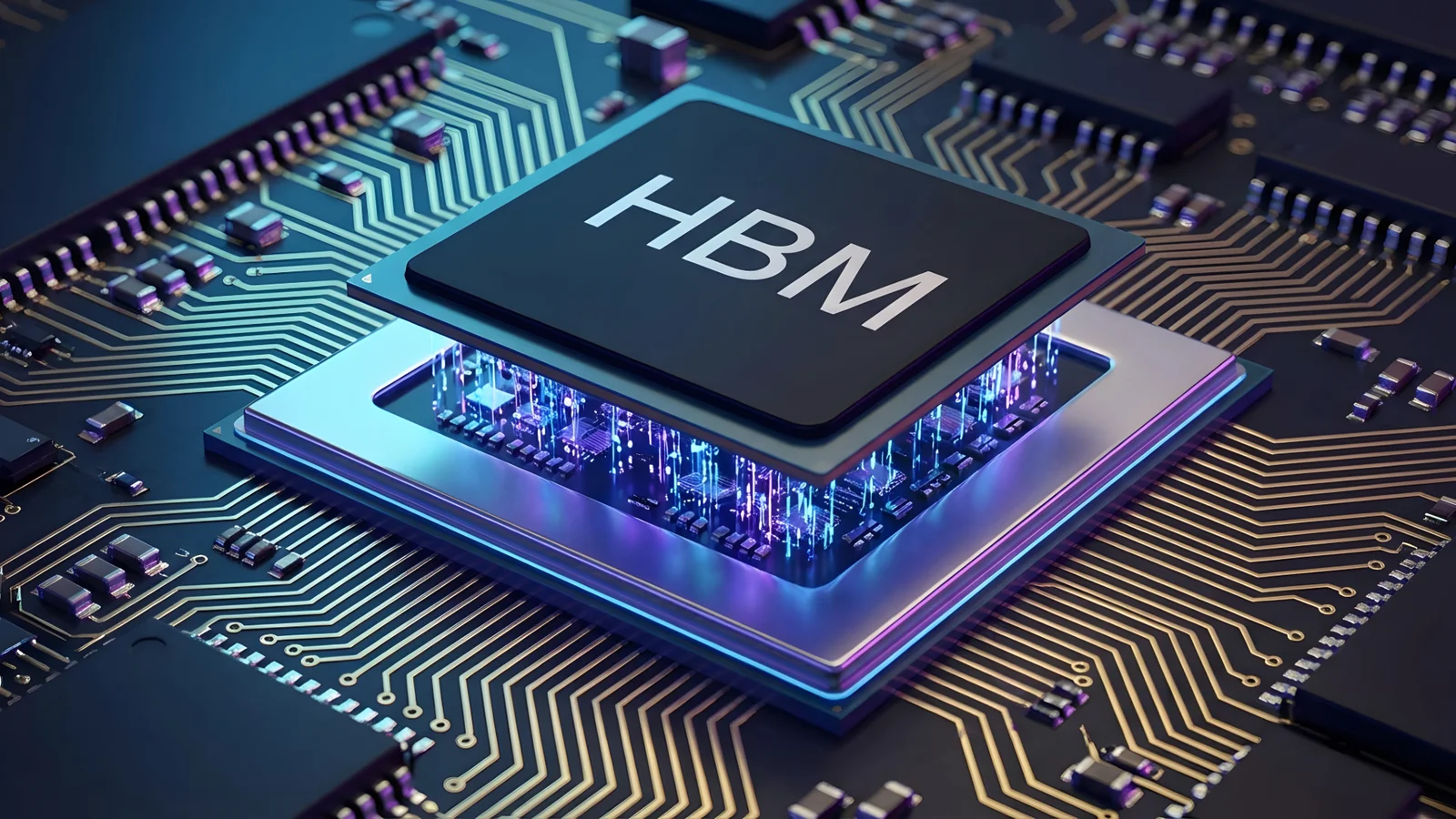
- Samsung and SK Hynix alone make close to 80% of the world's HBM supply, the memory type every AI chip depends on.
- China's ChangXin Memory Technologies priced an $85.7 billion IPO the same day, a real fourth DRAM competitor emerging just as analysts split on whether chip stocks have hit a bottom.
The Kospi crashed again this morning, and Korea rolled out a debt hotline for leveraged traders hours before its market even opened. By the time US trading started, the same story had crossed the ocean. Chip stocks sold off hard Thursday, even after TSMC (TSM) posted one of its best quarters in years. The reason those two events are connected is not complicated once you see it: two Korean companies make almost all of the memory that goes into an AI chip, and both of them are dealing with real trouble at home right now.
We keep a running list of HBM stocks, graded by how direct each company’s exposure actually is.
Why chip stocks fell on July 16
The semiconductor sector's benchmark ETF, SOXX, closed down 4.5% Thursday, a far sharper drop than the broader market, continuing Wednesday's rotation out of chip stocks. The S&P 500 and the chip-heavy Nasdaq both lagged. The Dow actually slipped slightly, lifted by earnings beats from UnitedHealth and Abbott Laboratories that pulled money into health care instead. We covered that rotation in detail here.
Memory names took the worst of it. SK Hynix's Nasdaq-listed shares (SKHY) closed down 13.7%. SanDisk (SNDK) fell 12.6%. Seagate (STX) fell 10%. Western Digital (WDC) fell 9.2%. Micron (MU) fell 5.7%. TSMC itself, despite record profit and a raised spending forecast, closed down about 2.3%. None of this happened because of bad news from any of these specific companies. The entire memory trade has been unwinding for weeks, and Thursday added another leg down.
Two Korean companies, one global bottleneck
Here is the part that doesn't get explained enough. Samsung Electronics and SK Hynix are not just two large chip companies among many. In ordinary DRAM, the standard memory in every computer and phone, Samsung holds about 38% of the global market and SK Hynix holds about 29%, together closer to two-thirds of the entire supply. In HBM, the specific high-bandwidth memory that sits inside every AI accelerator now, the concentration is even tighter: SK Hynix holds about 62%, Samsung about 17%. Add those together and two Korean companies control close to 80% of the world's supply of the memory type AI chips actually need. We explained how HBM actually works here, if that part is new to you.
There are exactly three companies on the planet that can manufacture HBM at meaningful scale. Two of them are Korean. Making HBM is also physically expensive in a way normal memory is not: producing one HBM wafer uses roughly the same manufacturing capacity as three ordinary DRAM wafers, so every HBM order pulls capacity away from the regular memory supply too. HBM's share of total DRAM industry revenue is expected to reach 41% this year, up from just 8% in 2023. That is how fast this one product has come to dominate the whole memory business, and how much of it runs through two companies in one country.
This is why a bad week in Seoul does not stay in Seoul. Samsung and SK Hynix are absorbing forced selling, margin calls and a surprise interest rate hike at home, all covered in our reporting from Korea this morning. The effect does not stop at Korea's border. Every US company that buys their memory, sells competing memory, or trades on the assumption that memory stays scarce and expensive feels it the same day.
Korea's own crisis is not finished
President Lee Jae-myung called the Korean market "quite unstable" on Wednesday and pointed directly at leveraged ETFs tracking Samsung and SK Hynix. The Bank of Korea then raised interest rates in a surprise move Thursday, and financial regulators were expected to meet the same day to discuss tighter rules on those leveraged funds. Regulators there are also rolling out a debt hotline after more than 320,000 accounts were forcibly liquidated this month. None of that is resolved yet. The mechanics behind why Korea's market moves this violently are here, and they are still very much in play.
So when US traders ask why a stock like Micron or Western Digital keeps falling on days with no company-specific news, part of the answer is sitting in a Seoul trading session that opened while most of America was still asleep.
Are chip stocks at the bottom?
No one can answer that with real certainty, and any headline that claims otherwise is overselling it. Here is the case on both sides.
The bull case rests on real numbers. TSMC's quarter was not a soft beat. Record profit, a raised full-year outlook, and a capex increase most analysts did not expect. JPMorgan strategist Mislav Matejka told clients the semiconductor upcycle is "not peaking anytime soon," and much of Wall Street is treating this stretch as a mid-cycle reset rather than the start of something worse, still holding full-year price targets on names like Nvidia (NVDA) and Micron. SanDisk, which fell hard earlier this month too, has $42 billion in multiyear supply agreements already signed and guided its own next quarter higher, not lower.
The bear case is just as real. The chip sector climbed roughly 130% over the prior twelve months before any of this started. That kind of run leaves little room for anything short of a perfect quarter, and even TSMC's genuinely strong one wasn't enough Thursday.
China's ChangXin Memory Technologies (CXMT) added a new wrinkle the same day. The company priced its IPO on Shanghai's STAR Market at a valuation of about $85.7 billion, raising roughly $8.6 billion, the largest STAR Market listing in history. CXMT is projecting first-half 2026 profit up more than 22-fold from a year earlier, on revenue growth of over 600%. It is already the world's fourth-largest DRAM maker by output, behind only Samsung, SK Hynix and Micron, and the new capital funds real expansion: 50,000 to 60,000 wafers of added capacity planned for this year alone.
CXMT is not yet a serious threat in HBM specifically. It has not announced an HBM roadmap, and it holds a fraction of the patents SK Hynix and Micron do. But in ordinary DRAM and mobile memory, where price competition matters most, a newly public and newly capitalized fourth competitor undercuts the idea that Samsung and SK Hynix's pricing power lasts indefinitely.
Korea's own leverage unwind hasn't actually finished playing out either. Regulators meeting to write new rules is not the same thing as the selling being done.
The more convincing read here: this looks like a richly priced market working off a very large prior run, not a change in what the AI buildout actually needs. But "more convincing" is not the same as certain, and anyone claiming to know exactly where the bottom is has more confidence than the facts support.
Sources
- Modern Diplomacy: Asian stocks fall as chip selloff overshadows TSMC earnings
- Counterpoint Research: Global DRAM and HBM market share
- JPMorgan says buy the chip dip as semiconductor stocks bounce back
- BigGo Finance: ChangXin Memory Technologies debuts on STAR Market at $85.7 billion valuation
- BigGo Finance: CXMT's IPO and the server/HBM competitive picture
- Price data via Yahoo Finance
- Our earlier coverage: Korea's president calls the market unstable, TSMC's earnings beat and the healthcare rotation, and why Kospi moves so violently
Prices are as of Thursday's close, July 16, 2026. This is general market commentary and not investment advice. Always do your own research and consider speaking with a licensed financial professional before making any investment decision.