Key points
- CEO Jim Burke bought $903,069 of Vistra
- Also bought 2,000 shares on August 24
- First such buying since March 2023
- No trading plan on either filing
Something interesting turned up on our insider tracker Wednesday morning. The chief executive of Vistra (VST) bought stock. Jim Burke picked up 6,665 shares over two sessions at an average of $135.49, which comes to $903,069.
The Form 4 covers two days. He bought 2,200 shares on August 31st at a weighted-average $135.99 and another 4,465 the next day at $135.25. It's also the second filing of its kind in nine days. On August 24th Burke bought 2,000 shares at $135 flat, on a day Vistra closed at $135.66 for its cheapest finish of the summer. Put the two filings together and you're looking at $1.17 million of his own money going into the stock in a week and a half.
Before that, the last time he bought Vistra on the open market was March 23, 2023. He paid $24.05 a share.
His own call, twice
Every Form 4 carries a checkbox for Rule 10b5-1, the rule that lets an insider schedule trades in advance and then leave them alone. The box is blank on both purchase filings, so Burke picked the days himself and took the prices the market handed him. We looked at the same distinction from the selling side when IBM's software chief sold a third of his stock in August. A scheduled trade tells you about a calendar. An unscheduled one tells you about a day.
That matters here, because Burke spent last autumn on the other side of this trade and that side was scheduled. He adopted a trading plan on June 12, 2025. It ran from September 10th through December 12th, and every filing in the run looks the same: exercise options struck at $14.03 or $19.68, sell the shares, repeat. Add up the sale lines across those Form 4s and you get 789,467 shares at an average of $202.85, or $160 million gross.
That word "gross" is doing real work in the sentence above. The footnotes say a large slice of what he sold on any given day covered the cost of exercising the options and the taxes that came with them. The Form 4 filed on October 8th puts numbers on it: of the 21,368 shares sold on October 6th, about 2,289 went to the cashless exercise and 8,547 went to the tax bill. So $160 million is the size of the trade, not the size of the check.
Vistra reached its 52-week high of $219.82 on September 22, 2025, in the middle of that run. It looks like immaculate timing and mostly it isn't his. The plan was signed in June, three months ahead of the peak, and that's the entire reason people adopt one. The December filing notes those were the final transactions under it.
The only buyer on the list
Vistra closed Tuesday at $138.08. That's 37% below the September high and 14% below where the stock started the year. The second-quarter report on August 7th is part of the reason. Net income landed at $305 million against $327 million a year earlier, pulled down by a $488 million increase in unrealized mark-to-market losses on hedges. The operating line went the other way, with ongoing operations adjusted EBITDA up more than 30% to $1.767 billion and full-year guidance of $6.8 billion to $7.6 billion reaffirmed. Then the whole power group got hit again in the week ended August 21st, when Vistra fell 8% in five sessions.
The tracker makes one more thing easy to see. Burke is the only Vistra insider on the buy side. Five other officers and directors have reported trades since May and all five sold. Four of them are board members: John Sult, Arcilia Acosta, Scott Helm and Paul Barbas. The fifth is Margaret Montemayor, the chief accounting officer. All four directors checked the 10b5-1 box, so their sales were set in motion months earlier and reflect an old decision. Montemayor's two, 9,600 shares at $160 and $164.96 in late May and early June, were her own call, the same way Burke's purchases were. Call it one buyer against five sellers, with four of those five running on autopilot.
All three of his purchases ran through JAMEB, LP, a partnership Burke owns jointly with his spouse. One housekeeping note, so the holdings make sense. In the August filing he also moved 436,173 shares out of his direct account and into that partnership. That line is a transfer between his own accounts. It's why the indirect number jumps while the direct number drops in the same document. He now controls 1,242,301 Vistra shares, and most of that sits in JAMEB at 1,146,352 shares. He holds 61,690 shares directly and two 2012 family trusts carry another 34,000 and 259 between them.
A Form 4 gives you the trade, the date, the price and an empty checkbox. Everything past that is inference. Burke has been chief executive since August 1, 2022. He sees the hedge book and the ERCOT load forecast, and he knows what the new Helix venture with NVIDIA, KKR and the Kuwait Investment Authority might eventually earn. None of that's in the document you can read. Executives buy their own stock for all sorts of reasons and some of them are personal. Plenty have bought on the way down and then watched it keep going. Ameresco's founder and three directors did that in August, adding at $21 two weeks after buying at $25. What this filing settles is narrower than any of that. The money was Burke's and the day was his, and after a year of paperwork running one direction, it turned. Vistra's filings sit on the VST stock page and Burke's full record is on his insider page.
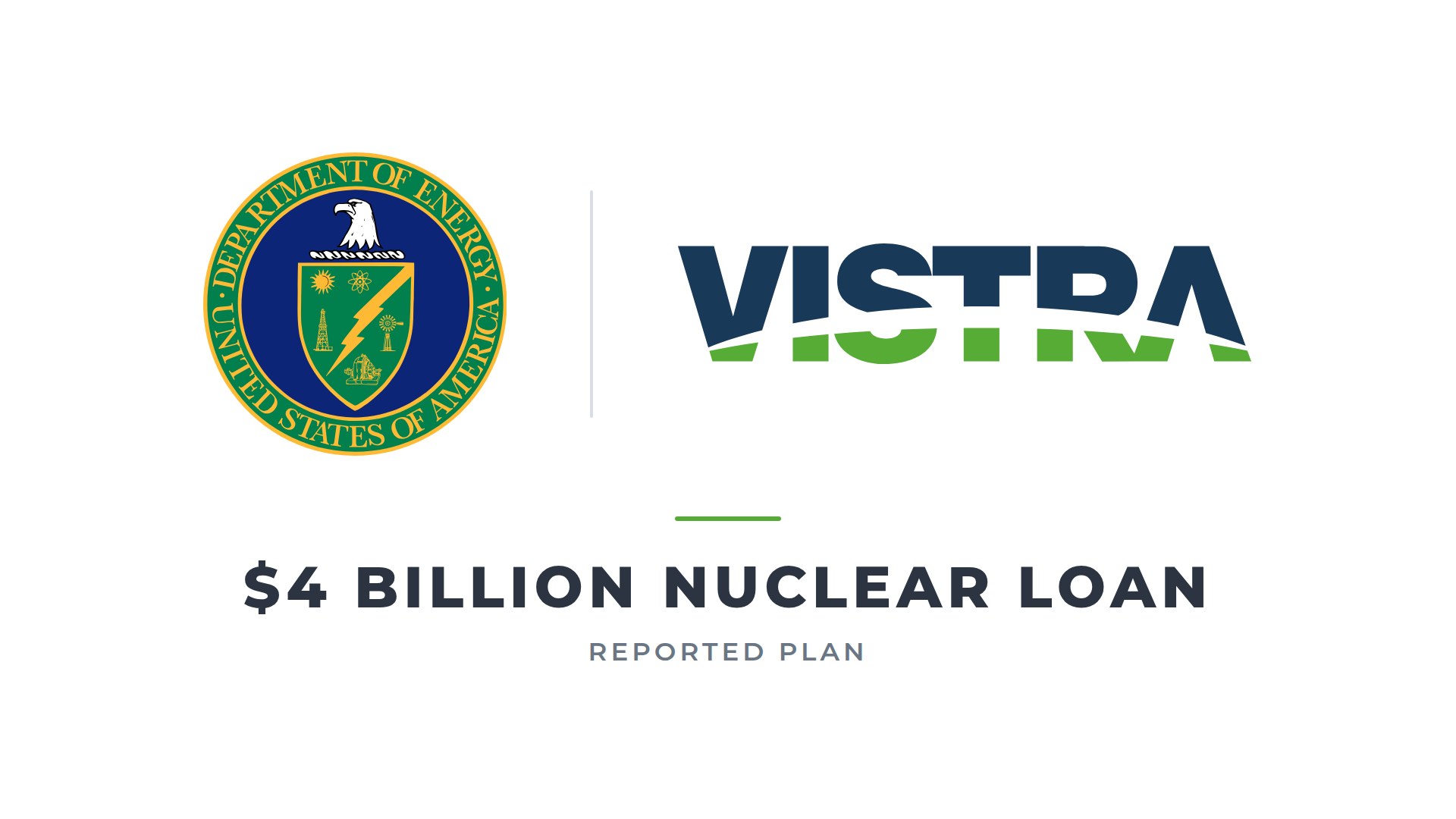
Update, October 2, 2026: Bloomberg reported that the US plans about $4 billion in loans for Vistra to boost output at three of its nuclear plants.
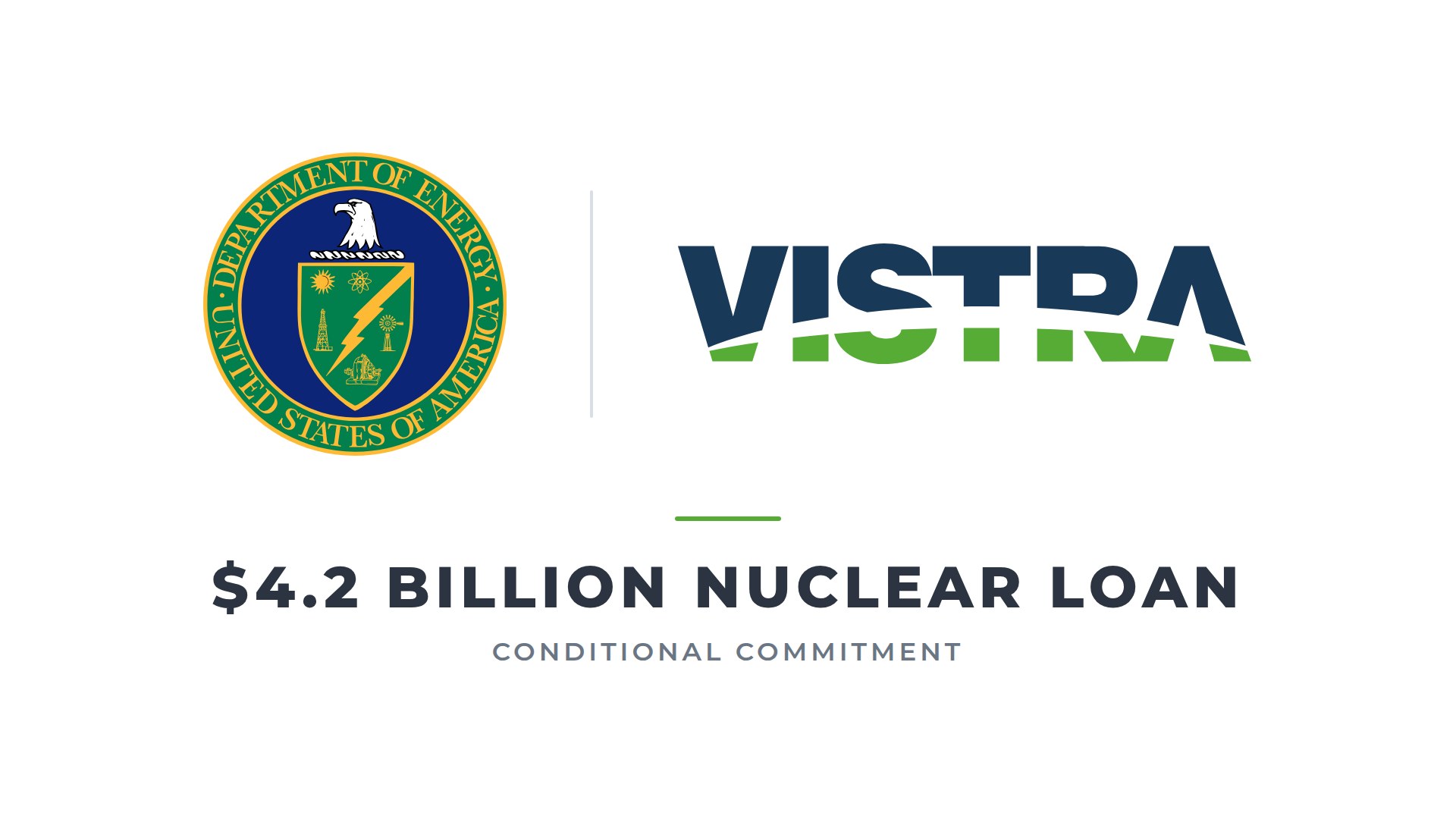
Update, October 5, 2026: The Energy Department made a conditional commitment to lend Vistra up to $4.2 billion for upgrades at its Ohio and Pennsylvania nuclear plants.