Key points
- In the 40 minutes after Monday's open, the whole AI build-out sold off together: optics, memory chips and the neo-clouds all had names down 8 to 10 percent from the 9:30 open, including Coherent (COHR), Arm (ARM), Micron (MU) and Applied Digital (APLD).
- It was not a broad selloff. Over the same window the S&P 500 barely moved and Amazon (AMZN) rose about 4 percent, so money rotated out of AI hardware, not out of the market.
- Bonds were flat, so this was not about interest rates. Nebius (NBIS) was the standout, gapping up at the open and staying close to flat on the day while every other neo-cloud fell hard.
The market opened higher this morning and the AI trade popped with it. Then it rolled over, and the sell-off that followed was fast and broad. It was not just semiconductors. In the roughly 40 minutes from the 9:30 open to about 10:10 a.m. Eastern, the entire AI build-out, the picks and shovels behind the boom, dropped together: memory chips, the optical and networking gear that wires up data centers, and the neo-cloud companies that rent out AI computing. (All moves below are measured from this morning's 9:30 open to about 10:10 a.m. ET, and prices are still moving.)
The damage, layer by layer
What stands out is how even the damage was. Every corner of the build-out fell, and the hardest-hit names all landed in roughly the same place, down 8 to 10 percent from the open.
Optics, the companies that make the laser-based parts that move data around AI data centers, got hit hard. Coherent (COHR) fell about 10 percent from the open, Ciena (CIEN) about 7 percent, and Lumentum (LITE) about 6 percent, with Credo (CRDO) down about 6 percent and Applied Optoelectronics (AAOI) and Fabrinet (FN) off 3 to 5 percent.
Memory and the chips were right there with them. Sandisk (SNDK) and Micron (MU) each dropped about 9 percent, Arm (ARM) about 9 percent, and Marvell (MRVL) about 8 percent. AMD fell about 4 percent and Broadcom (AVGO) about 3 percent, while Nvidia (NVDA) held up better, down under 2 percent.
The neo-clouds, the asset-heavy companies that build data centers and rent Nvidia chips to AI customers, fell just as hard. Applied Digital (APLD) dropped about 9 percent from the open, IREN about 9 percent, CoreWeave (CRWV) about 9 percent, and Core Scientific (CORZ) about 6 percent.
What held up tells the story
Here is the part that matters: this was not a market-wide selloff. Over the exact same window that the AI hardware names were falling 8 to 10 percent, the S&P 500 barely moved, down about half a percent, and Amazon (AMZN) actually rose about 4 percent. Microsoft (MSFT) was roughly flat. The data-center landlords held up, with Equinix (EQIX) and Digital Realty (DLR) down less than 1 percent, and GE Vernova (GEV), a key data-center power name, was actually green on the day. And long-term Treasury bonds did not move, which tells you this was not about interest rates.
So the money did not leave the market. It rotated. It came out of the highest-flying, most expensive AI-build-out hardware and moved into the megacap software and cloud companies that use that hardware, plus steadier infrastructure. Amazon climbing about 4 percent while the chips it buys fall 9 percent is the whole story in one line. That is rotation, not a panic.
Why the whole complex moves as one
All of these names, the optics makers, the memory makers, the neo-clouds, the networkers, are really one trade: the AI build-out. They live and die on a single question, which is whether spending on AI data centers is still accelerating. When that question feels settled, they rise together. When it wobbles, they fall together, and the ones that ran the furthest fall the hardest. Optics, memory and the neo-clouds had all gone vertical, so they led the way down in lockstep. We laid out every layer of this chain in the AI stock map.
The wobble this morning was not a single news bomb. It was the same tug-of-war we have been covering: a brutal chip selloff last week, an unresolved debate over whether memory is in a glut or a supercycle, and a morning bounce that ran out of buyers right around 10 a.m. and flipped to profit-taking across the whole group. We dug into the memory side in the memory giants piece, the optics side in our look at the photonics selloff, and the bigger bubble-or-dip question in did the AI bubble just pop.
Nebius, the one that got away clean
The standout was Nebius (NBIS). It opened sharply higher this morning, jumping to a gain of more than 8 percent at the high, and even after fading with the rest of the group it was still close to flat on the day while every other neo-cloud sat 5 to 8 percent in the red. That kind of relative strength in a group selloff usually means one of two things: the stock has its own piece of good news working, or big investors are treating it as the quality name they do not want to sell. Worth watching which it turns out to be. We covered the neo-cloud and ex-miner group in our piece on IREN and the ex-miners.
The bottom line: the entire AI infrastructure trade got faded together in the first 40 minutes of trading, with optics, memory and the neo-clouds all down 8 to 10 percent, while the rest of the market barely flinched and Amazon climbed. That points to profit-taking and rotation out of the frothiest corner of AI rather than a broad break. The thing to watch is whether it is a one-morning fade or the start of a deeper rotation out of the build-out names.
Nothing here is investment advice. All figures are intraday, measured from the 9:30 a.m. open to about 10:10 a.m. ET on Monday, June 29, 2026, and are moving in real time. These are volatile stocks. Do your own research.
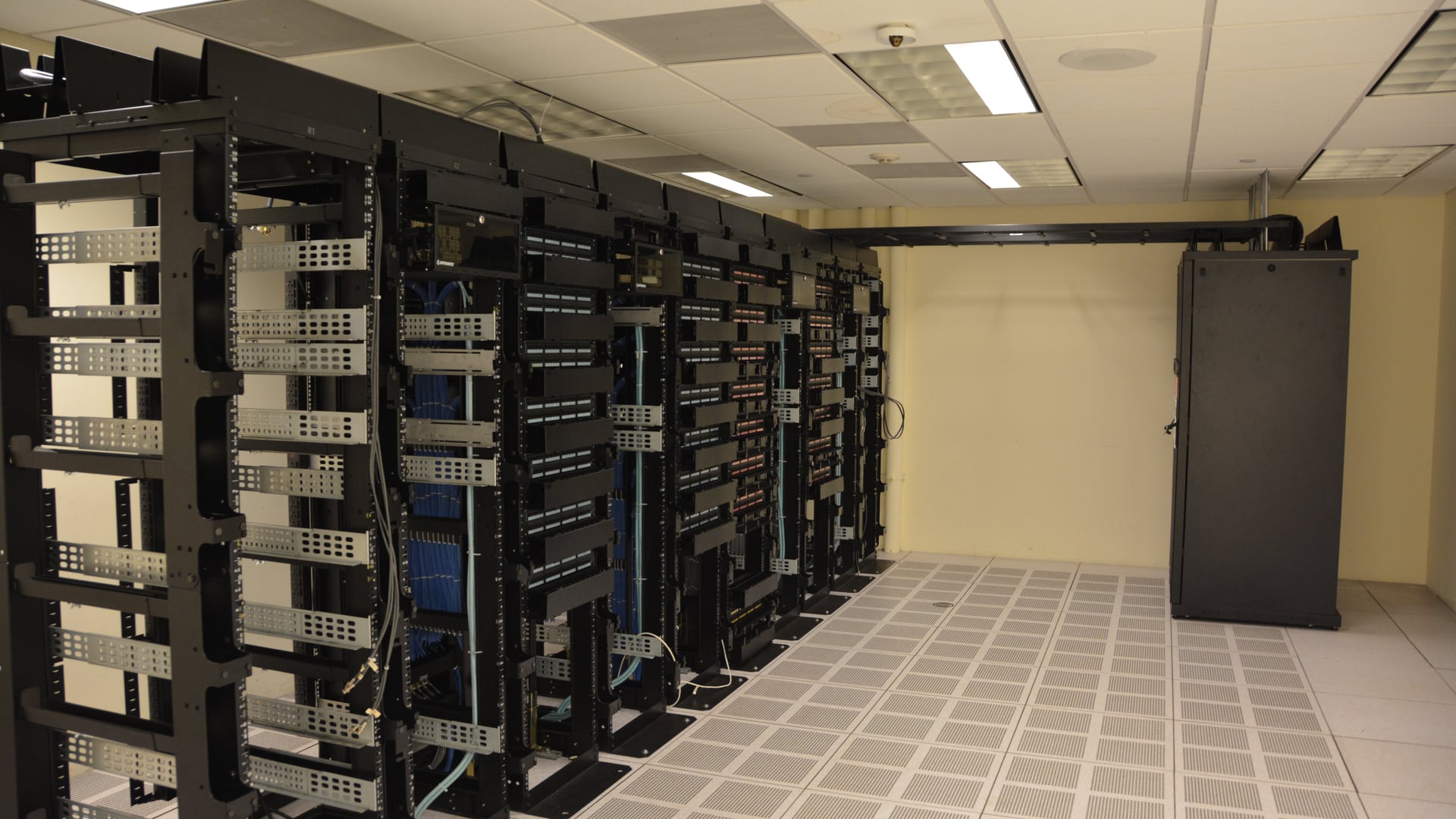
Cover photo: data center server racks by Carl Lender / Wikimedia Commons, CC BY 2.0, cropped.
This is general market commentary and opinion, not investment advice. Markets can go down as well as up, and you can lose money. Always do your own research and consider speaking with a licensed financial professional before making any investment decision.