Key points
- Samsung, SK Hynix, and Micron (MU) are each trillion-dollar stocks now, about $4.1 trillion combined.
- Micron (MU) is up roughly 847% in a year; the Roundhill Memory ETF (DRAM) holds the group.
- Together they rival single members of the Magnificent Seven, led by Nvidia (NVDA) near $4.7 trillion.
The AI memory boom has done something to the scoreboard that almost nobody saw coming a year ago. Samsung Electronics (005930.KS), SK Hynix (000660.KS), and Micron (MU) are now each worth more than $1 trillion. The memory makers, long treated as the boring, cyclical back end of the chip industry, have muscled their way into the same conversation as the biggest tech companies on earth. The cleanest way to own the whole group in one shot is the Roundhill Memory ETF, which trades under the ticker DRAM. Here is how the giants inside it stack up, against each other and against the Mag 7.
Three memory makers, three trillion-dollar market caps
As of late June, here is roughly where the big three sit. These move every day, and they have moved a lot lately:
- Samsung Electronics (005930.KS): about $1.48 trillion
- Micron (MU): about $1.37 trillion, up roughly 847 percent over the past year
- SK Hynix (000660.KS): about $1.25 trillion
Micron only crossed the $1 trillion line for the first time in late May, on a single 19 percent day. SK Hynix's run has been just as wild. On June 22 it briefly passed Samsung to become South Korea's most valuable company for the first time in 26 years, before both stocks fell about 12 percent the next day and Samsung took the crown back. Put the three together and you get around $4.1 trillion of market value tied to one thing: making memory.
How they stack up against the Mag 7
That combined $4 trillion is the part worth sitting with. Here is where the Mag 7 trade right now:
- Nvidia (NVDA): about $4.7 trillion
- Alphabet (GOOGL): about $4.17 trillion
- Apple (AAPL): about $4.1 trillion
- Microsoft (MSFT): about $2.75 trillion
- Amazon (AMZN): about $2.5 trillion
- Tesla (TSLA): about $1.45 trillion
- Meta (META): about $1.41 trillion
Stack the memory three against that list and the scale lands. Combined, at about $4.1 trillion, they are worth roughly as much as Apple and just behind Alphabet, and they clear Microsoft and Amazon outright. Individually, each one is in the same weight class as Tesla and Meta. A pure memory-chip company being worth as much as Tesla would have sounded absurd two years ago.
There is one number that puts the rest in perspective, though. Nvidia, by itself, is worth about $4.7 trillion, more than all three memory makers combined. The single biggest buyer of their memory is bigger than its three biggest suppliers put together. That is the whole AI trade in one comparison: the company selling the shovels is still valued above everyone doing the digging.
What the DRAM ETF actually holds
If you want the group rather than a single name, DRAM is the fund built for it. About 74 percent of it sits in those same three stocks, Samsung, SK Hynix, and Micron, each in the low-to-mid 20s as a share of the portfolio. The rest spreads across the supporting cast: Kioxia (285A.T), Sandisk (SNDK), and the storage makers Western Digital (WDC) and Seagate (STX). Roundhill's rule is that a company has to pull at least half its revenue from memory and storage to qualify. It is actively managed, charges 0.65 percent a year, and trades on the Cboe.
It has been the hottest launch on the market. DRAM came public at $28 a share on April 2 and ran to a high of $81.34, closing this past Thursday at $76.89, a total return of about 175 percent in under three months. Money flooded in just as fast: $6.5 billion in the first 27 trading days, the fastest start for any ETF ever, and past $20 billion in assets in a little over two months. This week's Korea selloff pulled it back to around $73. There is also a 2x leveraged version, the Roundhill and T-REX RAM, for traders who want more. We broke down the selloff in this week's KOSPI circuit-breaker piece.
Why the market caps exploded
The valuations are not coming from nowhere. The memory shortage is physical and severe. DRAM contract prices jumped as much as 98 percent in the first quarter and are set to climb another 58 to 63 percent this quarter, with NAND flash up 70 to 75 percent. The industry calls it RAMmageddon. AI data centers are buying up the world's memory supply, and the high-bandwidth memory (HBM) that AI accelerators depend on is reportedly sold out through the end of 2026.
The squeeze is showing up in everyday products. On June 25, Apple (AAPL) raised prices on Macs and iPads, some by $200 or more, and said it had never seen a component cost rise this much this fast. Even Elon Musk has weighed in. On June 25 he posted on X that "the production shortfall relative to demand is insane" and that "MUCH higher production is needed," and his Terafab project with Tesla, SpaceX, and xAI is a more than $20 billion bet on building memory and logic in-house because he cannot count on buying enough. Micron, the cleanest US-listed read on all this, just posted its best quarter ever and guided well above estimates, and SK Hynix reports on July 29. We covered Micron's quarter in this piece and the wider group in the memory stocks to watch.
The other side
Trillion-dollar market caps on memory companies also raise an obvious question: how much of the cycle is already priced in? Memory is the most cyclical corner of the chip world. Prices that double on the way up have a long history of halving on the way down once supply catches up, and new capacity is being built right now, including Micron's US fabs and Samsung's planned 1,000 trillion won, roughly $648 billion, decade-long buildout. The DRAM ETF's concentration means a bad week for two Korean stocks is a bad week for the whole fund, which is exactly what happened this week when leveraged single-stock ETFs unwound and tripped Korea's circuit breakers. The market caps are real. Whether they hold depends on how long the shortage lasts.
The bottom line: the memory makers have gone from the unglamorous back of the chip industry to a roughly $4.1 trillion group that now rivals the largest companies in the world, and the DRAM ETF is the single ticker that holds them. Where it goes from here rides on the one thing this story has always turned on, which is the price of memory.
Earnings watch
The memory giants report every quarter, and Micron (MU) is the one you can track directly on a US calendar. See its next earnings date on our earnings calendar.
Nothing here is investment advice. Market caps are approximate and as of late June 2026; they change every day. DRAM is a concentrated, volatile fund that can move double digits in a session. Do your own research.
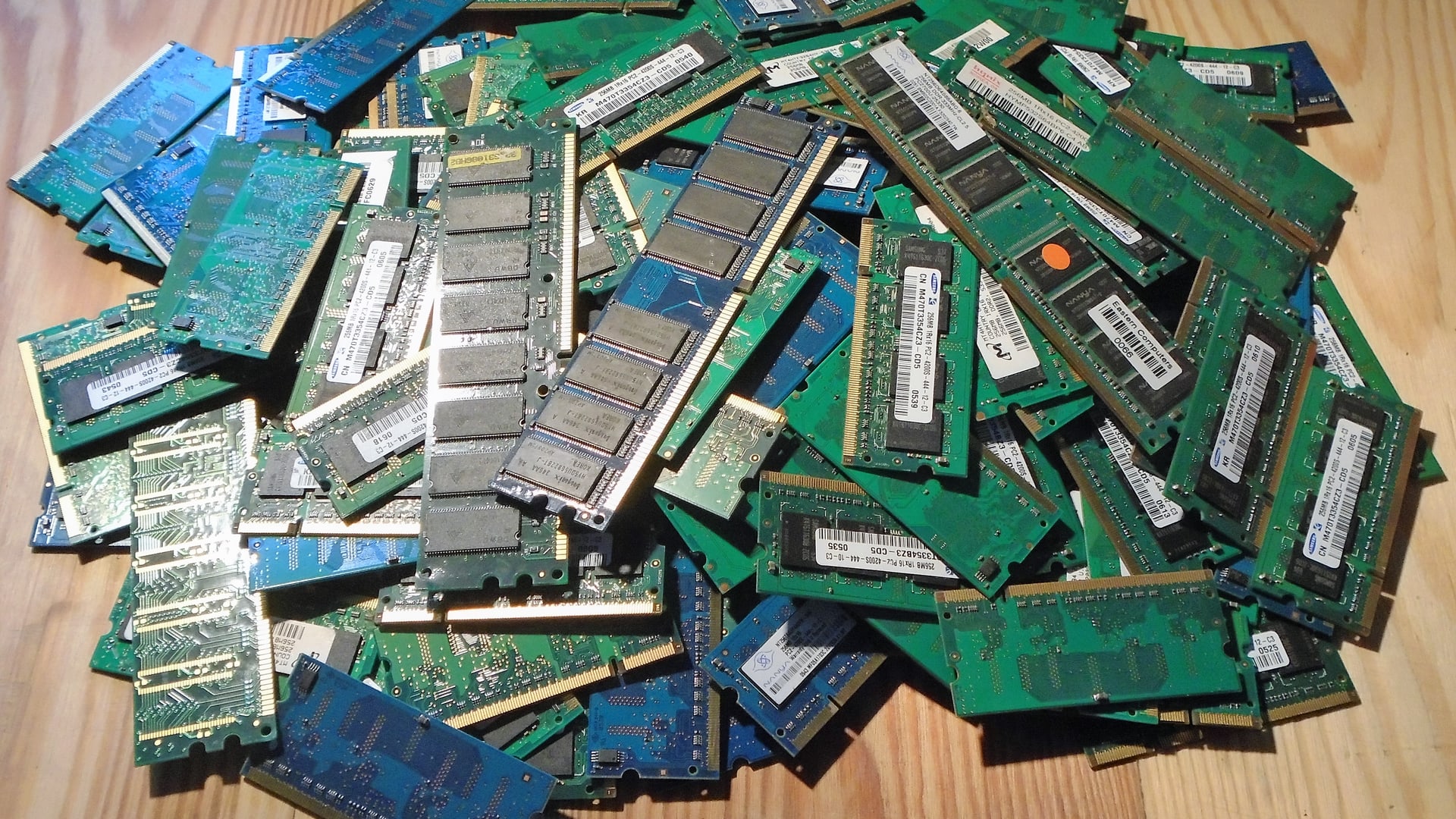
Cover photo: assorted RAM modules by Wilbysuffolk / Wikimedia Commons, CC BY-SA 4.0, cropped.
This is general market commentary and opinion, not investment advice. Markets can go down as well as up, and you can lose money. Always do your own research and consider speaking with a licensed financial professional before making any investment decision.