Key points
- AI's 24/7 power need is pulling nuclear, gas, and solar all into the AI trade at once; data-center electricity demand may double to about 950 TWh by 2030.
- Meta is funding an entire new $4.6 billion natural gas plant in Alberta just to power one data center, the clearest sign yet that gas, not nuclear, is doing the near-term heavy lifting.
- Every major hyperscaler has also signed a nuclear deal (Microsoft, Amazon, Google, Meta). Key stocks span power owners (CEG, VST, TLN), gas-turbine maker GE Vernova (GEV), small-reactor bets (OKLO, SMR), and uranium (CCJ).
- Nuclear's biggest contribution mostly arrives after 2030. The 2026 story is gas and grid-scale solar (FSLR) plus battery storage.
Here's the part of the AI story that doesn't get enough attention. Everyone argues about chips, but the chips are useless without something far more basic: electricity, and an enormous, constant amount of it. AI data centers run flat out, 24 hours a day, and the grid was not built for what's coming. That single problem is reviving nuclear power, pushing tech companies to fund brand-new gas plants, and pulling a whole group of energy stocks into the AI trade.
Just how much power are we talking about?
A lot, and it's climbing fast. The International Energy Agency expects electricity demand from data centers to roughly double, from about 485 terawatt-hours in 2025 to around 950 by 2030, which would put them at roughly 3% of all electricity used on the planet. Some estimates are even more aggressive, pushing past 1,000 terawatt-hours as soon as this year. AI is the main reason.
The catch isn't just the size of the demand, it's the shape of it. A data center training or running AI models wants power that is always on, steady, and predictable. Solar and wind are cheap and growing fast, but they're intermittent. You can't tell a hyperscaler their AI cluster only runs when the wind blows. That's why "baseload" power, the kind that runs around the clock, suddenly matters again, and it's why nuclear, gas, and increasingly solar-plus-storage are all being pulled into the same conversation.
Why nuclear, and why now
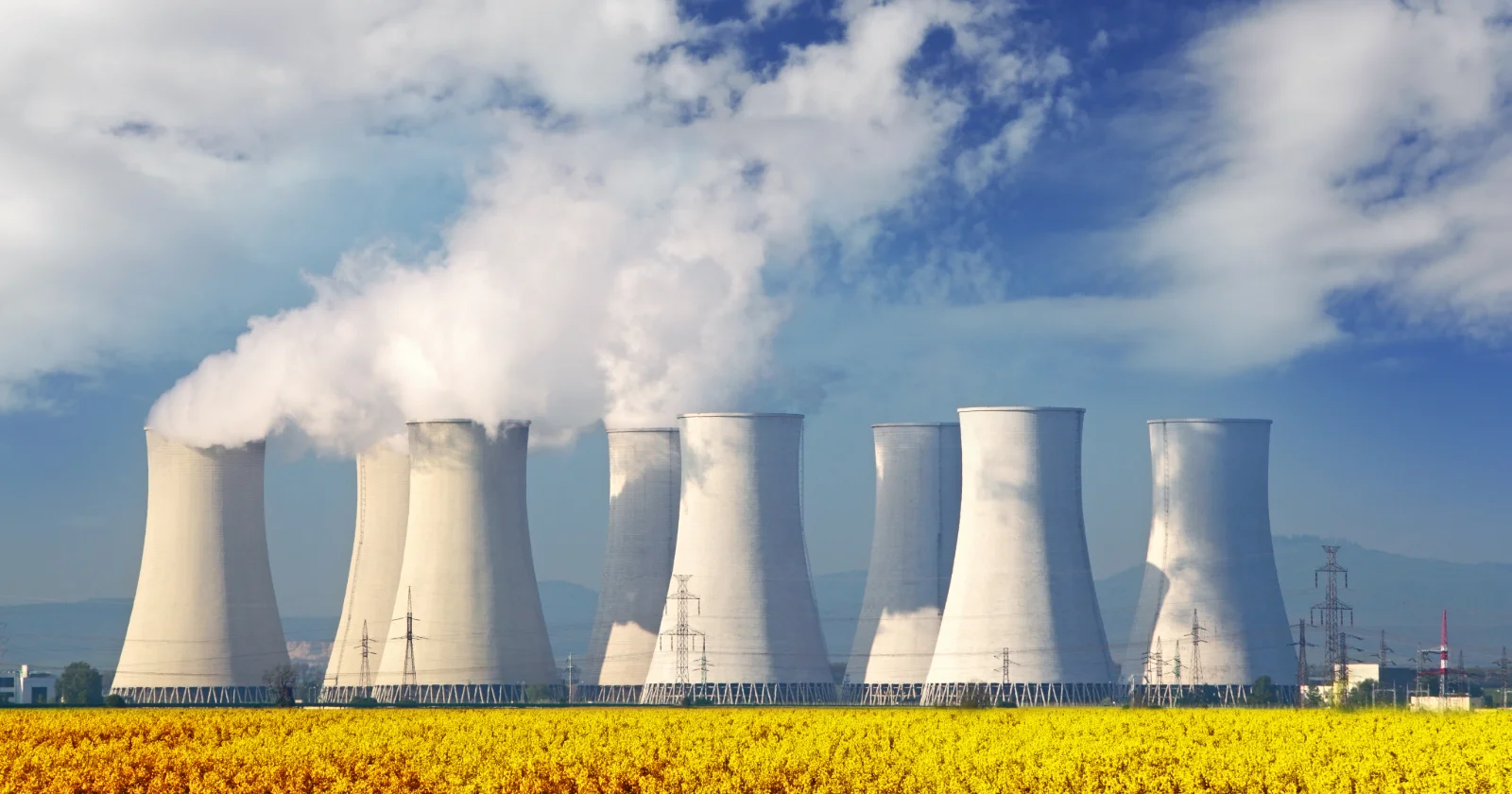
Nuclear checks the exact boxes AI needs: it runs 24/7, it produces enormous output from a single site, and it's carbon-free, which matters to tech companies that have spent years making climate promises. After decades of being treated as a relic, that combination has made it the surprise winner of the AI buildout.
Here's the honest nuance most headlines skip, though. Through about 2030, nuclear is not actually the main source filling the gap. The IEA's numbers show natural gas and renewables doing most of the near-term heavy lifting, with gas the single largest new source. Nuclear's biggest contribution, especially from new small reactors, mostly shows up after 2030. So nuclear's "big break" is really two separate stories: restarting plants that already exist, which is happening right now, and building new reactors, which is a 2030s bet. Keep those two apart and the whole sector makes a lot more sense. The gas story is happening right now, and it just got a very concrete example.
And don't count out solar, it's just playing a different position. Solar is the fastest power source to build, which is why hyperscalers are pairing it with batteries in behind-the-meter "energy parks" that cover daytime load while gas and nuclear handle the around-the-clock base. The US is expected to add a record 43 gigawatts of utility-scale solar in 2026, up about 60% from the year before, and First Solar (FSLR), the largest US panel maker, just posted record sales on AI-driven demand with a backlog approaching 48 gigawatts; the stock trades around $231 as of midday July 9. The catch is the same one nuclear solves: the sun isn't always up, so solar only fully answers the AI power problem when it's bolted to enough battery storage from the likes of Tesla and Fluence. For a deeper look at the solar side, that's its own story, but it belongs in the same conversation.
The gas power play: Meta's Alberta bet
While nuclear gets the headlines, gas is quietly doing most of the near-term work, and Meta's newest data center shows exactly how. On July 8, Meta Platforms (META) broke ground on a C$13 billion (about $9.2 billion) data center in Sturgeon County, Alberta, its first in Canada and its largest anywhere outside the US. The site needs roughly 1 gigawatt of power, about what 800,000 homes use, and Alberta's grid simply doesn't have that much spare capacity sitting around.
So Meta did what a growing number of AI companies are doing: it went and bought a power plant's entire output before the plant even exists. It signed a long-term deal with Pembina Pipeline, Morgan Stanley Infrastructure Partners, and Kineticor Asset Management for all of the electricity from a new $4.6 billion natural gas plant, the Greenlight Electricity Centre, being built in the same county. The plant's official startup target is the second half of 2030, though Meta wants its data center running well before that.
That's the pattern across the industry right now. Gas turbines can be ordered and built in a few years; new nuclear reactors take most of a decade. GE Vernova (GEV), the GE spinoff that makes the gas turbines utilities and data-center operators need for deals like Meta's, trades around $1,083 as of midday July 9, and it's one of the more direct ways to bet on this specific piece of the buildout rather than on nuclear or solar. For the full story on Meta's Alberta project, including the awkward timing next to a Meta "spare compute" report the company wouldn't confirm, we covered it here.
The deals that flipped the script
What turned this from a thesis into a real trade was a wave of deals where Big Tech went straight to nuclear operators and signed long-term contracts. As of mid-2026, every major hyperscaler has at least one:
- Microsoft and Constellation are restarting Three Mile Island. The dormant Unit 1, rebranded the Crane Clean Energy Center, is coming back under a 20-year power purchase agreement, with all 835 megawatts going to Microsoft. Constellation expects to spend roughly $1.6 billion to revive it, with the plant due back online around 2028. It's the first US nuclear plant being brought back specifically for a single customer. (Michigan's Palisades plant is actually the first retired US reactor to return to service at all, but it feeds the grid rather than one buyer.)
- Amazon and Talen Energy signed a 17-year deal in 2025 for 1.92 gigawatts from the Susquehanna plant in Pennsylvania, running through 2042, after Amazon bought an adjacent data center campus for $650 million. Talen expects the contract to bring in roughly $18 billion over its life.
- Google committed to 500 megawatts from small modular reactor startup Kairos Power.
- Amazon also put $700 million into X-energy for up to 12 small reactors.
- Meta went biggest of all on the nuclear side too, lining up as much as 6.6 gigawatts across multiple partners to feed its Prometheus AI supercluster, on top of the gas deal above.
When the richest companies in the world start signing 20-year power contracts, and funding entire power plants from scratch, the market notices.
How to think about the stocks
This is not one trade, it's four, and they carry very different risk. Lumping them together is how people get hurt.
1. The companies that own power plants today. These are the real, cash-generating businesses, and they're the ones signing the hyperscaler deals. Constellation Energy (CEG) runs the largest US nuclear fleet, has been landing contracts steadily, and in early 2026 closed its Calpine acquisition, bolting roughly 21,000 megawatts of gas and geothermal onto that nuclear base, so it's really a nuclear-plus-gas story now. It trades around $250 as of midday July 9, down from the low $300s in late June. Vistra (VST), which owns the second-largest competitive nuclear fleet after its Energy Harbor deal, trades around $158 and has been one of the standout power stocks of the AI era. Talen Energy (TLN), the Amazon partner, trades around $384. These are the lower-risk way to play the theme, because the plants already exist and the revenue is real.
2. The equipment makers. Somebody has to build the turbines. GE Vernova (GEV) is the biggest name here, supplying the gas turbines behind deals like Meta's Alberta plant, and it trades around $1,083. This bucket is a more direct bet on the gas buildout specifically than the utilities are, since GE Vernova gets paid whether the plant ends up owned by Constellation, an independent developer, or anyone else.
3. The small-reactor moonshots. Oklo (OKLO) and NuScale (SMR) are bets on technology that mostly isn't generating commercial power yet. The upside is huge, the execution risk is just as big, and the volatility is brutal. NuScale has swung between roughly $9 and $57 over the past year and trades around $9.18 as of midday July 9, down sharply on the year. Oklo trades around $49, also pulled back hard in 2026 after a massive prior run, even with Nvidia's Jensen Huang publicly backing nuclear for AI. NuScale is the only US company with an NRC-certified SMR design, and it now has two approved. Just remember what you're buying: a 2030s story priced today, which is exactly why these names whip around so violently.
4. The fuel. More reactors means more uranium, and the supply math is tight. Uranium has been holding around $86 a pound, and Cameco (CCJ), the big Western miner, has delivery commitments running well above its planned production through 2030, and trades around $96 as of midday July 9. That gap is the bull case for the fuel side in one sentence. Nuclear and uranium funds have been among the hottest trades of the AI-power theme over the past couple of years, though the most speculative names have cooled off in 2026.
The risks worth respecting
This is a genuinely exciting theme, which is exactly why it's worth staying clear-eyed. A few things to keep in mind:
- Timelines are long. New reactors take years to permit and build, and even gas plants like Meta's Alberta project run years out (target startup is the second half of 2030). The stock can get ahead of the actual electrons.
- A lot is already priced in. After moves like Oklo's, a chunk of the good news is in these stocks. It's a "bubble within a bubble" worry that rhymes with the broader AI valuation debate.
- Gas is still the near-term reality, not nuclear. Meta's Alberta plant is one example of a pattern playing out across the industry. If you're betting on nuclear to solve AI's power crunch in 2026, the data says you're early.
- Regulation and politics can speed this up or slow it down in a hurry, on both the nuclear and gas sides.
Bottom line
AI's power problem is real, it's huge, and it isn't going away, which makes energy one of the most interesting long-term beneficiaries of the entire AI boom. Nuclear gets the headlines, but gas is doing the heavy lifting right now, as Meta's own Alberta plant shows, and solar is filling in around the edges. The smart way to look at it is to separate the buckets: the utilities and turbine makers cashing hyperscaler checks today, the small-reactor startups that are thrilling but speculative and years out, and the uranium underneath all of it. The chips get the headlines. Increasingly, the power behind them, in all its forms, is the story worth watching.
Sources
- International Energy Agency, Data centres and data transmission networks
- BNN Bloomberg, Meta to build $13 billion Alberta data centre
- Our full coverage: Meta said it had spare compute. Then it broke ground on a $9 billion data center in Canada
- Related coverage: Solar stocks for the AI power boom
- Related coverage: T1 Energy (TE) is down today while tech rallies
- Price data via Robinhood market data
This is analysis and opinion for information only, not investment advice, and I'm not a financial advisor. Figures come from market reporting, the IEA, and live pricing as of midday July 9, 2026, and vary by source, so do your own research and confirm current numbers before making any decisions.