Key points
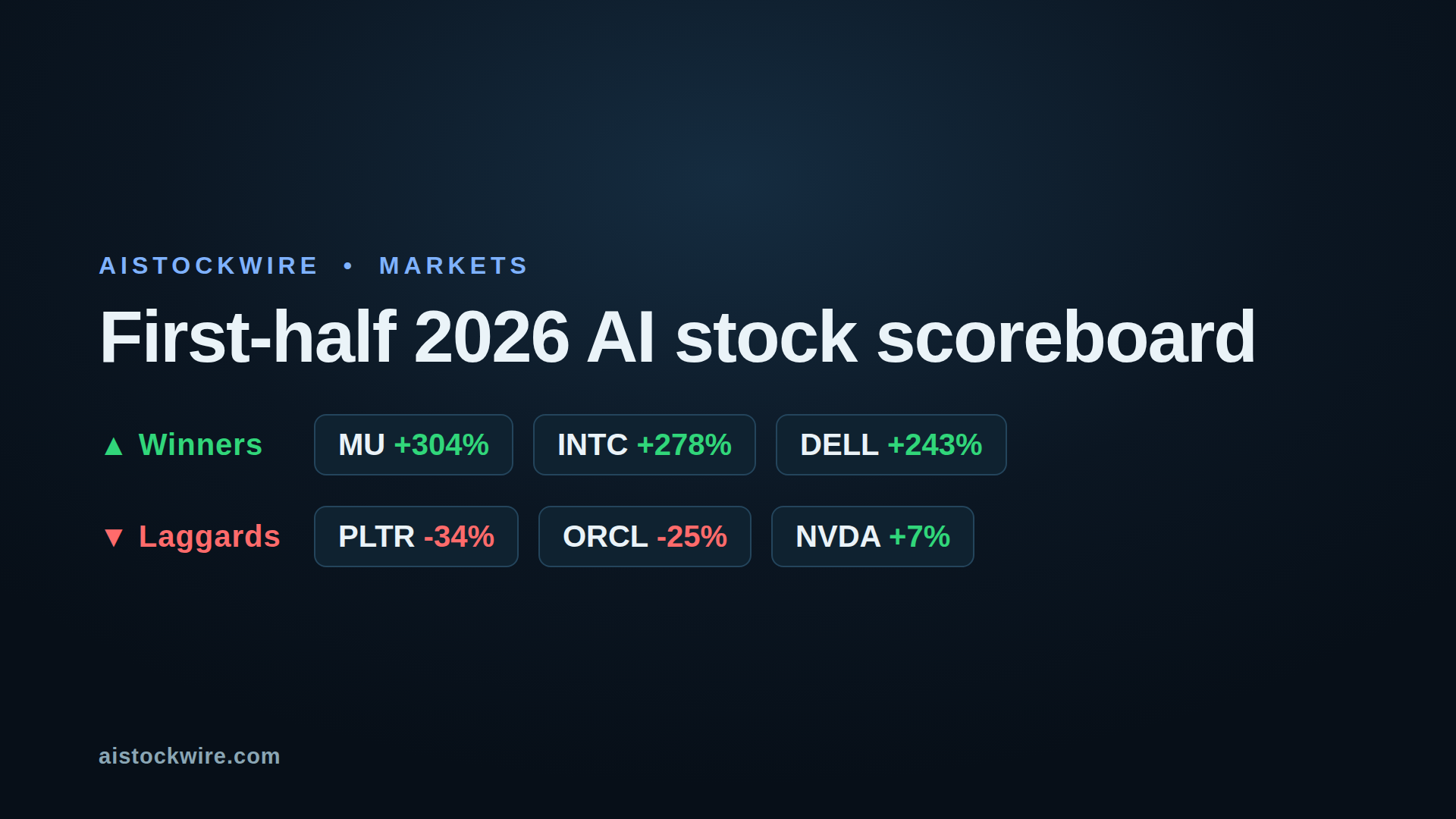
- Memory and chip-supply names led the AI trade in the first half of 2026. Micron (MU) rose about 304% and Intel (INTC) about 278%.
- The famous AI names lagged. Nvidia (NVDA) gained just 7%, and AI software fell hard, led by Palantir (PLTR) down about 34%.
- The money moved toward the hardware AI actually runs on, and away from the priciest software stories.
The first half of 2026 is in the books. If you owned AI stocks, your six months looked very different depending on which ones. This was not a year where you could just buy "AI" and win. The parts that make the hardware soared. Some of the biggest and most famous names went nowhere, or lost money. Here is the scoreboard, and what it tells us.
All the numbers below run from the last trading day of 2025 through the close on June 30, 2026.
The winners: memory, foundries, and the parts nobody talks about
The best AI trade of the year was not a chip designer or a software company. It was memory. Micron (MU) rose about 304 percent. The stock started the year near $285 and finished June above $1,150.
The reason is a part called high-bandwidth memory, or HBM. It sits right next to every Nvidia AI processor and feeds it data. Demand blew past supply. Micron sold out its HBM for the year and signed customers to long deals. Analysts called it the worst memory shortage in 15 years, and prices climbed all year. When a part is that scarce and that necessary, the company making it gets paid.
The second surprise was Intel (INTC), up about 278 percent. A year ago most people had written it off. Then the turnaround got real. Its new 18A factory process started to work. The U.S. government took a 10 percent stake in the company. And reports said Apple would build some of its chips with Intel in the United States. A left-for-dead stock became one of the year's biggest winners.
From there the list is a tour of the AI supply chain:
- Marvell (MRVL), up about 251 percent, which designs the custom chips big tech uses for AI.
- Dell (DELL), up about 243 percent, which builds the servers AI models run on. We wrote about Dell and the other suppliers leading the market last week.
- Nebius (NBIS), up about 230 percent, a "neocloud" that rents out AI computing power.
- AMD, up about 171 percent, and Vertiv (VRT), up about 107 percent, which sells the power and cooling gear a data center cannot run without.
Notice the theme. None of these are the name you think of first when someone says AI. They are the picks and shovels.
The famous names that could not keep up
Here is the part that surprised a lot of people. Nvidia (NVDA), the company at the center of the whole AI boom, gained just 7 percent. It is still a great business. It just did not move much while the companies that supply it ran away. Its gain was more than 40 times smaller than Micron's for the year.
Broadcom (AVGO) rose about 9 percent and Apple (AAPL) about 6 percent. Both fine, both far behind the supply chain. And Super Micro (SMCI), the server maker that was a star in 2024, finished the half almost exactly where it started.
The losers: AI software got expensive, then got cheap
The clearest losers were the high-priced software names. Palantir (PLTR) fell about 34 percent, the worst of the big AI stocks. The odd part is that the business is still growing fast. Revenue rose 85 percent from a year earlier. The problem was the price. The stock was valued for perfection, and when investors started moving out of expensive software, it had the most room to fall. Michael Burry spent much of the year betting against it, which we covered in his trading disclosures.
He had company. Oracle (ORCL) fell about 25 percent, Microsoft (MSFT) about 23 percent, and Meta (META) about 15 percent. These are strong companies. But they got swept up in the same move away from pricey AI-linked stocks.
What it means going into the second half
The lesson of the first half is simple. "Buy AI" was not a plan. The market paid up for the bottleneck, which was memory and chip manufacturing, and it punished the most expensive stories. If you owned the supply chain, you had a great six months. If you owned the household names, you mostly waited.
Whether that continues is the real question for the back half of the year. The supply-chain winners are no longer cheap. Micron and Intel have already made their big moves. The beaten-down software names are a lot cheaper than they were in January. None of that tells you what happens next, and this is not advice. But it is worth watching whether the money stays with the parts makers or rotates back to the names it left behind. You can follow the new filings from any of these companies on our filings page.
Nothing here is investment advice. Figures are price returns from the December 31, 2025 close through the June 30, 2026 close, and past performance does not predict future results. Do your own research.
This is general market commentary and opinion, not investment advice. Markets can go down as well as up, and you can lose money. Always do your own research and consider speaking with a licensed financial professional before making any investment decision.