Key points
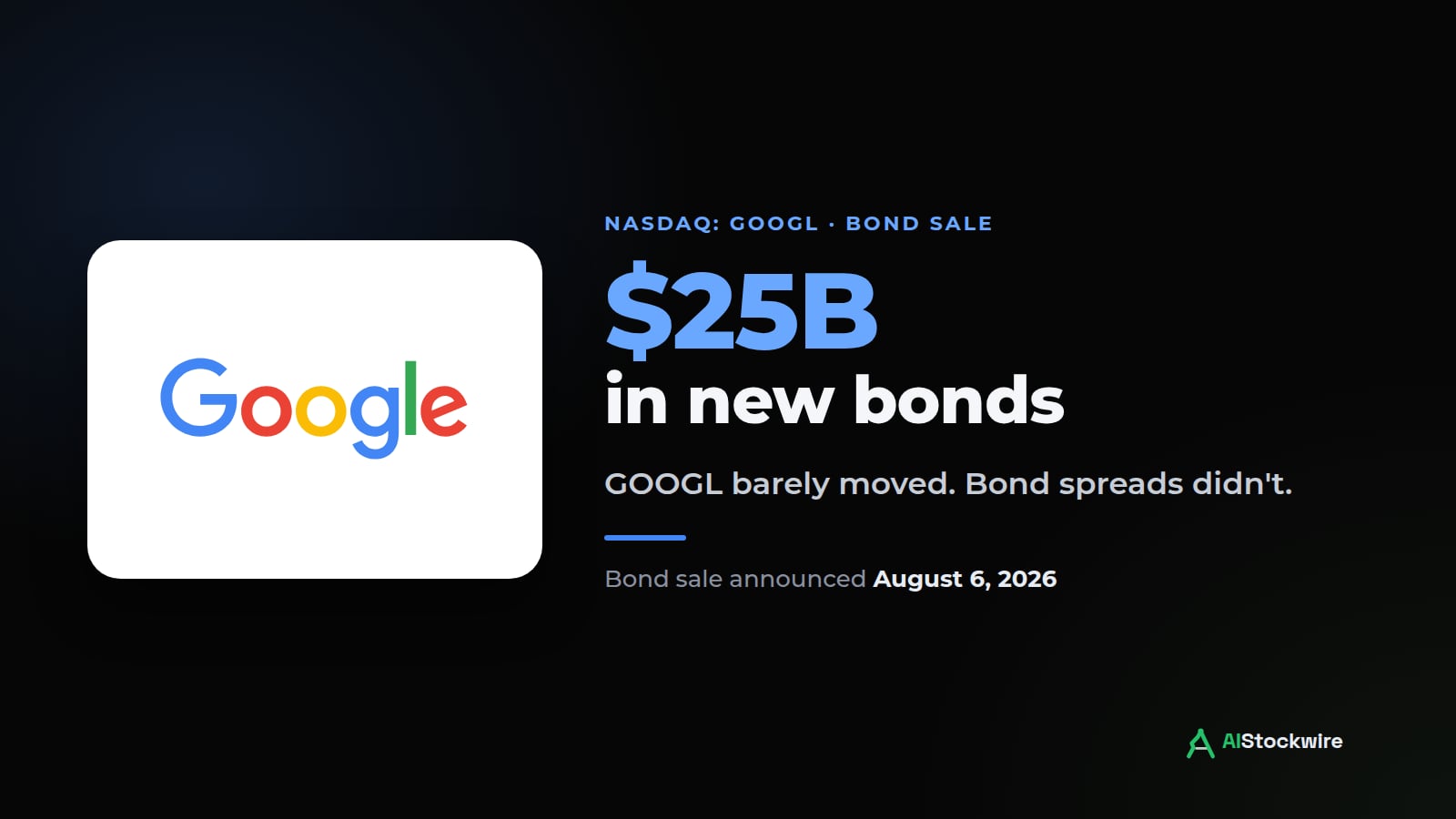
- Alphabet is seeking up to $25 billion in a new US bond sale, its third debt offering of 2026, in as many as 10 tranches maturing from 2 to 40 years.
- GOOGL traded near $358 as of 1:40pm ET Thursday, down about 1.2% from Wednesday's close. Hyperscaler bond spreads widened about 10 basis points instead, after tightening close to 20 basis points the week before.
- The sale follows Alphabet's first negative free cash flow quarter since its 2004 IPO, negative $5.9 billion in Q2, after capital spending hit $44.9 billion in three months.
- Alphabet's total debt has climbed past $100 billion in 2026, up from $46 billion before its AI-driven borrowing began.
Alphabet is back in the bond market. The company launched a new US investment-grade bond sale Thursday, seeking up to $25 billion across as many as 10 tranches with maturities running from two years to 40, Bloomberg reported. GOOGL was down about 1.2% as of 1:40pm ET Thursday, trading near $358 against Wednesday's $362.43 close. Credit investors priced it differently.
What bond investors charged this time
The longest tranche in Thursday's deal priced at about 155 basis points above Treasuries, according to data tracked by ZeroHedge. Spreads on Alphabet and its hyperscaler peers had tightened by close to 20 basis points the week before this deal. They widened back about 10 basis points once it hit the market. Six banks are underwriting the sale, including Goldman Sachs and JPMorgan.
Ten basis points is a small move by itself. Widening is still the direction that counts, since credit spreads widening on a borrower this large is one of the cleaner reads on financial conditions there is. It's also the opposite direction from GOOGL's own reaction. Bondholders get repaid at face value no matter how the AI trade turns out. When they demand extra yield anyway, it's a different kind of vote than a stock price is.
Why Alphabet needs the cash
Two weeks earlier, Alphabet told Wall Street it was raising 2026 capital spending guidance again, to $195 billion to $205 billion, its third increase this year. "We have increased our capacity quite significantly over the past three years. The demand still outpaces that investment," chief financial officer Anat Ashkenazi told analysts on the call. Operating cash flow that quarter came in at $39.1 billion. Capital spending was $44.9 billion. Free cash flow went negative for the first time since Alphabet's 2004 IPO, negative $5.9 billion.
That's the gap this bond sale is filling. Alphabet has now sold bonds three times in 2026:
- February: more than $20 billion in dollar bonds, plus debut deals in Swiss francs and British pounds, including a rare 100-year tranche.
- May: close to $17 billion in euro bonds, Alphabet's largest ever, plus its first Canadian-dollar notes.
- August: up to $25 billion more, announced Thursday.
Combined, Alphabet's total debt has climbed past $100 billion this year, up from $46 billion before the AI buildout began. The company still holds well over $100 billion in cash and marketable securities. Alphabet is choosing to fund AI spending with debt instead of selling more shares or slowing down, the same choice Amazon and Meta have been making, among others. Hyperscalers combined have issued about $194 billion in bonds this year through early July, up 79% from the same stretch of 2025. Microsoft and Meta laid out their own AI spending plans the same week Alphabet's capex guidance jumped.
GOOGL's price doesn't reflect any of this yet. Alphabet locked in a slightly higher borrowing cost instead, for as long as 40 years, on a bet that the spending pays off. The stock will have its own reckoning eventually. Thursday, it was the bond market's turn. By late September, that caution had spread across the AI complex, with investors demanding wider spreads from AI-related borrowers than from anyone else.
This is general market information, not investment advice. Always do your own research and consider speaking with a licensed financial professional before making any investment decision.