Key points
- Amazon is working on "fully automated" delivery stations, internally called Project Tetromino, according to documents reviewed by Business Insider.
- The design could process packages about 2.5 times faster, with a pilot in 2028 and more than $530 million invested by 2029.
- Amazon calls it an early-stage concept and says the document's figures and timeline are inaccurate.
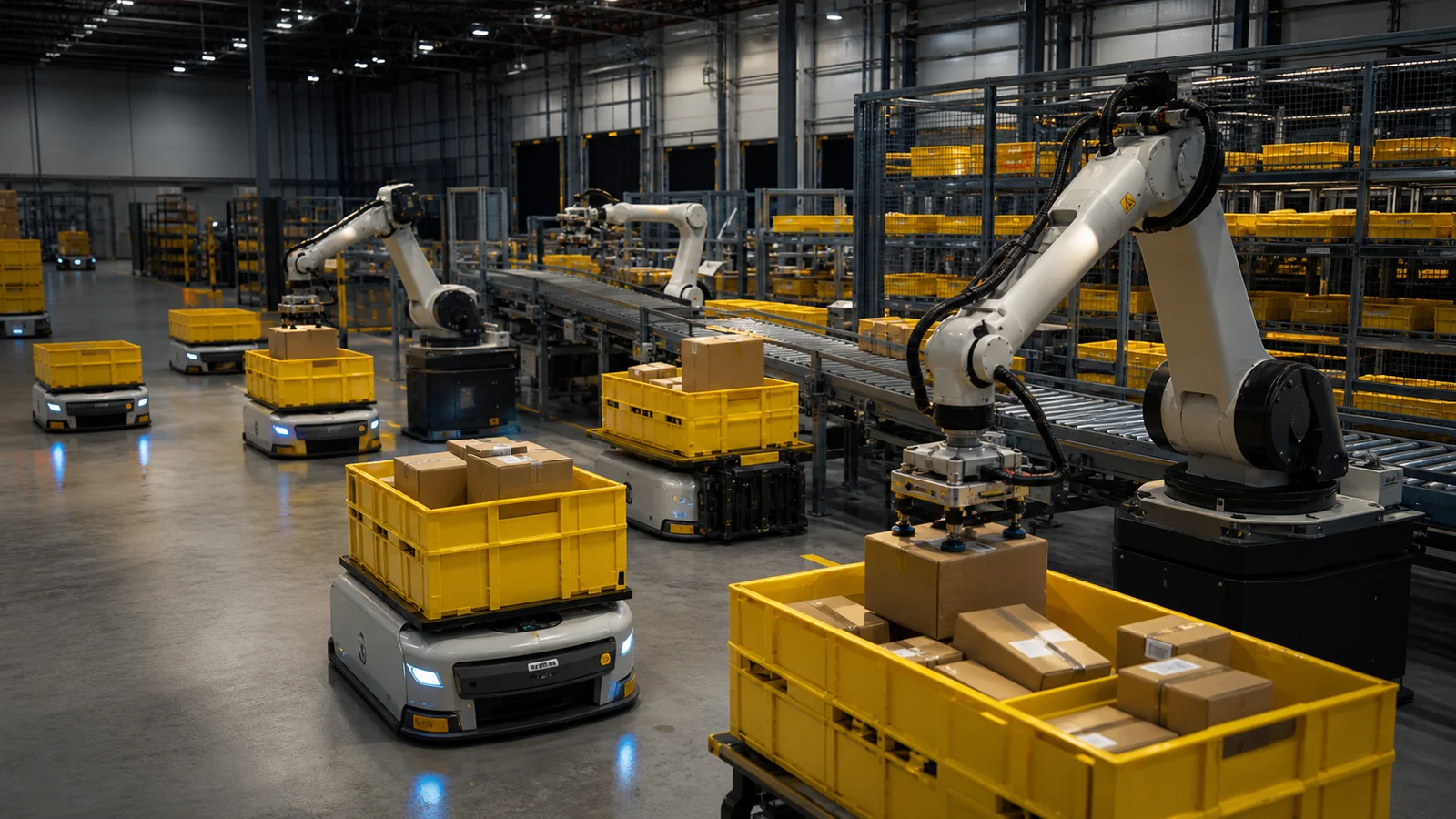
Amazon (AMZN) is working on a way to fully automate its delivery stations, the last and most manual stop before packages reach drivers, according to an internal planning document reviewed by Business Insider. The effort, internally called Project Tetromino, aims to build stations that run on AI and robotics with less human labor.
Delivery stations are the final facility in Amazon's shipping network. They take packaged items from fulfillment centers, then sort and stage them for the drivers who carry them the last mile. Organizing and loading those packages into vehicles is one of the hardest and most expensive tasks in logistics to automate, which is what makes the project worth watching.
What the documents describe
The document, dated last month, considered a $103 million pilot in 2028, followed by five sites in 2029 and another ten in 2030. With each 2029 location estimated at about $85 million, planned spending would exceed $530 million by that year. The design was also projected to process packages at about 2.5 times the rate of Amazon's existing delivery stations.
Amazon disputed those details. A spokesperson described Tetromino to Business Insider as an "early-stage concept" and said the document's financial estimates and road map are "inaccurate and don't reflect our current plans."
"We're always exploring and testing new technologies across our operations to improve safety and the delivery experience for customers," the spokesperson said. "Like any early-stage concept, this is one of many initiatives we regularly evaluate, and plans evolve significantly as we learn."
How the robots would work
One of Tetromino's key technologies could come from Boxbot, an AI and robotics startup, according to the document. Boxbot's system moves packages from conveyors onto trays for storage, then uses AI to retrieve and sequence them for loading. The company's website says it can make vehicle loading up to ten times faster. Boxbot did not respond to Business Insider's request for comment.
The automation push, and the jobs question
Tetromino fits a broader drive. On its July earnings call, Amazon said it expects to more than double its fleet of robotic arms in 2026, part of the same race pulling in the U.S. humanoid-robot makers we have covered. Business Insider has previously reported that Amazon internally projected some warehouse robots would "flatten" its hiring curve over the next decade.
Amazon frames the work as help for its staff rather than a replacement. Robotics chief Tye Brady has told Business Insider that the robots are meant to make frontline jobs safer and more efficient. A spokesperson said the delivery-station projects are "designed to complement and empower our workforce" and that employees "remain central to how we operate."
Amazon is not alone in the effort. FedEx is expanding AI-powered robots that load trailers, UPS and DHL use robots to unload them, and delivery startups such as Serve Robotics are automating the sidewalk side of the last mile.
Amazon shares closed near $262 on Monday, up more than 1% on the day. The company gave no timeline for when, or whether, Tetromino would move past the concept stage.
Prices as of the August 24, 2026 close. This is general information, not investment advice.