Key points
- FCC to vote October 29 on device-testing restrictions
- Labs in China would be cut out starting in December 2028
- Last year's rules already stripped 29 labs of FCC recognition
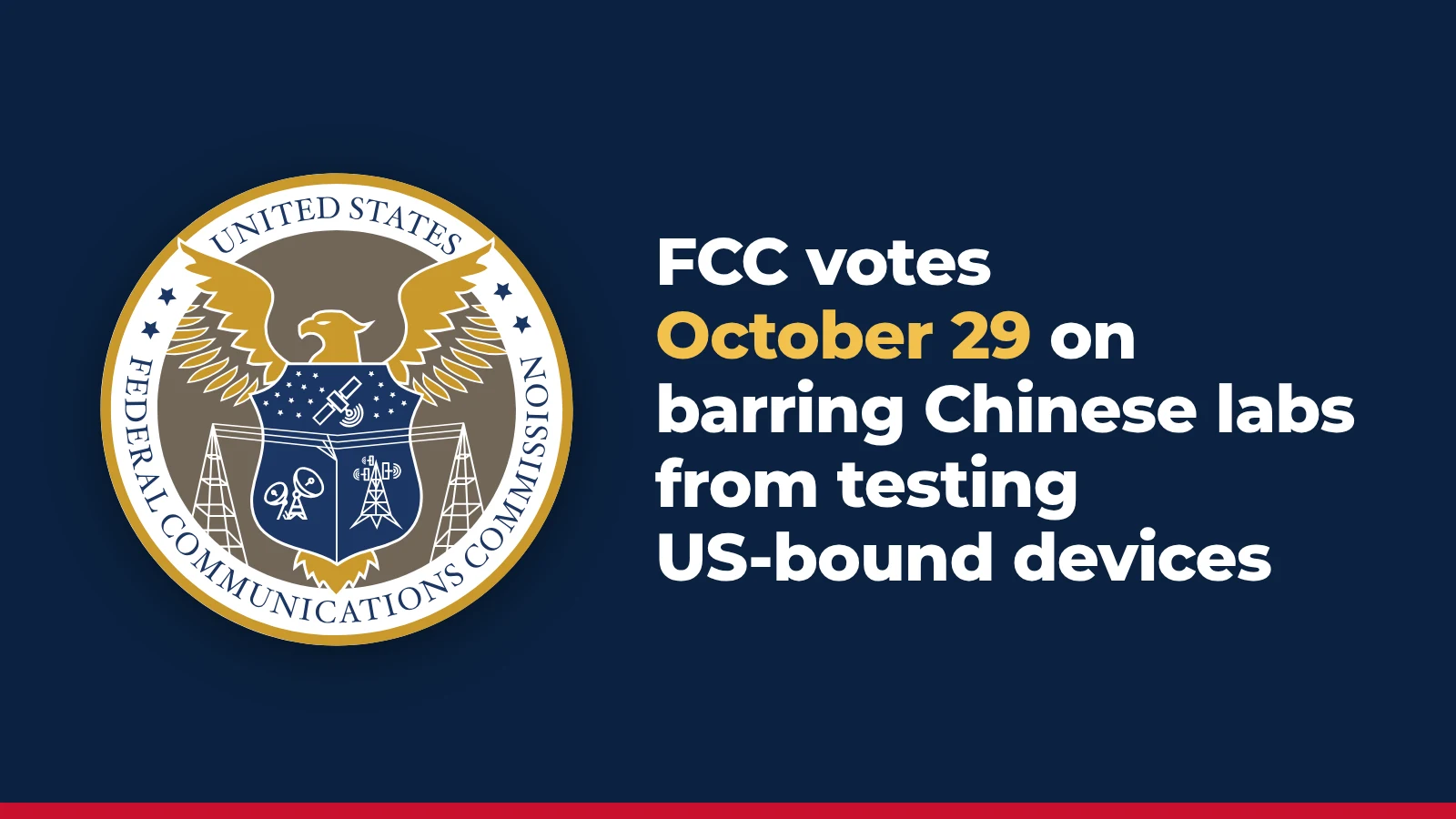
The Federal Communications Commission will vote October 29 on rules that would only recognize device-testing labs in the US or in countries that recognize US labs in return, the agency said on October 7. China has no such agreement with the US. That means Chinese labs would be barred from testing smartphones, cameras, and computers for the US market, Reuters reported.
Devices that require FCC certification must be tested at an FCC-recognized lab before they can be marketed in the US. FCC Chair Brendan Carr said 82% of electronics were tested in China in 2025, according to Reuters.
Carr said in the FCC's release that "less than 4% of all electronic devices are tested in labs located inside the U.S., and the lion's share are tested in countries that do not operate a reciprocal economy."
The rules would take effect in December 2028
If the commission adopts them, starting December 1, 2028, all testing, certification, and accreditation work would have to happen in the US or in what the FCC calls a Reciprocal Economy. That gives device makers a little over two years to move their testing.
The proposal also includes a streamlined approval process for devices tested in US labs or in countries that don't pose national security risks, Reuters reported. The agency said the full draft order would be posted on its website on October 7. It hadn't appeared on the October meeting page by that evening, so details of the order, including which countries would qualify, weren't yet available.
An earlier rule removed 29 labs
The vote builds on last year's "Bad Labs" rules, which barred labs owned or controlled by entities deemed national security threats. The FCC says 29 labs have lost their recognition under those rules. Even so, the agency said this year that a substantial majority of China-based labs were still testing electronics for the US market, according to Reuters.
The FCC has also pulled recognition from two labs in non-reciprocal countries and started the process for two more. It said those labs had copied and pasted test results.
The FCC has stepped up its actions against Chinese technology
The testing vote follows a run of FCC moves aimed at Chinese equipment. Last December, the agency banned imports of all new models of Chinese drones, and it has barred new models of Chinese-made consumer routers. In July, it moved to bar new Chinese humanoid and quadruped robots, and in August Reuters reported it was drafting a rule that would ban new optical transceiver models while exempting many non-Chinese suppliers.
Unlike those actions, the lab rules don't single out a product category. They would reach nearly every phone, laptop, and camera maker that sells in the US and currently tests in China.