Samsung and SK Hynix memory inventories fall below 10 days, KB Securities says. Kospi rally nears 7,000.
Key points
- KB Securities says Samsung and SK Hynix hold less than 10 days of memory inventory
- Kospi closed at 6,995.39 on Monday, up 4.61%, 4.61 points short of 7,000
- SK Hynix rose 8.26% and Samsung Electronics 5.68%
- Foreigners and institutions bought a net 5.2 trillion won; individuals sold 6.8 trillion
KB Securities (KB증권) said on Monday, September 7, that Samsung Electronics (삼성전자) and SK Hynix (SK하이닉스) have less than 10 days of memory chips in stock. The note came out on a big day for Korean stocks. The Kospi rose 4.61 percent to 6,995.39, just short of 7,000, with SK Hynix up 8.26 percent to 1,783,000 won ($1,325) and Samsung up 5.68 percent to 270,000 won ($201).
Monday's gains followed a sharp rise in US chip stocks on Friday after OpenAI's GPT-6 Astra launch. On Sunday, Nvidia's Jensen Huang said the model was trained on more than 100,000 Nvidia chips, with 400,000 more coming. Seoul opened 3.34 percent higher and held the gain all day, according to Korea Exchange figures reported by Herald Economy (헤럴드경제).
Advertisement
What KB Securities said
The inventory call came from Kim Dong-won, head of research at KB Securities. "As of the third quarter, Samsung Electronics' and SK Hynix's memory inventory has fallen to under 10 days," Kim said, according to Munhwa Ilbo (문화일보). "Beyond a simple recovery in demand, we could see an unprecedented situation in which the volume available to sell itself runs out." Munhwa Ilbo's account does not specify how KB calculated the inventory figure. It should not be read as a countdown to the companies running out of chips.
The note's argument starts with spending. Global hyperscalers, the largest data center operators, are raising their AI infrastructure budgets for next year to about $1.3 trillion, up 60 percent from this year, according to KB. KB separately estimates that memory chips' share of total AI infrastructure investment will rise from 14 percent in 2025 to 40 percent in 2026 and 57 percent in 2027. It is unclear whether the two estimates cover the same spending base.
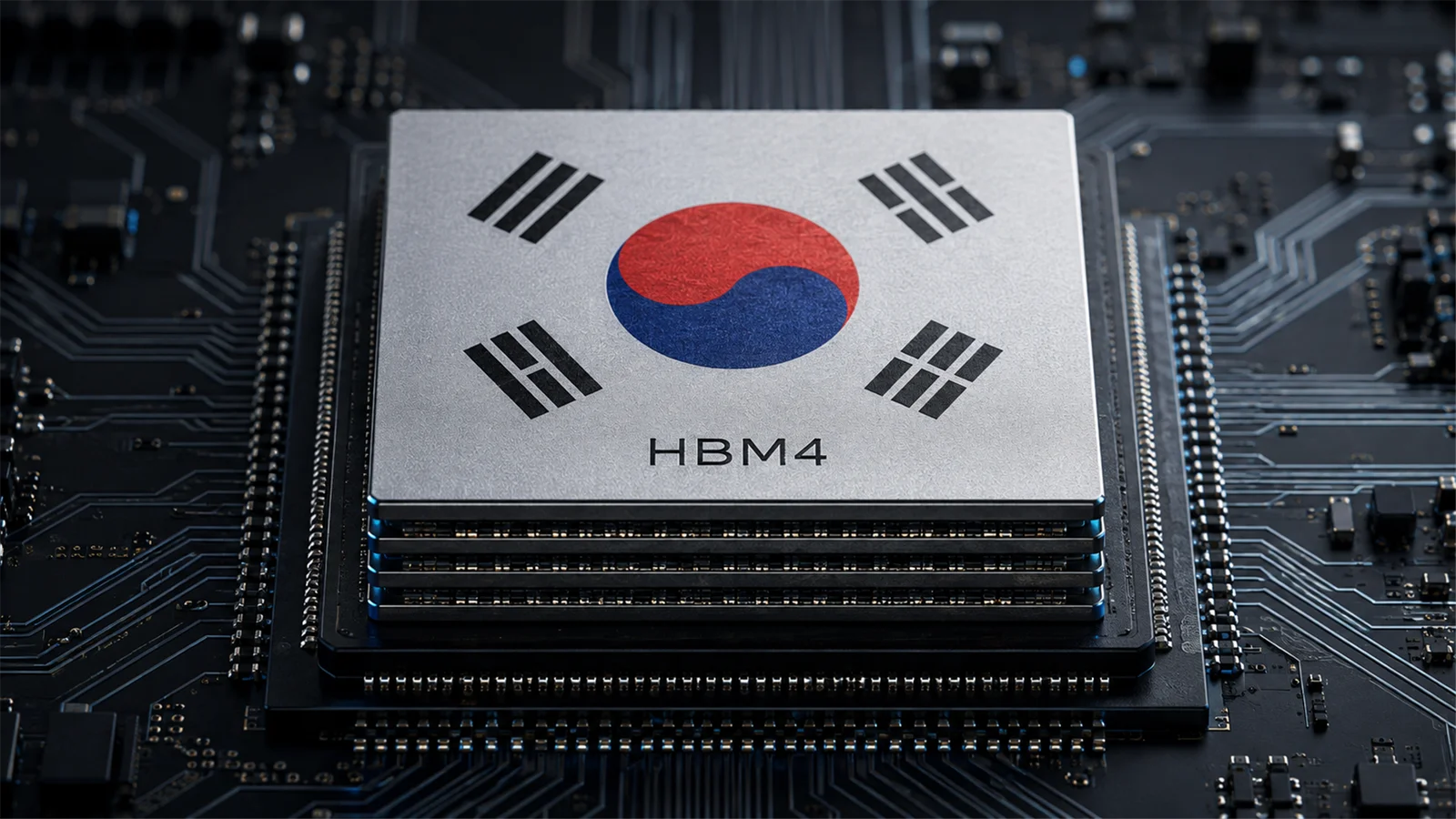
Production constraints are the other part of KB's argument. The newest high-bandwidth memory, HBM4, uses about three times the wafer capacity of ordinary DRAM, KB says, so as the two companies shift production lines to HBM4, the total supply of memory bits grows more slowly.
Kim also put a number on how far the two stocks had fallen. "Over the past three months, Samsung Electronics and SK Hynix shares have dropped 38 percent from their highs and trade at about three times 2027 earnings," Kim wrote, adding that the firm expects "a strong re-rating to begin from an extreme undervaluation." Three times 2027 earnings means share prices about three times KB's forecast of annual earnings per share for 2027. By our arithmetic from Korea Exchange price data, SK Hynix closed Monday 40 percent below its June 25 intraday high of 2,987,000 won ($2,220) and Samsung 28 percent below its June 19 high of 374,500 won ($278). Those figures do not reproduce Kim's 38 percent, and Munhwa Ilbo's account does not give the dates or prices KB used.
Advertisement
Who was buying
Foreign investors bought a net 2.587 trillion won ($1.92B) of Kospi shares on Monday and institutions a net 2.633 trillion won ($1.96B), Herald Economy reported, citing Korea Exchange data. Other corporations, a category that includes companies trading their own accounts, bought a net 1.635 trillion won ($1.22B). Individual investors sold a net 6.821 trillion won ($5.07B), their largest day of selling since July 31, when they sold 8.284 trillion won ($6.15B). Through most of the summer, foreigners bought and locals sold into the rebound. Monday again saw foreign investors buying while individuals sold.
The index is still well below where it was in June. The Kospi's record close was 9,114.55 on June 22, and Monday's close is 23 percent under it, by our arithmetic. For the year the index is up 66 percent from its 2025 close of 4,214.17. The won closed at 1,345.90 to the dollar, 3.60 won stronger on the day, according to Naver Finance data.
What comes next
KB's inventory figure is a brokerage estimate, not a company disclosure, and neither Samsung nor SK Hynix has published a days-of-inventory number for the third quarter. Third-quarter results in late October could provide more evidence on inventory levels, though balance-sheet figures alone may not confirm KB's estimate of fewer than 10 days. Monday's close left the Kospi just 4.61 points below 7,000.
Kim Dong-won's comments are translated from Korean. Won figures are converted at 1,345.90 won to the dollar, the Seoul close on September 7.
Advertisement