Key points
- NeoVolta (NEOV) closed up 26.9% at $4.24 on 6.7 times its normal volume after announcing a five-year battery deal with SK On.
- In the cell agreement SK On is the seller and NeoVolta is the buyer. Korean media value it near $1.09 billion, which is money NeoVolta would spend.
- Neither company disclosed any dollar figure. NeoVolta did $13.3 million of revenue in the nine months to March 31 and has 17 employees.
NeoVolta (NEOV) closed Monday at $4.24, up 26.9%, on 10.2 million shares against a 30-day average of 1.5 million. The news was a five-year agreement with SK On, the battery arm of Korea's SK Innovation, and the Korean press has been putting a number on it: about 1.5 trillion won, roughly $1.09 billion.
NeoVolta's entire market value is $250 million.
That comparison is going to get made a lot this week, and it is backwards.
Who is paying whom
The agreement announced Monday has two legs, and the big number belongs to the first one.
In that first leg, "SK On [will] supply 9 gigawatt-hours of U.S.-manufactured lithium iron phosphate battery cells to NeoVolta Power from 2027 through 2031." SK On sells. NeoVolta buys. The 1.5 trillion won that Korean outlets have attached to this is an estimate of SK On's revenue from selling those cells, which makes it NeoVolta's cost, not its windfall.
The second leg runs the other direction. NeoVolta will "produce energy storage packs for purchase by SK On" over the same 2027 to 2031 window, and there the money flows toward NeoVolta. No value has been put on that leg by anyone.
Worth stating plainly: neither company disclosed a dollar figure for any part of this. The $1.09 billion is a Korean industry estimate of the cell contract, reported by the Korean press and picked up from there. It is not in the press release and it is not NeoVolta's revenue.
Why the stock still went up
None of that makes the deal bad for NeoVolta, and the 27% is not irrational.
American storage buyers are under growing pressure to source domestically, and cells are the part of a battery system hardest to source that way. Locking in nine gigawatt-hours of US-made LFP cells, built at SK On's Georgia plant, is a supply guarantee that most companies NeoVolta's size cannot get. It also comes with a customer attached, since SK On has agreed to buy packs back.
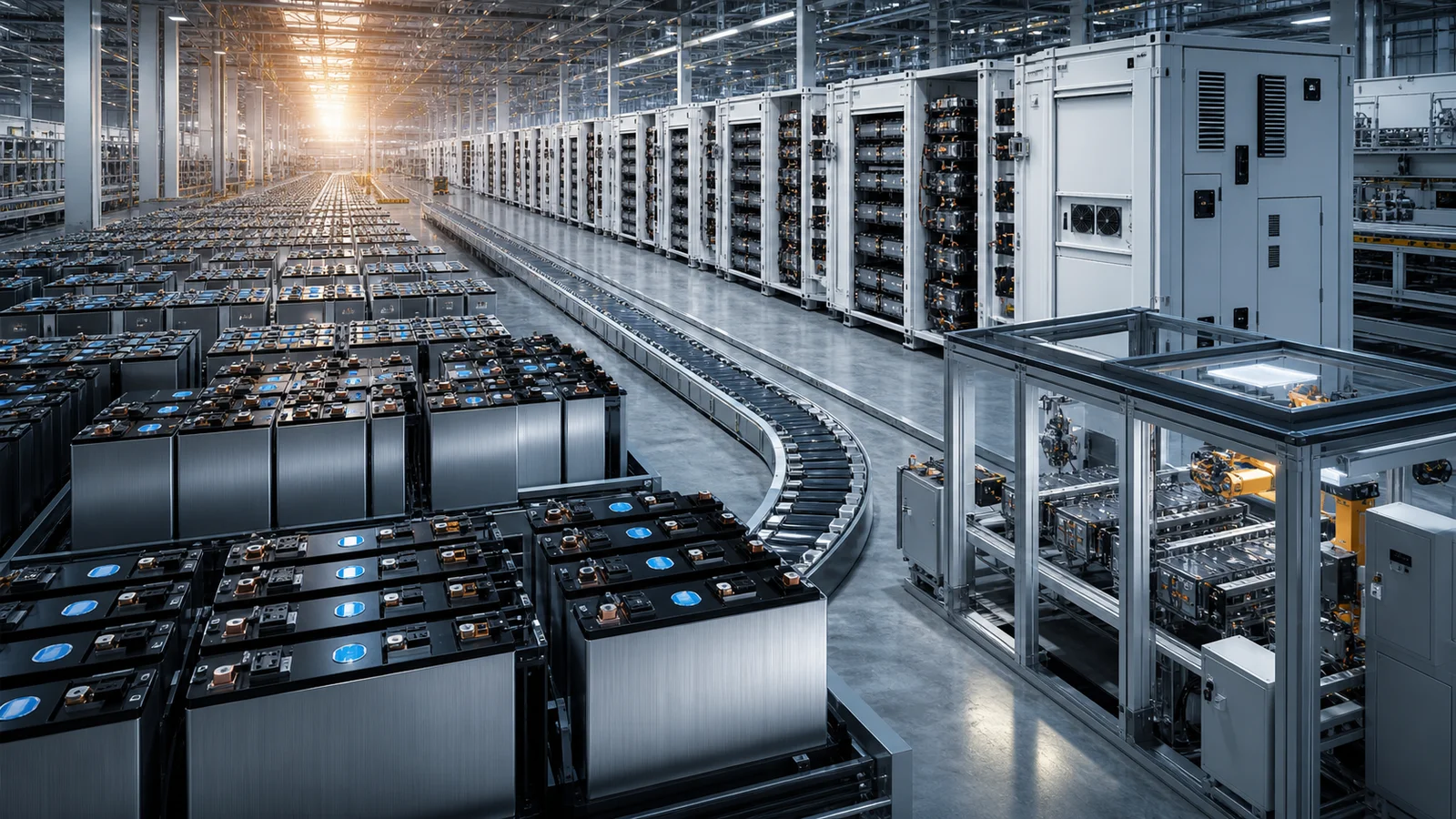
NeoVolta says it is targeting up to 8 GWh of annual pack production by 2028 at Pendergrass, Georgia, expanding to two lines.
CEO Ardes Johnson called the deal "an important milestone in NeoVolta's expansion into large-scale energy storage and the continued buildout of our U.S. manufacturing platform." Daejin Choi, who heads SK On's storage business, said it "brings together SK On's U.S.-made LFP battery technology with NeoVolta Power's growing energy storage manufacturing capabilities."
The part that decides whether it works
Here is the gap you have to look at. NeoVolta booked $13.3 million of revenue in the nine months through March 31, 2026, and about $2 million in its third fiscal quarter. The unprofitable company has 17 employees. In January, it raised $10 million by issuing shares at $4.76 each, a price still above the stock even after Monday's gain.
Now put a commitment to buy an estimated billion dollars of battery cells next to that, starting in 2027.
Spread evenly, an estimated $1.09 billion of cells over five years is about $218 million a year. NeoVolta's revenue currently annualizes near $18 million. The company has to build two production lines, absorb cell purchases running roughly 12 times its present revenue, and find enough buyers for finished storage systems to take nine gigawatt-hours of batteries. Any of those could work out. None of them is done, and the first delivery is more than a year away.
That makes this an execution story rather than a demand story. Demand for grid and data-center storage is not currently in question. The unanswered issue is whether a 17-person business can turn this supply agreement into a manufacturing operation of the required size.
NeoVolta has traded between $1.36 in May and $7.13 in January. Deliveries are scheduled to begin in 2027.