Trump expected to name intelligence chief Jay Clayton as AI czar

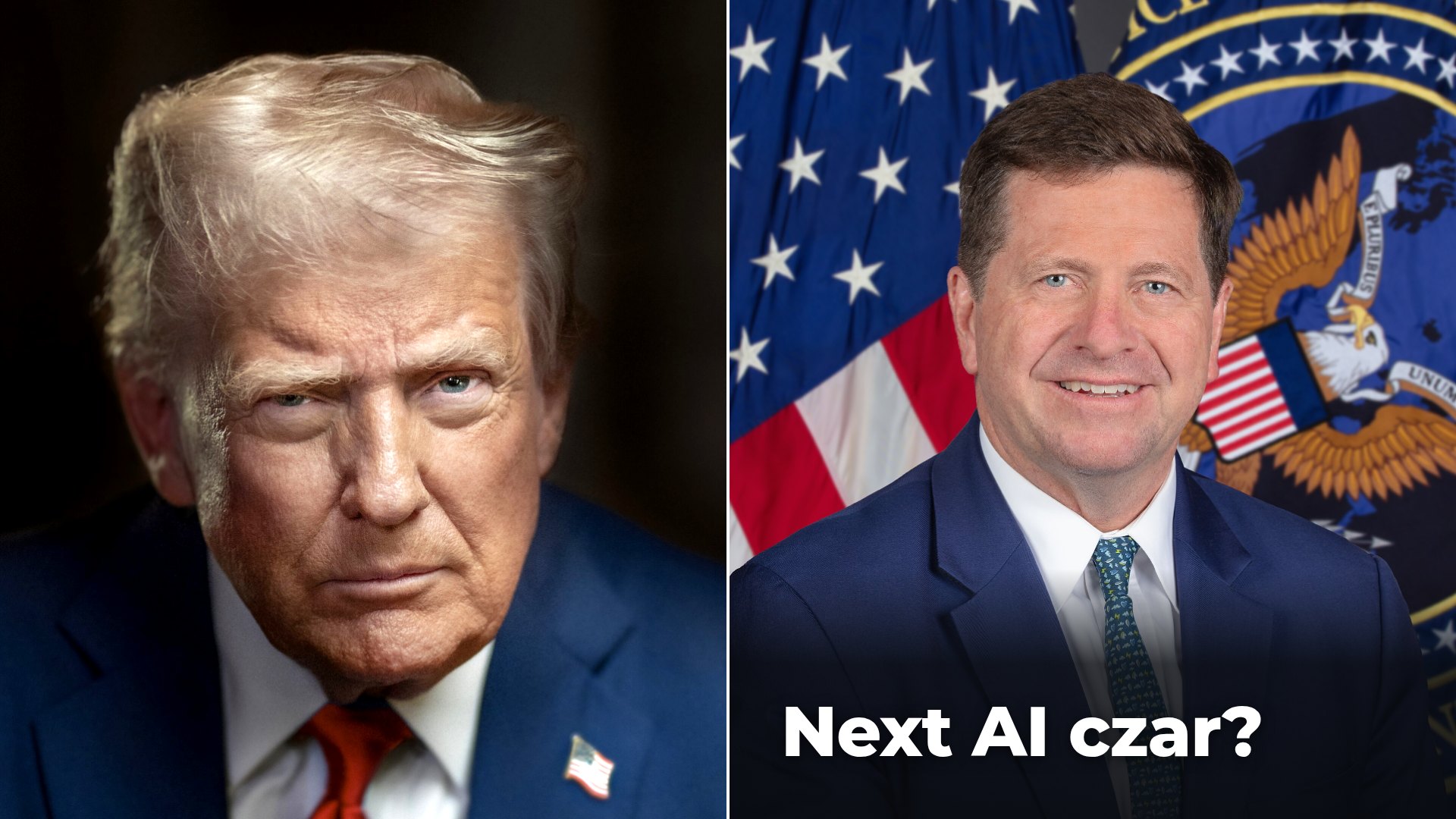
President Donald Trump, left, and Director of National Intelligence Jay Clayton, right, with the text Next AI czar?

Left: President Donald Trump's official 2025 portrait (Daniel Torok/White House). Right: Jay Clayton's official 2026 portrait (Office of the Director of National Intelligence). Both public domain.

Key points

  • Trump is expected to name Jay Clayton AI czar
  • Clayton is expected to keep his intelligence role
  • The White House calls the reports speculation

President Donald Trump is expected to name Director of National Intelligence Jay Clayton as the White House's AI czar, according to Reuters. CBS News first reported the likely choice on Oct. 1. Clayton is expected to retain his intelligence role.

The White House hasn't confirmed the choice. "Any personnel announcement will be announced directly by the President. Any reporting until then is baseless speculation," a White House official said.

Trump said last month that he would name an AI czar, writing on social media, "Only High I.Q. individuals need apply!" After meeting AI executives at the White House on Sept. 29, he told reporters he planned to name one within three or four days. "We have somebody that's extraordinary," he said.

Clayton ran the SEC in Trump's first term

The Senate confirmed Clayton as director of national intelligence in July. A lawyer, he previously served as the top federal prosecutor in Manhattan and led the Securities and Exchange Commission for most of Trump's first term.

He would be Trump's second AI czar. Venture capitalist David Sacks was named crypto and AI czar early in Trump's second term. Sacks stepped down earlier this year but still co-chairs the President's Council of Advisors on Science and Technology.

The reports follow a voluntary AI safety accord

At that meeting, six AI companies, including Alphabet (GOOGL), Meta (META), Nvidia (NVDA), OpenAI and Anthropic, signed a voluntary safety accord that Trump called "morally binding". The agreement includes no stated consequences for a company that doesn't comply. Separately, the Federal Trade Commission has opened an investigation into Anthropic, OpenAI and other AI developers.

Trump is skeptical of tighter AI regulation and has argued that a slowdown could give Chinese AI labs an edge. He said last month that he would also create an "AI force," but gave no details about either initiative.
Frequently asked questions

Who is Trump expected to name as AI czar?

President Donald Trump is expected to name Director of National Intelligence Jay Clayton as the White House's AI czar, Reuters reported on October 2, 2026. CBS News first reported on October 1 that Clayton was the likely pick. As of October 3, the White House had not announced it.

Would Jay Clayton stay director of national intelligence?

He is expected to, according to Reuters, which reported that Clayton is expected to keep his role overseeing the 18 US intelligence agencies.

What did the White House say about the reports?

A White House official said: "Any personnel announcement will be announced directly by the President. Any reporting until then is baseless speculation."

Who was Trump's previous AI czar?

Venture capitalist David Sacks was named crypto and AI czar early in Trump's second term. He stepped down earlier in 2026 but continued to co-chair the President's Council of Advisors on Science and Technology, according to CBS News.

What did Jay Clayton do before becoming director of national intelligence?

Clayton, a lawyer, served as the top federal prosecutor in Manhattan and led the Securities and Exchange Commission for most of Trump's first term. The Senate confirmed him as director of national intelligence in July 2026.

More on NVDA and GOOGL

Dennis Singleton
Dennis Singleton

Dennis Singleton was born in Australia and later moved to the United States. He has spent years following the markets, but what keeps his attention is how AI is built. He writes about the companies behind the technology, from semiconductor designers and advanced packaging to photonics, memory, networking, and the hardware powering modern AI. His approach starts with filings, earnings, and industry research, then translates the important details into clear, straightforward analysis without unnecessary hype.