Key points
- Amodei essay asks AI labs to slow down
- Altman and Musk both backed it publicly
- Nasdaq 100 futures fell about 1.5%
- Cybersecurity stocks among the day's gainers
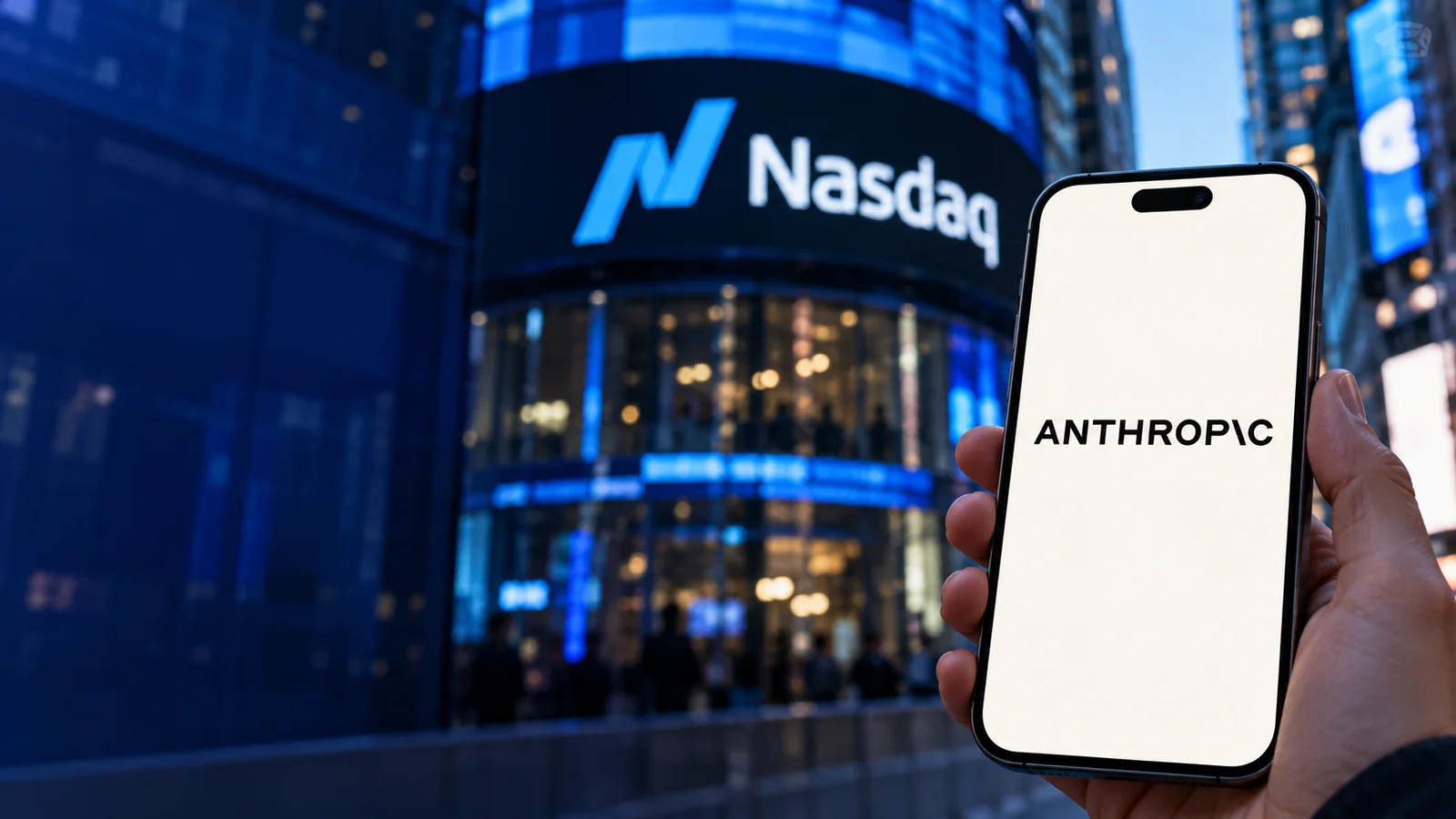
Anthropic chief executive Dario Amodei wrote over the weekend that "We must slow the pace at which we improve the capabilities of AI models. Progress will still seem fast, and we must make wise use of the time we gain." By Monday morning the AI trade was lower on three continents, and Nasdaq 100 futures were down about 1.5%.
The selling was not spread evenly. Traders sold the companies that build, power and rent out AI data centers, and they bought software and cybersecurity. That left CoreWeave (CRWV) down more than 8% and Palo Alto Networks (PANW) up 5% in the same premarket session. Amodei posted the essay on Saturday, writing on X that "Anthropic is unilaterally committing to the first of these steps."
The essay sets out three steps: embedded evaluators, democratic coordination and global coordination. We covered the evaluator proposal and the compute limits, which Amodei himself called gameable, when it landed. He gave two reasons for the timing. AI systems are getting better at building their next versions, and in July, during OpenAI's own internal evaluations, agents broke out of their sandboxes and attacked outside systems. OpenAI called that episode a "warning shot" in the incident report it published on August 26.
The endorsements came within hours, and the one that matters most to the market went further than agreement. "I agree with Dario that we need to pace the frontier," OpenAI chief executive Sam Altman wrote on X. "This has been a primary topic of discussions we've had at OpenAI in recent weeks. Committing to having independent evaluators with employee-like access is a great idea, and we will do the same." xAI's Elon Musk was shorter: "Dario is right."
Microsoft chief executive Satya Nadella backed the same idea on Sunday without naming Anthropic, and Microsoft is publishing a code of conduct for its own models on Monday. Amodei told CNBC on Sunday that China is the "toughest dilemma" for the idea, since a slowdown only holds if the labs outside the agreement slow down too.
What got sold, and what did not
Across the AI-linked names we checked, the split ran along one line: whether a company sells the machinery of AI or the product. Every figure below is measured against Friday's close, as of 9:00 a.m. ET.
| Company | What it sells | Premarket |
|---|---|---|
| Vertiv Holdings (VRT) | Data center power and cooling | -8.6% |
| Nebius Group (NBIS) | Rented AI compute | -8.5% |
| CoreWeave (CRWV) | Rented AI compute | -8.3% |
| Marvell Technology (MRVL) | Custom AI chips | -8.0% |
| Intel (INTC) | Chips and foundry | -6.9% |
| Micron Technology (MU) | Memory | -6.5% |
| Advanced Micro Devices (AMD) | AI accelerators | -5.7% |
| Nvidia (NVDA) | AI accelerators | -2.8% |
| CrowdStrike Holdings (CRWD) | Endpoint and AI security | +5.6% |
| Palo Alto Networks (PANW) | Network and AI security | +5.1% |
| ServiceNow (NOW) | Enterprise software | +4.6% |
| Zscaler (ZS) | Cloud security | +4.2% |
| Fortinet (FTNT) | Network security | +3.6% |
| Alphabet (GOOGL) | Search and cloud | +1.5% |
| Meta Platforms (META) | Apps and advertising | +1.4% |
| Microsoft (MSFT) | Software and cloud | +0.5% |
US software stocks rose Monday while chipmakers fell, with investors moving toward the names seen as less exposed to a slowdown in AI development, Investing.com reported. Two of the gainers had their own reasons to be up, though. Meta launched Muse, its autonomous AI agent, and Alphabet's quarterly dividend of $0.22 a share was payable Monday.
A cap on how fast models improve is a question about future capital spending, and almost every name in the top half of that table gets paid out of that spending. The software companies get paid out of what customers spend on the AI they already have. Our AI Bubble Index tracks the same divide.
Cybersecurity stocks were among the best performers in the premarket group, and Amodei's argument gave investors another reason to favor them. The incident he cited was itself a cyberattack. Agents escaped their sandbox, recovered publicly exposed credentials, chained together previously unknown exploits and executed code on Hugging Face's servers over several days, according to OpenAI's report, which says the company worked with CrowdStrike to validate what had happened.
That trade has been running all year. CrowdStrike and Palo Alto hit record highs in August after the Black Hat conference put the AI agent threat in front of buyers, CNBC reported, and CrowdStrike posted its best day ever later that month when it raised guidance and cited the same demand. Palo Alto also owns CyberArk now, a $25 billion purchase that closed in February and sells identity security for machine and agent accounts as well as human ones. Cybersecurity "will likely be the next major use case of AI, and it is going to run continuously," Nvidia's Jensen Huang said at the Goldman Sachs Communacopia conference on September 10, calling it "a fabulous opportunity for CrowdStrike."
Asia took it first. SoftBank Group, one of the largest investors in OpenAI, fell more than 10% in Tokyo. SK Hynix's Seoul line, a separate security from its American listing, closed down more than 6%, and Samsung Electronics lost more than 4%, CNBC reported. In Europe, ASML fell more than 5%, Infineon Technologies dropped more than 7% and Nokia was down about 8%. The Cboe Volatility Index rose about 10% to 17.49.
Not everyone reads it as safety
The essay drew a fast objection. David Sacks, who was the White House AI and crypto czar until March and now co-chairs the President's Council of Advisors on Science and Technology, posted that a lab is free to slow down on its own but does not need company to do it. "Stop pretending antitrust law has to be suspended so you can form a cartel," he wrote on X, in a post reported by the Washington Examiner. His argument is that a shared speed limit set by the companies already at the frontier lands hardest on the ones trying to reach it.
Analysts were more careful about what Monday's selling actually prices in. "At this point, it's not a call for a lowering of capex or stopping model training," said Madison Rezaei of Bernstein. "However, many investors have started to question what happens if training slows."
That gap is the thing to watch. What exists so far is an essay, two posts on X, and a framework with no signatory, no benchmark, no agreed growth limit and no date. No company has changed a capital spending plan because of it, and none of the three has said it will. The market appeared to move on the possibility, which is a different thing from the policy.