Key points
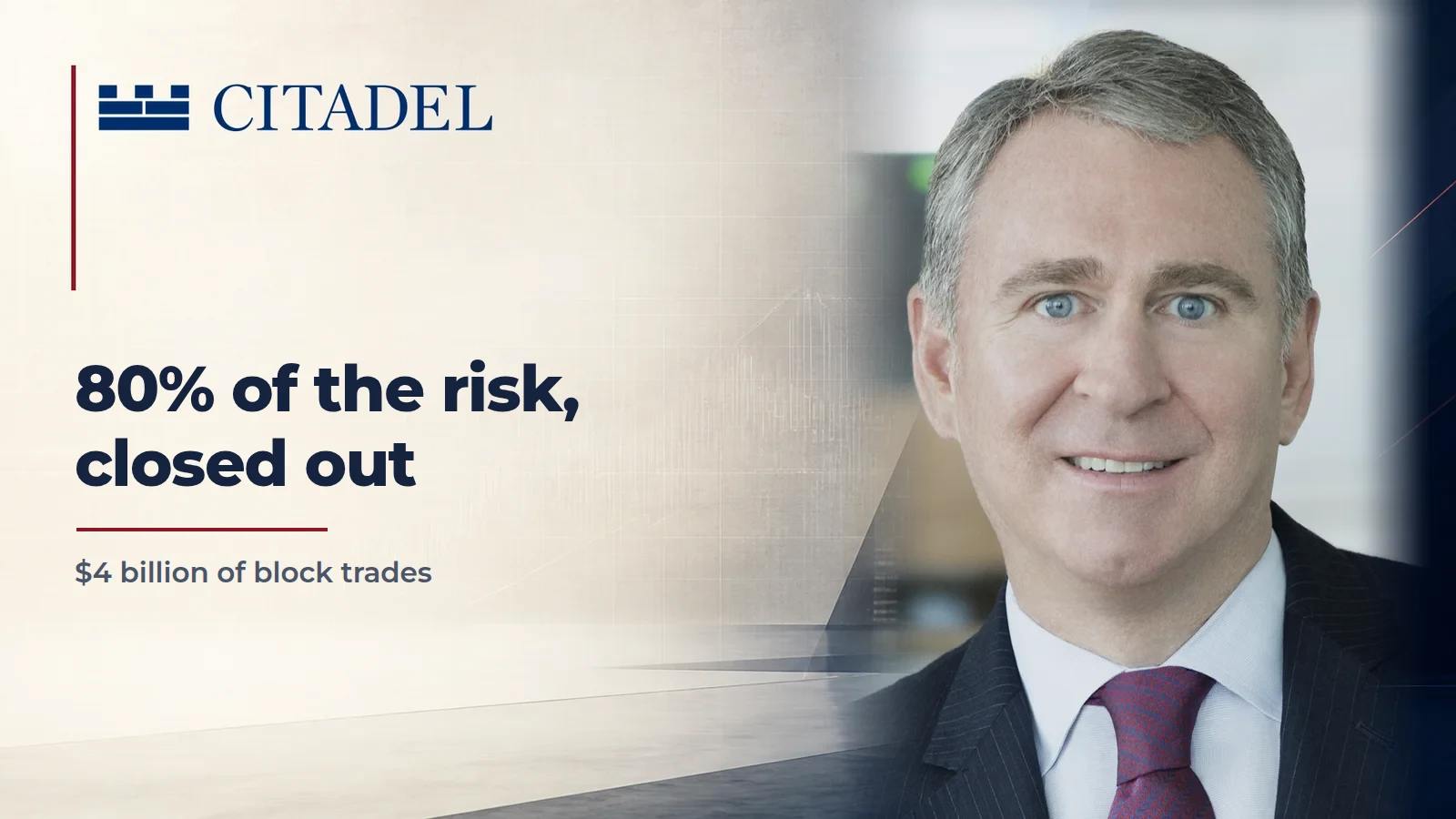
- Ken Griffin told Citadel clients on Friday that the firm has closed out more than 80% of the aggregate risk in the portfolio it bought from Leopold Aschenbrenner's Situational Awareness.
- It took more than 100 block trades covering over $4 billion of market value, according to the letter obtained by CNBC.
- Aggregate risk and market value are different measurements, so the 80% figure does not say how much of the book Citadel still holds.
- Griffin confirmed Citadel's flagship Wellington fund returned 5.94% in July, its best month since 2022. SanDisk (SNDK) has risen about 58% since the day the talks began.
Ken Griffin broke three weeks of silence on Friday. Citadel has closed out more than 80 percent of the aggregate risk in the portfolio it bought from Leopold Aschenbrenner's Situational Awareness, he told clients in a letter, and getting there took more than 100 block trades, covering over $4 billion of market value. The letter was obtained by CNBC's Sara Eisen.
The firm had stayed quiet through everything that came before it. A Citadel representative declined to comment on July 30, when Bloomberg and Reuters first named it as the buyer of Aschenbrenner's book, and the weeks since have run on other people's guesses about what Citadel did with what it bought. Griffin's letter also dates the start of the trade. Citadel opened discussions on July 29, one day before David Faber reported that the fund was being forced out of its public stock positions.
"A transaction of this magnitude could not have been completed without the extraordinary cooperation of the trading and prime brokerage teams at the banks serving both firms," Griffin wrote. "I am grateful for the focused effort they brought to the rapid transfer of the portfolio."
Why $4 billion can retire the risk in a $16 billion book
CNBC puts the book Aschenbrenner was forced to sell at about $16 billion. The fund's own June 30 filing listed $20.24 billion of US stocks. Set either one against the $4 billion Citadel says it traded and the arithmetic looks strange, at least until you know what a trading desk counts when it's counting risk. Risk here means exposure after the long positions and the short ones have been set against each other, weighted by how far each one can realistically move. Situational Awareness held chip and power stocks, and bet against software companies at the same time. That's why Adobe (ADBE) rising and SanDisk (SNDK) falling in the same weeks hurt the fund twice over. Market value adds up every leg on the page. Risk measures what survives once the legs cancel.
Citadel's own filings fill in the rest. When we put its June 30 holdings next to Aschenbrenner's, the firm was already reporting $11.7 billion of SanDisk puts against $10.3 billion of SanDisk calls, a month before the block sale. Those lines belong to Griffin's market-making arm, and they're inventory in a stock the firm makes a market in. A desk that already stands on both sides of a name can absorb an enormous block and finish the day with modest new exposure. That's a large part of how one firm swallowed the whole portfolio in an afternoon.
So the 80 percent is a real number about a real thing, and it's narrower than it sounds. It describes how much of the risk has been retired. The market value of what Citadel still owns is a separate question, and the letter leaves that one alone.
The rescue has paid so far
Griffin used the letter to confirm that Wellington, Citadel's flagship multistrategy fund, returned 5.94 percent in July. That's its best month since 2022. CNBC reported earlier in August that the tactical trading fund gained 11.1 percent and the equities fund 14.2 percent. Both were the strongest single months those two funds have ever had. As of July 1, Citadel ran about $71 billion.
The timing of that phone call explains most of what followed. July 29, the day Citadel opened talks, turned out to be at or near the low for almost everything he'd owned.
| Stock | July 29 close | Aug. 20 close | Change |
|---|---|---|---|
| SanDisk (SNDK) | $1,015.89 | $1,600.62 | +57.6% |
| Nebius (NBIS) | $148.22 | $220.11 | +48.5% |
| Micron (MU) | $739.00 | $974.33 | +31.8% |
| Bloom Energy (BE) | $163.75 | $202.48 | +23.7% |
Regular-session closes. July 29, 2026 is the day Griffin says Citadel entered discussions with Situational Awareness.
Those gains belong to whoever held the shares through August, and Griffin has just told his clients that Citadel spent the month handing most of them along to somebody else. Selling into a recovery is how a desk turns a distressed purchase into a realized gain, so a rising tape and a shrinking position sit together comfortably. What the letter withholds is which names went out, and at what price.
Every block Citadel traded here cleared after June 30, which puts all of it beyond the filing Citadel made last week. The next quarterly report covers Sept. 30 and lands in mid-November. By then, going by Griffin's own letter, four fifths of the risk will have been gone for months, so the stakes that do appear are the ones Citadel chose to keep. Aschenbrenner's side of it is further along in the public record. His fund reported a $20.24 billion US portfolio on June 30, with SanDisk and Micron making up 55 percent of it, and we're tracking each new filing as it posts on the Situational Awareness fund page.