Key points
- The old reputation is real but dated. Before the 2012 STOCK Act, one study found senators' stock picks beat the market by roughly 10% a year. That edge has mostly vanished in the data since.
- As a group, Congress still looks good lately. In 2024, Democrats' trades returned about 31% and Republicans about 26%, versus 24.9% for the S&P 500. Most of that came from owning a lot of Big Tech.
- It is a top-half story. Of the roughly 100 active traders, only about half actually beat the S&P in 2024.
- Copying them is harder than it sounds. Trades show up as much as 45 days late, and the copycat ETF NANC returned 18.5% in 2025, barely ahead of the S&P's 17.9%.
Every few months a headline goes viral: some member of Congress beat the market again, and the rest of us are chumps. I love digging into these filings, so let me tell you what they actually show once you get past the headline. The short version is that the answer changed in 2012, and the reason Congress looks good today is not the reason you probably think.
Where the reputation came from
Start with the study that lit the fuse. In 2004, a group of researchers led by Alan Ziobrowski looked at U.S. senators' stock trades from the 1990s. They found that a portfolio copying senators' purchases beat the market by about a percentage point a month. Compounded, that is roughly 10 to 12 percent a year of extra return. A follow-up on the House found a smaller edge, around 6 percent a year.
Those are huge numbers, and they are why "politicians beat the market" became common knowledge. But notice the dates. All of that trading happened before there were any real disclosure rules. Back then nobody was checking, and the reports were not even audited.
Then the STOCK Act changed the game
In 2012, Congress passed the STOCK Act. The name stands for Stop Trading on Congressional Knowledge. It does two simple things. It bars members from trading on nonpublic information they pick up through the job, and it forces them to publicly report each trade within 45 days. Before this law, a lot of congressional trading happened in the dark.
Here is the interesting part. Once the trades had to see daylight, the edge faded. Several later studies found that, on average, members would have done just as well or better in a plain index fund. One well-known paper was even titled "Senators as feckless as the rest of us at stock picking." So the secret-sauce version of this story mostly died in 2012. If you want to watch the trades yourself, I wrote a guide to tracking Congress and the president that walks through where to find them.
So why does Congress still beat the market?
Because as a group, it recently has. The firm Unusual Whales runs the numbers every year, and 2024 was a good one. Democrats' trades returned about 31 percent and Republicans about 26 percent. The S&P 500 returned 24.9 percent. So both sides beat the index.
But the reason is not spycraft. It is Big Tech. Members of Congress, especially Democrats, hold a lot of Nvidia, Microsoft and the other giants that have led the market for three years straight. Owning those names is what beat the S&P. You did not need a committee seat to do it. You needed to be overweight tech, which millions of ordinary investors also were.
One more number keeps the hype in check. Of the roughly 100 members who trade actively, only about half beat the S&P in 2024. "Congress beats the market" really means a handful of tech-heavy winners pull up the average, while the other half lag. That is a very different story.
The standouts (the names you have heard, and some you have not)
Here are some of the members who posted the biggest gains in the last two annual reports. A quick note on the returns: they come from public filings that report trades in dollar ranges, not exact amounts, so treat the percentages as good estimates rather than audited figures.
| Member | Return | The story |
|---|---|---|
| Rep. David Rouzer (R-NC) | +104% (2024) | The year's top result, mostly from ETFs he bought years ago that are packed with Nvidia |
| Rep. Warren Davidson (R-OH) | +79% (2025) | Led the 2025 report |
| Rep. Donald Norcross (D-NJ) | +71% (2025) | Second in 2025 |
| Paul Pelosi (for Rep. Nancy Pelosi, D-CA) | +71% (2024) | The famous "Pelosi" trades are actually her husband Paul's, disclosed under her name |
| Rep. Terri Sewell (D-AL) | +68% (2025) | Third in 2025 |
| Rep. Dan Crenshaw (R-TX) | +61% (2024) | A big percentage on a fairly small portfolio |
| Rep. Nancy Pelosi (D-CA) | +20% (2025) | Beat the S&P again, ranked 28th that year |
| Rep. Marjorie Taylor Greene (R-GA) | +12% (2025) | Trailed the S&P despite hundreds of trades |
The single trade everyone points to is a Pelosi options play. In June 2025, the household exercised 200 Broadcom (AVGO) call options, picking up 20,000 shares at an $80 strike while the stock traded near $250. By late December, Broadcom was above $349. That is the kind of well-timed, leveraged bet that keeps this whole topic in the news.
Then there is the volume crowd. Rep. Ro Khanna (D-CA) is the busiest trader in Congress by a wide margin, with thousands of transactions a year across tech, staples and financials. All that activity does not automatically mean big returns, though. High turnover and heavy diversification tend to pull a portfolio back toward the market average. Rep. Michael McCaul (R-TX) trades huge dollar amounts and co-chairs the Semiconductor Caucus. He helps shape chip policy and also trades chip stocks like Nvidia (NVDA). That kind of overlap is exactly what fuels the calls for a trading ban. Sen. Tommy Tuberville and former Sen. David Perdue have been named in that debate too. Rep. Josh Gottheimer (D-NJ) raised eyebrows with a single day of Microsoft (MSFT) options trades worth tens of millions.
Can you actually copy them?
This is where the dream meets the fine print. The STOCK Act gives members up to 45 days to report a trade. By the time you see it, the stock may have already moved. You are copying a decision that is weeks old.
People have still built products around it. There are two ETFs, NANC for Democratic members and KRUZ for Republican ones, plus apps that track specific portfolios. They work, in the sense that they roughly track the market. In 2025, NANC returned 18.5 percent while the S&P returned 17.9 percent. That is a win, but a small one, and once you adjust for the extra risk it mostly washes out. You are not getting a cheat code. You are getting a tech-tilted index fund with a fun name.
The honest bottom line
The scary version of this story, politicians using secret information to crush the market, was real decades ago and largely ended with the STOCK Act. What is left is more mundane. Congress looks good lately because it owns a lot of Big Tech, only about half of the active traders actually beat the market, and the disclosure lag blunts most of the edge for anyone trying to follow along. It is genuinely fun to watch, which is why I keep reading the filings. It is just not the money machine the headlines make it sound like. None of this is investment advice, and if you want to see the raw trades for yourself, start with the tracking guide or a 13F for the fund side of the same question.
Return figures are estimates from public disclosures compiled by Unusual Whales and reported by Fortune, The Hill and others, as of the 2024 and 2025 annual reports. Prices and figures will change over time. This is educational information, not investment advice.
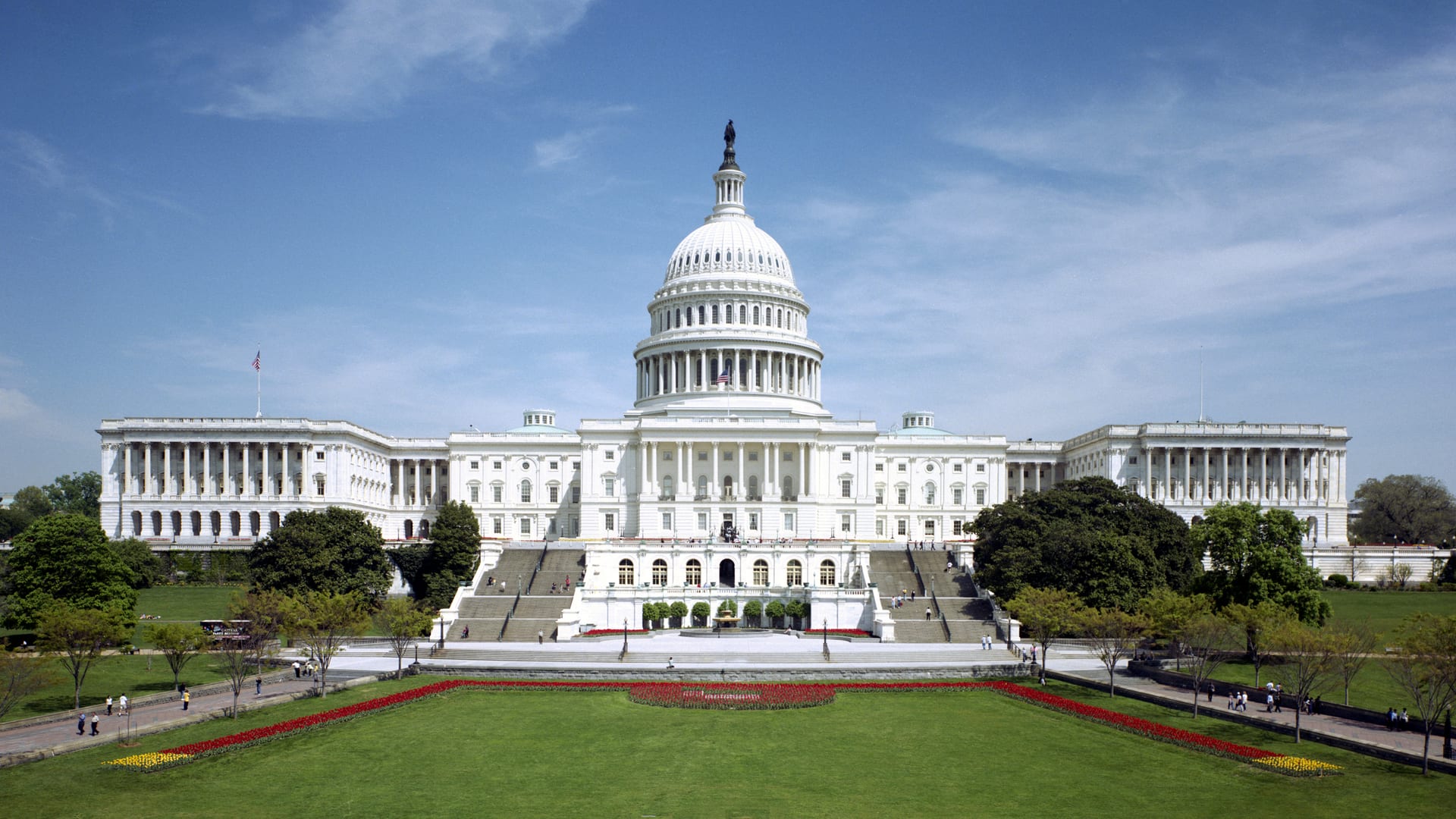
Photo: Architect of the Capitol / Wikimedia Commons, public domain.