Key points
- Huang calls training on a rival's model "competition"
- Washington has threatened sanctions over alleged distillation
- What happened when Anthropic banned accounts
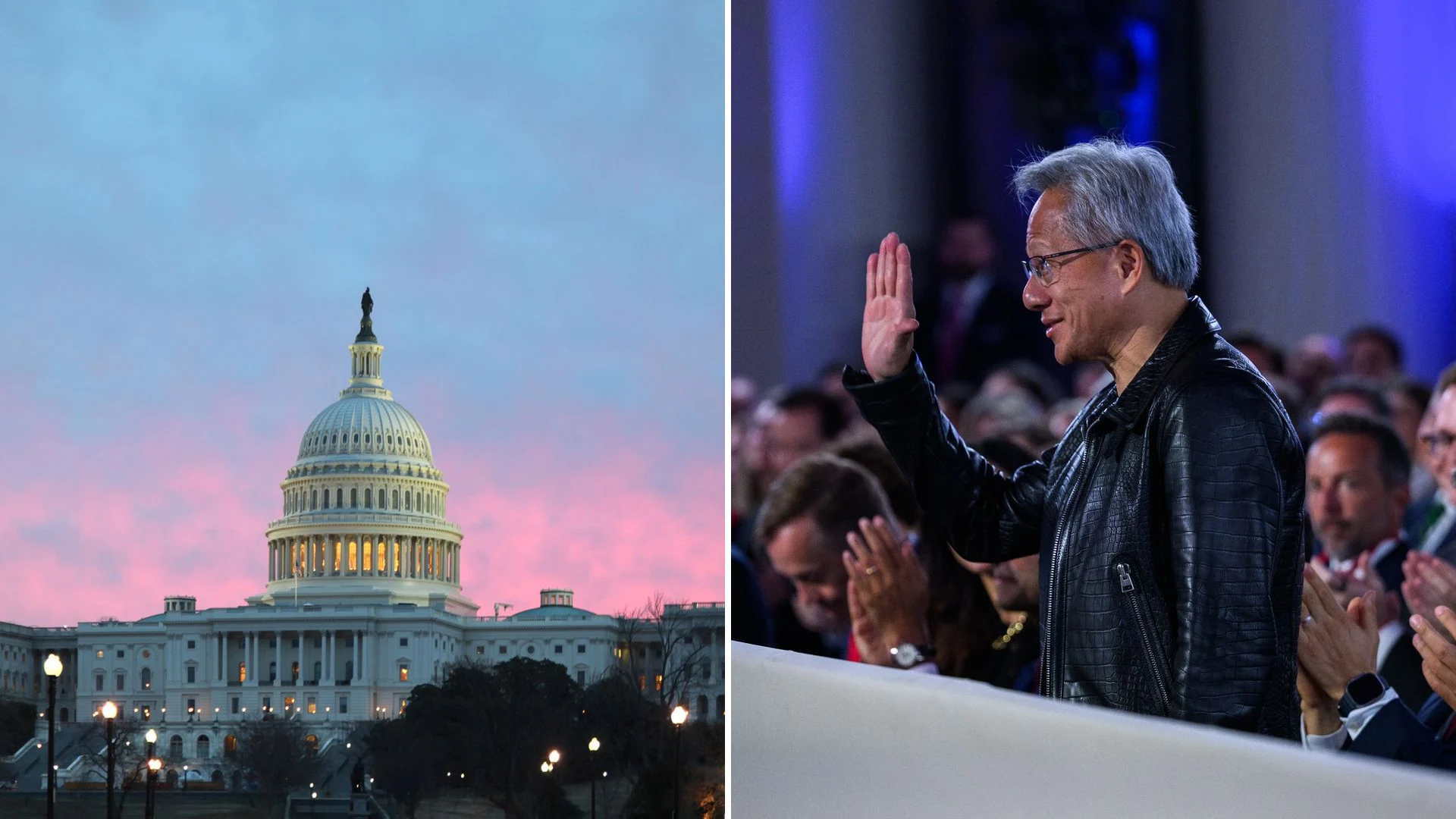
Jensen Huang was asked Monday whether training a model on another model's output is robbery. The Nvidia (NVDA) chief executive answered in three words: "That's called competition."
His answer on CNBC's "Squawk Box" puts him at odds with officials in Washington. Treasury Secretary Scott Bessent called the practice "theft" in July and threatened sanctions against overseas companies extracting capabilities from US-built models, CNBC reported.
Earlier this month, the Cybersecurity and Infrastructure Security Agency accused Chinese AI companies of running "industrial-scale knowledge distillation campaigns" that violated US companies' terms of use. Anthropic has accused Alibaba (BABA) and DeepSeek of "illicit distillation." China has rejected the allegations. The White House didn't immediately respond to CNBC's request for comment.
Distillation is a technique for training one model using another model's outputs. The dispute concerns how those outputs were obtained and whether their use was authorized.
What Huang said
"You're allowed to test somebody else's products all you want," Huang said. Nvidia's products, he added, sometimes get stripped "down to bones" by companies trying to understand how they work.
"I'd really prefer that nobody learns from our products, and we have the benefit of just cruising along," he said. "But, you know, frankly, competition makes everything better."
Huang also offered a remedy for companies that object.
"If you don't like that, if you don't like people to use your products," he said, the answer is to "know your customers, and disable the service."
That leaves enforcement to the model providers, which would have to identify the customers and cut off their access.
What happens after the accounts are banned?
Anthropic has described what happened when it tried that against the campaign it tied to Alibaba. According to its September threat report, the campaign peaked at nearly 3 million exchanges a day, sent from more than 3,500 fraudulent accounts. Anthropic said that after it banned an initial pool of nearly 5,000 accounts, the traffic moved to a second pool.