Key points
- Sen. Jerry Moran (R-KS) disclosed on July 21, 2026 that he bought Berkshire Hathaway Class B stock for $15,001 to $50,000 and Alphabet (GOOGL) stock for $1,001 to $15,000, both on June 23, 2026.
- It's Moran's third disclosed Berkshire Hathaway purchase since May 27 and his largest one so far. Berkshire closed at $492.81 on the June 23 trade date and is trading around $490 now, roughly flat since.
- The Alphabet buy came about four weeks after Moran sold Alphabet stock on May 27 at $388.83. He bought it back June 23 at $346.13, about 11% cheaper. Alphabet is trading around $347.70 Wednesday, hours ahead of its Q2 earnings report.
- Both filings landed inside the STOCK Act's 45-day disclosure window: 29 days for the May trades, 28 days for the June ones.
Sen. Jerry Moran (R-KS), the senior senator from Kansas, filed a periodic transaction report on July 21 showing he bought Berkshire Hathaway stock and Alphabet (GOOGL) stock on the same day, June 23. It's the third time in two months Moran has disclosed buying Berkshire, and the Alphabet purchase is effectively a re-entry: he sold the same stock a month earlier, and bought it back noticeably cheaper.
What the July 21 filing shows
The trade showed up on our Congress trade tracker, which watches around 100 sitting members for new disclosures as they land. Both positions were bought June 23, 2026, and reported in the dollar ranges the STOCK Act requires rather than exact figures.
| Date | Action | Asset | Amount |
|---|---|---|---|
| June 23, 2026 | Bought | Berkshire Hathaway (Class B) | $15,001 to $50,000 |
| June 23, 2026 | Bought | Alphabet (GOOGL) | $1,001 to $15,000 |
The filing itself doesn't print a ticker for the Berkshire line, congressional disclosures often just list the company name. But the dollar range settles which share class it has to be. Berkshire Hathaway's Class A stock (BRK.A) traded above $700,000 a share this year, so a single share alone would blow past the $50,000 top of this range. Class B shares (BRK.B), which closed at $492.81 on June 23, fit comfortably inside it.
Not his first Berkshire buy this year
This is Moran's third disclosed Berkshire purchase since late May, and it's not the only recent trade in these two names. A separate filing, disclosed June 25, shows Moran and his spouse each bought Berkshire on May 27, and Moran sold Alphabet that same day. Here's the fuller picture pulled from our tracker's history for Moran:
| Date | Owner | Action | Asset | Amount |
|---|---|---|---|---|
| May 27, 2026 | Self | Bought | Berkshire Hathaway | $1,001 to $15,000 |
| May 27, 2026 | Spouse | Bought | Berkshire Hathaway | $1,001 to $15,000 |
| May 27, 2026 | Self | Sold | Alphabet (GOOGL) | $1,001 to $15,000 |
| June 23, 2026 | Self | Bought | Alphabet (GOOGL) | $1,001 to $15,000 |
| June 23, 2026 | Self | Bought | Berkshire Hathaway | $15,001 to $50,000 |
Put together, that's three separate Berkshire purchases in about four weeks, each in Moran's own account or his spouse's, with the June 23 buy the largest of the three by dollar range. It's also a sell-then-rebuy on Alphabet inside the same stretch, which is the more unusual piece of this filing.
Buying Alphabet back below where he sold it
Moran sold Alphabet on May 27, 2026, when the stock closed at $388.83. Twenty-seven days later, on June 23, he bought it back at $346.13, about 11% below his exit price. Whether that gap reflects a deliberate buy-the-dip decision or two unrelated trades that happened to land at different points in a volatile stretch isn't something a periodic transaction report can answer, it only shows what happened and when, not why.
Alphabet did fall meaningfully in that window on its own. The stock slid from the high $380s in late May into the mid-$340s by late June, before climbing back toward $370 in mid-July and settling back down again. As of Wednesday, July 22, 2026, Alphabet is trading around $347.70, up less than 1% from where Moran bought it back and essentially flat over the past month. The timing matters here too: Wednesday is also the day Alphabet reports second-quarter earnings, a report already drawing attention after a report that Google is building its own AI chip around its Gemini models sent the stock up earlier this week, and after IBM's own earnings warning put this week's round of Big Tech results under extra scrutiny.
Berkshire is roughly flat since the big buy
The Berkshire side of the filing has been calmer. Shares closed at $479.92 on May 27, when Moran and his spouse each made their first purchase, then climbed to $492.81 by June 23, up about 2.7%, when Moran made his largest purchase yet. Since then, Berkshire has slipped back slightly, closing at $489.65 on July 21 (the day the filing became public) and trading around $490 as of Wednesday, down less than 1% from the June 23 price and still a bit above where the position started in late May.
The purchases also land a few months into a leadership change at the top of the company. Warren Buffett stepped down as Berkshire's chief executive at the end of 2025 after six decades in the role, handing the job to Greg Abel on January 1, 2026, while staying on as chairman. Berkshire's May 2 annual meeting in Omaha was the first with Abel running the company and Buffett watching from the audience rather than the stage. Moran's first Berkshire purchase came about three and a half weeks after that meeting, and the June 23 purchase followed about seven weeks after it.
Filed on time, for once
The STOCK Act gives members of Congress up to 45 days to disclose a trade. Moran's two filings both made that deadline comfortably: the May 27 trades were reported 29 days later, on June 25, and the June 23 trades were reported 28 days later, on July 21. That's a cleaner record than some of the filings we've covered from other members of Congress, where disclosures have landed weeks past the legal window.
What this filing doesn't tell you
A periodic transaction report shows a trade and a dollar range, disclosed weeks after the fact. It doesn't explain intent. Moran sits on the Senate Appropriations Committee, where he chairs the subcommittee that funds the Commerce Department and Justice Department, and on the Commerce, Science and Transportation Committee, along with Agriculture, Indian Affairs, and the Intelligence Committee, and chairs Veterans' Affairs. None of those assignments hands him direct oversight of Berkshire's insurance and railroad businesses or Alphabet's advertising business specifically, though the Justice Department his subcommittee helps fund is the same agency pursuing an antitrust case against Google. Nothing in this filing suggests Moran had access to any non-public information about either company, and members of Congress are barred from trading on material non-public information the same as anyone else. Buying a beaten-down mega-cap tech stock and steadily adding to a stake in the country's best-known conglomerate are both fairly ordinary moves, and they fit what's in this filing just as well as anything else would.
Sources
- Senate periodic transaction report, filed July 21, 2026 (June 23 trades)
- Senate periodic transaction report, filed June 25, 2026 (May 27 trades)
- Our Congress trade tracker, updated as new disclosures land
- Related reading: Should you actually copy stocks bought by hedge funds, Congress, or insiders?
- Related reading: Another senator's June trade: Sheldon Whitehouse sold Apple and Nvidia, bought Coherent and Micron
- Related reading: Google's new AI chip report and Wednesday's earnings
- Price data via Yahoo Finance market data
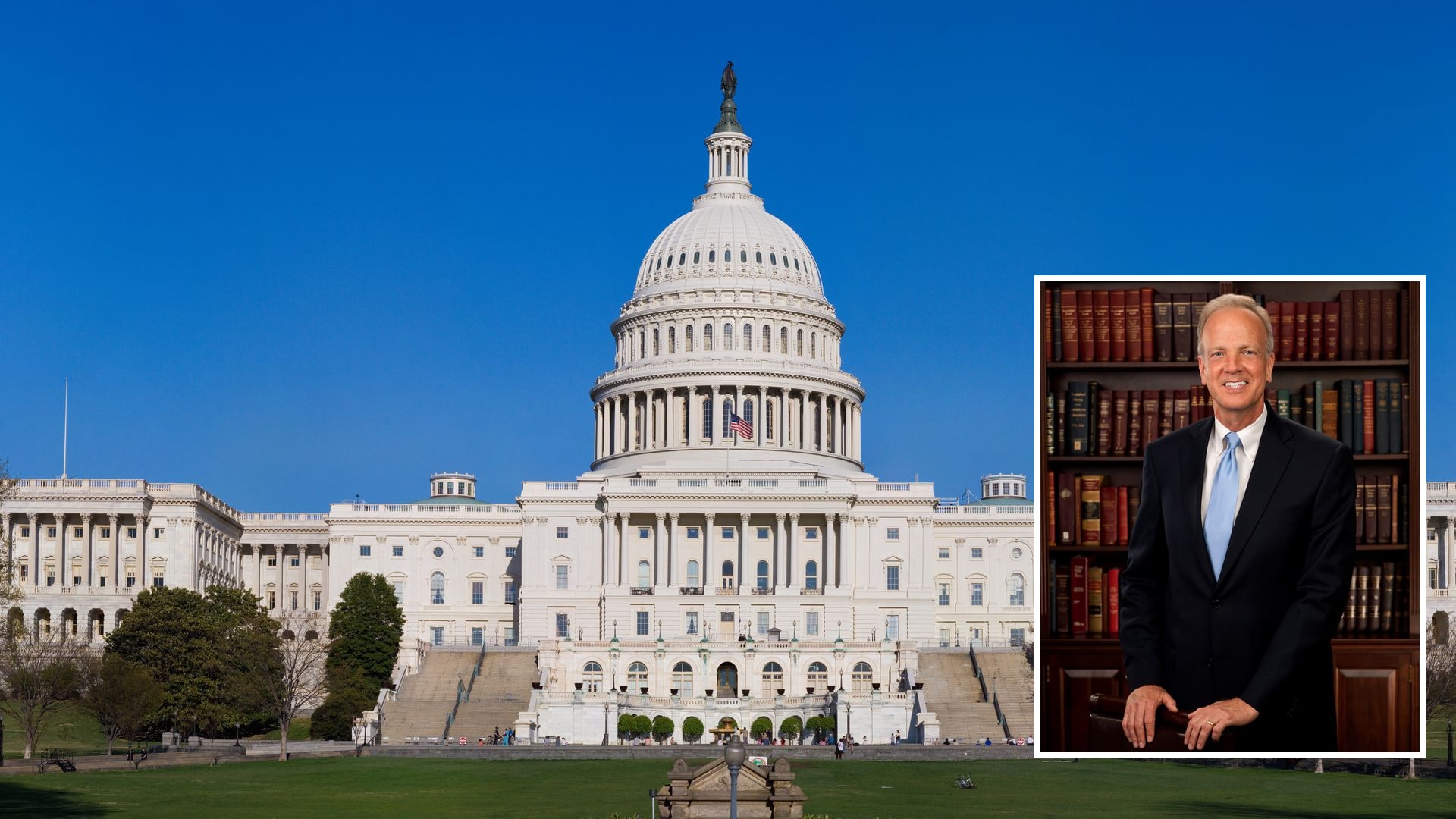
- Cover photo: U.S. Capitol, west front, public domain, via Wikimedia Commons, composited with Moran's official congressional portrait (United States Senate, public domain)
This reflects a public congressional disclosure and price data, not investment advice. Jennifer Song does not hold positions in Berkshire Hathaway or Alphabet. Prices are as of Wednesday afternoon, July 22, 2026, and will move. Always do your own research and consider speaking with a licensed financial professional before making any investment decision.