Key points
- Zuckerberg told Trump in an August call, BI reports
- Argued against a FINRA-style AI regulator
- Treasury-backed plan still under White House review
- Meta (META) up 3.8% on the day, flat on the report
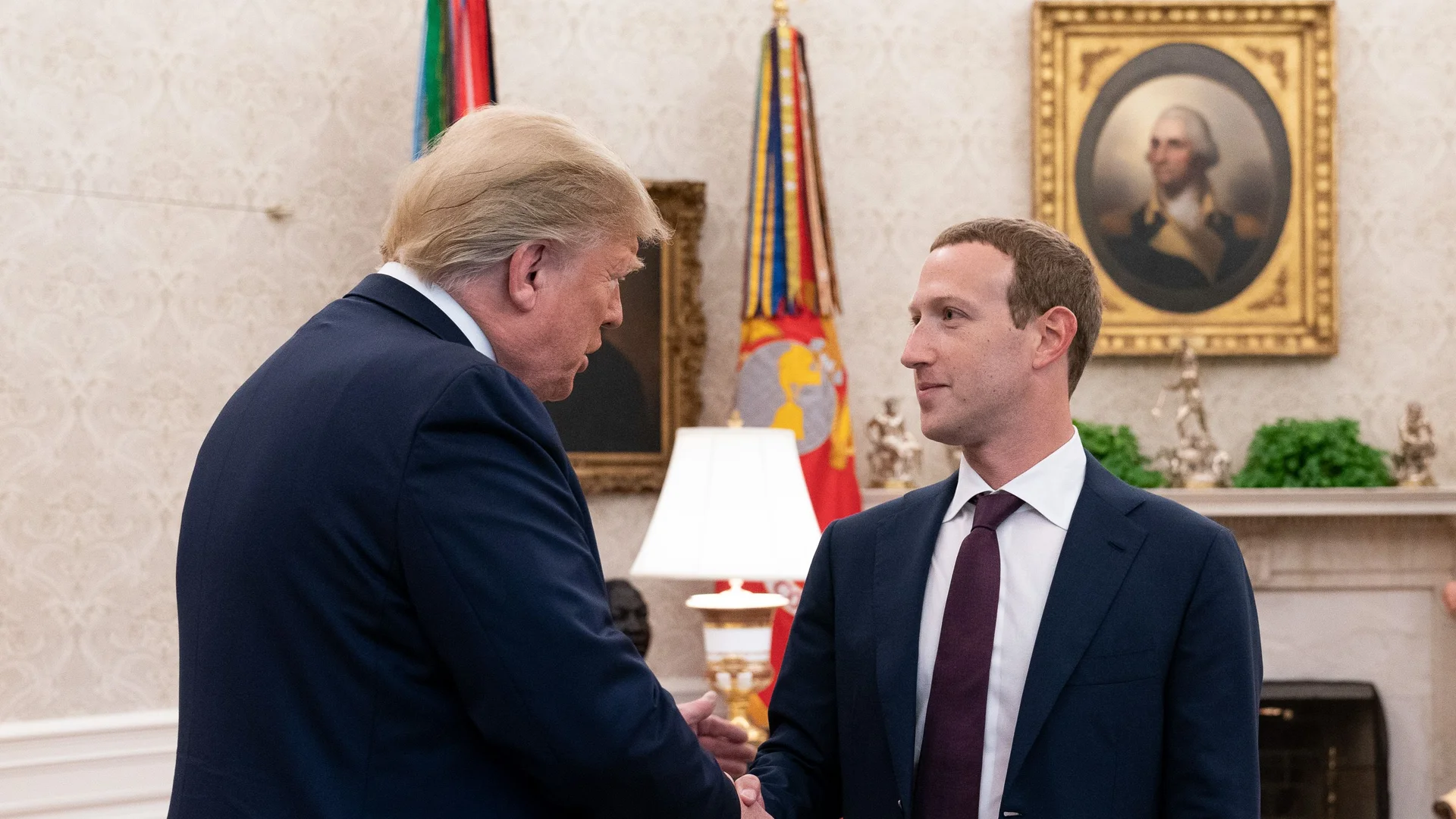
Meta (META) chief executive Mark Zuckerberg told President Trump in a phone call the week of August 17 that he opposed a proposal to create a national AI regulator, Business Insider reported on Thursday, September 3, citing a senior White House official familiar with the conversation. A second person told the outlet that Trump placed the call. Reporters Sophia Cai and Charles Rollet wrote that senior officials had previewed the plan in mid-August with Trump and separately with Meta, OpenAI and Anthropic. A Meta spokesperson declined to provide a statement. A White House spokesperson said the administration "is committed to balancing innovation and security in AI policymaking," and the outlet reported the idea remains under consideration.
What is the regulator he argued against?
A closely related public proposal came from Demis Hassabis, chief executive of Google (GOOGL) DeepMind. On July 14 he published a proposal for a U.S.-led standards body modeled on FINRA, the industry-funded organization that polices brokerages under Securities and Exchange Commission supervision. Frontier labs would at first share models voluntarily up to 30 days before release for testing of cyber, biological and deception capabilities. Once the process proved itself, formalization "could quickly follow," TechCrunch reported, meaning models would need to pass before they could be deployed in the U.S. market.
Three days later, Bloomberg reported that the White House was reviewing a version of the plan developed with Treasury Secretary Scott Bessent, under which the regulator would report to the SEC. Chief of Staff Susie Wiles was reviewing it and Trump had not yet seen it, according to the report. Business Insider says officials are now weighing that FINRA-style regulator against a second option, a voluntary industry group modeled on the Motion Picture Association, which David Sacks proposed on the August 21 episode of his All-In podcast and said had Elon Musk's support.
Sacks, the former White House AI czar who still advises Trump, has called the first option "a DMV for AI" that would "create long queues as AI models wait for testing and approval" and "handicap the U.S. relative to China," as quoted by Fortune.
Has Zuckerberg done this before?
Yes, in May. Trump was set to sign an executive order that would have let AI companies submit models to national security agencies for testing up to 90 days before release. Elon Musk, Zuckerberg and Sacks persuaded the White House to shelve it, Semafor reported on May 21, in what Fortune described as last-minute lobbying. "We're leading China. We're leading everybody, and I don't want to do anything that's going to get in the way of that," Trump said, according to Fortune. The order he signed on June 2 instead set up a voluntary 30-day review.
Fortune also cited a Future of Life Institute poll of Republican voters in which 79 percent favored government safety testing of AI models and 87 percent supported government power to block dangerous releases.
Zuckerberg made the same argument in public before the call. His August 10 letter on AI, "The Future is for Everyone," says "I believe government should update its policies in multiple areas," and also that "any policy that slows American model releases — even by a month — could add significant risk to American leadership while letting foreign models race ahead." Business Insider reported that the month figure was the argument he put to Trump.
What else happened today?
Three things happened within three hours, all times Eastern. At noon, Sen. Bernie Sanders and Rep. Greg Casar announced forthcoming legislation that would create a cabinet-level AI agency and pause advanced development until it writes safety rules. At 2 p.m., OpenAI released GPT-6 Astra. The administration had reviewed it under the June order's voluntary process, chief executive Sam Altman told NBC News, saying the company chose to take part "of course." President Greg Brockman said "there is nothing that they came back with saying that you need to change this in terms of safeguards." At 2:30 p.m., Business Insider published the call.
Meta shipped its own model update, Muse Spark 1.3, the day before. Under the June order, a review is voluntary and a company can skip it.
As of 2:41 p.m. Eastern, Meta was up 3.8 percent on the day and had moved 0.1 percent since the story, and Google was up 1.7 percent on the day and unchanged since. The Nasdaq 100 was up 1.3 percent.
Hassabis told Axios in July that he wanted the body operational before the end of 2026. The White House hasn't said when it'll decide.