AAPL343.24 +0.93%NVDA192.81 -2.13%GOOGL339.58 +1.76%MSFT397.91 +1.16%AMZN231.06 +0.09%TSM383.40 -2.27%AVGO376.97 -1.03%SPCX114.42 -1.71%META593.57 +0.03%TSLA302.29 -1.68%SKHY127.52 -2.04%ASML1,566.83 -1.02%CSCO113.99 -1.38%INTC84.09 -2.56%AMAT450.77 -5.39%ORCL119.26 -0.59%LRCX258.93 -3.96%PLTR125.29 +1.42%PANW315.74 -1.02%ARM232.60 -4.96%DELL376.30 -4.03%GEV907.05 -3.85%KLAC173.86 -8.88%IBM228.72 +0.51%ANET160.39 -5.49%CRWD180.38 -0.78%STX789.36 +5.63%QCOM160.91 -1.21%WDC478.36 +3.20%SNDK1,052.17 -4.01%MRVL169.04 -3.11%UBER71.03 +0.41%ETN363.15 -5.98%APP401.40 -4.02%LMT576.12 -0.89%ISRG354.36 -2.06%NOW116.36 +5.18%FTNT147.01 -1.98%ACN174.94 +6.24%ADBE264.50 +6.15%SNOW289.31 +7.01%EQIX1,014.56 -1.96%TT449.53 -4.36%NET274.12 +3.79%DDOG269.24 +7.32%CDNS343.92 -0.23%CEG259.55 -0.10%INTU335.37 +7.15%VRT223.00 -17.27%HOOD90.09 -2.88%SNPS383.40 -0.11%DLR188.80 -2.27%MPWR1,279.70 -0.18%NXPI245.87 -5.11%HPE45.61 +0.04%TER334.55 +4.33%ROK458.11 -2.77%CARR60.68 -3.93%VST143.66 -3.35%BE169.56 +1.63%CIEN336.47 -4.01%NOK8.52 -4.65%LITE610.14 -6.41%COHR224.11 -7.90%ALAB253.72 -2.50%WDAY170.00 +6.45%CBRS179.20 -7.02%NBIS155.18 -8.55%RKLB60.56 -5.21%CCJ85.07 -2.18%CRWV62.96 -6.45%CRDO180.14 -6.32%ERIC9.91 -0.65%GEHC71.17 +11.01%VRSN293.99 +4.57%GFS48.23 -1.62%ZS154.96 +2.20%SYM40.78 -3.70%OKTA137.50 +0.95%FFIV395.78 -1.90%FSLR202.14 -0.22%TSEM190.76 -6.02%ASTS55.30 -2.21%SOFI15.35 -8.30%SMCI26.75 -5.98%GEN27.91 +1.18%LSCC115.73 -3.61%AKAM109.43 -2.12%TLN319.59 -1.98%FN417.32 -7.20%LDOS115.64 -2.30%NXT93.26 -2.19%CHKP139.89 +1.63%ZBRA284.56 +0.06%FIG25.38 +4.10%DRS46.98 -4.54%IONQ32.85 -3.04%AMKR44.90 -1.73%IREN30.76 -9.36%GSAT79.16 +0.15%VSAT73.15 -1.32%MOD184.68 -11.24%CGNX58.01 -3.89%SAIL16.32 +3.39%KTOS45.32 -6.83%WULF15.74 -7.93%CIFR18.36 -10.11%AVAV146.12 -6.55%PL20.13 -1.42%AGX499.09 -4.52%APLD24.09 -9.50%OKLO38.00 -3.99%S18.62 +1.53%AAOI79.29 -10.05%KRMN47.23 -4.66%QBTS16.71 -5.27%CAMT130.44 -6.87%VRNS41.25 -7.66%IRDM45.05 -0.86%QLYS135.47 -0.21%BB7.94 -1.92%RGTI13.54 -6.75%ONDS7.20 -8.39%FRMI5.99 -4.70%TENB31.94 +1.82%CLSK12.35 -8.38%AMBA71.87 +4.20%FLY18.31 -5.23%NTCT39.08 -1.54%SMR7.80 -5.17%NVTS10.18 +1.65%PLUG1.88 -4.08%UPST27.13 -2.48%SOUN5.87 -6.01%PENG45.80 -4.84%FLNC12.24 -3.05%AEHR66.72 -4.69%OUST32.18 -5.10%ATEN29.41 -6.10%MBLY8.17 -3.08%KEEL3.37 -9.91%ALKT18.37 +1.10%RDW8.04 -6.18%LUNR11.69 -5.50%INOD56.24 -2.30%QUBT7.51 -2.72%FCEL19.24 -2.16%SKYT31.01 -0.55%SHAZ42.88 -4.67%VOYG23.49 -8.42%AI8.95 +0.51%BBAI2.68 -3.08%ABSI6.88 -3.58%EOSE3.20 -4.93%HLIT10.64 -3.80%POET6.66 -1.55%TE3.81 -8.20%RCAT6.93 -6.98%PRCT18.02 -0.33%SBGI14.20 +0.57%RDWR24.09 -14.61%AMRC18.81 -4.35%ASST11.44 -4.55%AEVA14.20 -3.40%CSIQ13.83 +1.28%BKSY21.12 -3.77%UMAC18.06 -9.37%AOSL28.18 -2.32%SIVEF2.80 -12.50%NNE15.12 -5.88%HIVE2.64 -7.04%BOT28.00 -7.77%INDI3.11 -3.27%RPD9.55 -0.68%HYLN3.28 -7.30%ASPI3.67 -2.91%SPIR10.84 -4.66%ELMT12.92 -10.83%EH5.05 -3.63%SERV4.44 -5.64%DGXX3.49 -5.04%TLS4.48 -2.72%SPCE2.51 +0.60%RR1.39 -3.82%GRRR11.01 -5.49%ARQQ16.17 -7.87%OSS11.21 -4.60%GLOO3.16 +0.96%PDYN4.88 -3.37%EU1.09 -5.65%III4.27 +2.98%AIRO6.39 -6.03%PERF1.93 +0.52%SLNH1.19 -2.86%VLN1.51 -1.63%DPRO3.92 -4.52%MBOT1.69 +0.30%KULR2.43 -3.95%TRT9.16 -7.01%LTRN2.64 +1.54%KITT0.78 -10.27%MU763.53 -6.95%AMD438.50 -3.55%CLS326.85 -6.67%CRM189.00 +4.13%AAPL343.24 +0.93%NVDA192.81 -2.13%GOOGL339.58 +1.76%MSFT397.91 +1.16%AMZN231.06 +0.09%TSM383.40 -2.27%AVGO376.97 -1.03%SPCX114.42 -1.71%META593.57 +0.03%TSLA302.29 -1.68%SKHY127.52 -2.04%ASML1,566.83 -1.02%CSCO113.99 -1.38%INTC84.09 -2.56%AMAT450.77 -5.39%ORCL119.26 -0.59%LRCX258.93 -3.96%PLTR125.29 +1.42%PANW315.74 -1.02%ARM232.60 -4.96%DELL376.30 -4.03%GEV907.05 -3.85%KLAC173.86 -8.88%IBM228.72 +0.51%ANET160.39 -5.49%CRWD180.38 -0.78%STX789.36 +5.63%QCOM160.91 -1.21%WDC478.36 +3.20%SNDK1,052.17 -4.01%MRVL169.04 -3.11%UBER71.03 +0.41%ETN363.15 -5.98%APP401.40 -4.02%LMT576.12 -0.89%ISRG354.36 -2.06%NOW116.36 +5.18%FTNT147.01 -1.98%ACN174.94 +6.24%ADBE264.50 +6.15%SNOW289.31 +7.01%EQIX1,014.56 -1.96%TT449.53 -4.36%NET274.12 +3.79%DDOG269.24 +7.32%CDNS343.92 -0.23%CEG259.55 -0.10%INTU335.37 +7.15%VRT223.00 -17.27%HOOD90.09 -2.88%SNPS383.40 -0.11%DLR188.80 -2.27%MPWR1,279.70 -0.18%NXPI245.87 -5.11%HPE45.61 +0.04%TER334.55 +4.33%ROK458.11 -2.77%CARR60.68 -3.93%VST143.66 -3.35%BE169.56 +1.63%CIEN336.47 -4.01%NOK8.52 -4.65%LITE610.14 -6.41%COHR224.11 -7.90%ALAB253.72 -2.50%WDAY170.00 +6.45%CBRS179.20 -7.02%NBIS155.18 -8.55%RKLB60.56 -5.21%CCJ85.07 -2.18%CRWV62.96 -6.45%CRDO180.14 -6.32%ERIC9.91 -0.65%GEHC71.17 +11.01%VRSN293.99 +4.57%GFS48.23 -1.62%ZS154.96 +2.20%SYM40.78 -3.70%OKTA137.50 +0.95%FFIV395.78 -1.90%FSLR202.14 -0.22%TSEM190.76 -6.02%ASTS55.30 -2.21%SOFI15.35 -8.30%SMCI26.75 -5.98%GEN27.91 +1.18%LSCC115.73 -3.61%AKAM109.43 -2.12%TLN319.59 -1.98%FN417.32 -7.20%LDOS115.64 -2.30%NXT93.26 -2.19%CHKP139.89 +1.63%ZBRA284.56 +0.06%FIG25.38 +4.10%DRS46.98 -4.54%IONQ32.85 -3.04%AMKR44.90 -1.73%IREN30.76 -9.36%GSAT79.16 +0.15%VSAT73.15 -1.32%MOD184.68 -11.24%CGNX58.01 -3.89%SAIL16.32 +3.39%KTOS45.32 -6.83%WULF15.74 -7.93%CIFR18.36 -10.11%AVAV146.12 -6.55%PL20.13 -1.42%AGX499.09 -4.52%APLD24.09 -9.50%OKLO38.00 -3.99%S18.62 +1.53%AAOI79.29 -10.05%KRMN47.23 -4.66%QBTS16.71 -5.27%CAMT130.44 -6.87%VRNS41.25 -7.66%IRDM45.05 -0.86%QLYS135.47 -0.21%BB7.94 -1.92%RGTI13.54 -6.75%ONDS7.20 -8.39%FRMI5.99 -4.70%TENB31.94 +1.82%CLSK12.35 -8.38%AMBA71.87 +4.20%FLY18.31 -5.23%NTCT39.08 -1.54%SMR7.80 -5.17%NVTS10.18 +1.65%PLUG1.88 -4.08%UPST27.13 -2.48%SOUN5.87 -6.01%PENG45.80 -4.84%FLNC12.24 -3.05%AEHR66.72 -4.69%OUST32.18 -5.10%ATEN29.41 -6.10%MBLY8.17 -3.08%KEEL3.37 -9.91%ALKT18.37 +1.10%RDW8.04 -6.18%LUNR11.69 -5.50%INOD56.24 -2.30%QUBT7.51 -2.72%FCEL19.24 -2.16%SKYT31.01 -0.55%SHAZ42.88 -4.67%VOYG23.49 -8.42%AI8.95 +0.51%BBAI2.68 -3.08%ABSI6.88 -3.58%EOSE3.20 -4.93%HLIT10.64 -3.80%POET6.66 -1.55%TE3.81 -8.20%RCAT6.93 -6.98%PRCT18.02 -0.33%SBGI14.20 +0.57%RDWR24.09 -14.61%AMRC18.81 -4.35%ASST11.44 -4.55%AEVA14.20 -3.40%CSIQ13.83 +1.28%BKSY21.12 -3.77%UMAC18.06 -9.37%AOSL28.18 -2.32%SIVEF2.80 -12.50%NNE15.12 -5.88%HIVE2.64 -7.04%BOT28.00 -7.77%INDI3.11 -3.27%RPD9.55 -0.68%HYLN3.28 -7.30%ASPI3.67 -2.91%SPIR10.84 -4.66%ELMT12.92 -10.83%EH5.05 -3.63%SERV4.44 -5.64%DGXX3.49 -5.04%TLS4.48 -2.72%SPCE2.51 +0.60%RR1.39 -3.82%GRRR11.01 -5.49%ARQQ16.17 -7.87%OSS11.21 -4.60%GLOO3.16 +0.96%PDYN4.88 -3.37%EU1.09 -5.65%III4.27 +2.98%AIRO6.39 -6.03%PERF1.93 +0.52%SLNH1.19 -2.86%VLN1.51 -1.63%DPRO3.92 -4.52%MBOT1.69 +0.30%KULR2.43 -3.95%TRT9.16 -7.01%LTRN2.64 +1.54%KITT0.78 -10.27%MU763.53 -6.95%AMD438.50 -3.55%CLS326.85 -6.67%CRM189.00 +4.13%

Korean investors sent funeral wreaths to the National Assembly. Forced selling is up 596% this year (July 29, 2026)

Korean investors sent funeral wreaths to the National Assembly. Forced selling is up 596% this year (July 29, 2026)

Key points

  • An investor group had about 30 funeral wreaths delivered to Korea's National Assembly on July 29, 2026. The messages on them included "Investor protection, only in words?" and "Delist them."
  • Forced liquidations at Korea's 10 largest brokerages rose from 56.5 billion won ($39.0M USD) in January to 393.5 billion won ($272M USD) in June, an increase of 596%.
  • Investors 70 and older rose fastest, up 791%. Accounts liquidated in that age band went from 357 in January to 1,174 in June.
  • Investors 60 and older owe 9.608 trillion won ($6.64B USD) of margin debt, 30.4% of the market total of 31.618 trillion won ($21.9B USD).
  • As of July 27, 44% of Samsung Electronics holders and 59% of SK Hynix holders were at a loss.

Timing note. Seoul runs 13 hours ahead of New York, so the July 29 Seoul session had already closed before the US market opened that morning. All dates below are Seoul dates.

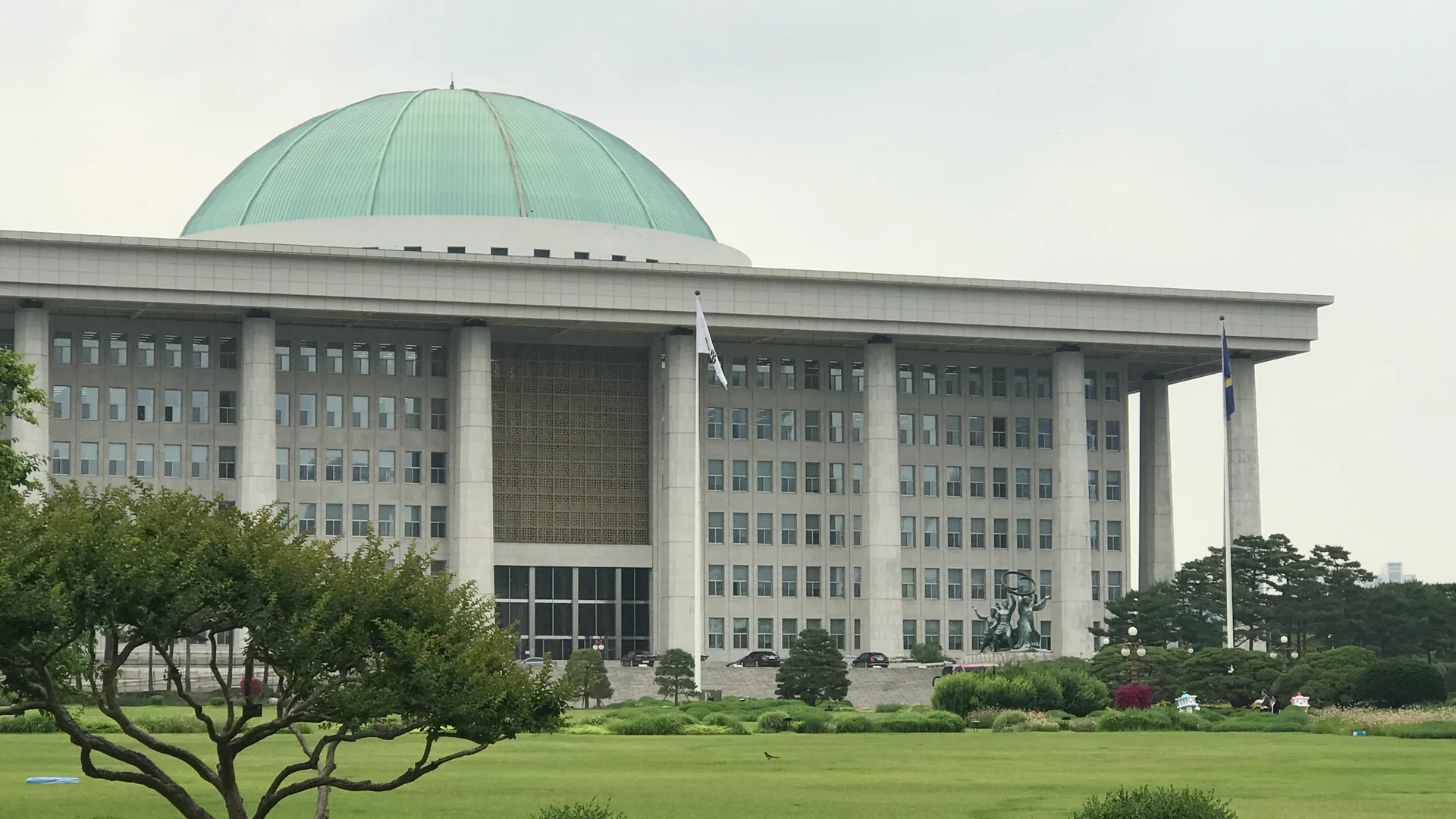
On July 29, 2026, a group of Korean individual investors called the Group for the Normalization of the Stock Market had about 30 funeral wreaths delivered to the front of the National Assembly in Yeouido, Seoul. In Korea a funeral wreath is what you send to a wake. The messages written across them said things like "Investor protection, only in words?" and "Delist them."

The same day, the Kospi closed at 5,663.24, down 5.98%, and both Korean markets halted for a second straight day, which had never happened before. The index is down 33.2% from where it closed on June 30.

An index number does not show what is happening inside ordinary accounts when a market falls this fast, and that is the part I want to explain. A large number of Koreans borrowed money to buy these shares. Once the price drops far enough, their broker sells for them.

How forced selling works in Korea

Korean brokerages lend investors money to buy stock, and the loan is secured by the stock itself. Most brokers require the account to hold a collateral ratio of about 140%. When prices fall and that ratio breaks, the broker asks the investor to wire in more cash by the next business day. If the money does not arrive, the broker sells the shares itself at market price on the second business day. Koreans call this 반대매매, and the account is sold whether the owner agrees or not.

Two things make it harder than it sounds. The investor does not pick which shares go, because the broker sells in a fixed order that starts with the most recently bought Kospi names. And since the sale happens two business days after the shortfall, the selling caused by one bad day arrives at the market later, often when prices are already lower than they were.

Hong Ji-yeon, a senior researcher at the Korea Capital Market Institute, described the effect plainly. "Margin trading widens buying demand while the market is rising, but in a falling market it amplifies selling pressure through forced liquidation."

The numbers, and whose accounts they came from

Kim Sang-hoon, a lawmaker with the opposition People Power Party, pulled the underlying data from Korea's 10 largest brokerages. It shows how fast this grew. Forced liquidations came to 56.5 billion won ($39.0M USD) in January. By June they were 393.5 billion won ($272M USD), an increase of 596%. The first half of the year totaled 919.3 billion won ($635M USD).

Investors in their 50s had the most stock taken from them in June.

  • 50s, 142 billion won ($98.1M USD)
  • 40s, 102.8 billion won ($71.0M USD)
  • 60s, 67.8 billion won ($46.9M USD)
  • 30s, 52.3 billion won ($36.1M USD)
  • 70 and older, 16.3 billion won ($11.3M USD)

The oldest group is the smallest in won terms and the fastest growing in every other way. Forced liquidations for investors 70 and older went from 1.8 billion won ($1.2M USD) in January to 16.3 billion won ($11.3M USD) in June, an increase of 791%. The number of accounts liquidated in that age band went from 357 in January to 1,174 in June, more than three times as many.

This is retirement money

The borrowing behind those liquidations sits with older investors too. As of June, Korean investors owed 31.618 trillion won ($21.9B USD) on brokerage margin loans. The largest single band is people in their 50s, at 9.7978 trillion won ($6.77B USD). Right behind them are investors in their 60s with 7.1371 trillion won ($4.93B USD), and another 2.4709 trillion won ($1.71B USD) belongs to people 70 and older. Add those last two together and the 60 and older group owes 9.608 trillion won ($6.64B USD), which is 30.4% of all margin debt in the market.

Against the end of 2024, margin debt across the whole market is up 133.6%. The 60s band grew faster than that, up 169.3% from 2.6503 trillion won ($1.83B USD). Borrowing by people 70 and older more than tripled, rising 224.4% from 761.6 billion won ($526M USD). Most people in those age bands have little wage income or none at all, so a forced sale does not come out of next month's pay. It comes out of what they retired on.

Data the same lawmaker received from Korea's financial regulators points at a second problem hitting the same people. Between January and April 2026, regulators logged 17 reports about illegal stock tip chatrooms run by people impersonating well known finance influencers. Investors in their 50s filed 7 of those and investors in their 60s filed 5, so those two age bands accounted for more than 70% of the complaints. The average reported loss was 180 million won (about $124,000 USD).

What people are actually holding

Figures from the trading app of NH Investment & Securities show how widely the losses are spread. As of July 27, 44% of the investors holding Samsung Electronics were at a loss, measured against an average purchase price of 206,044 won ($142 USD). For SK Hynix (SKHY) the share underwater was 59%, and the average purchase price there was 1,735,737 won ($1,200 USD). SK Hynix closed July 29 at 1,401,000 won ($968 USD), which is 19.3% below that average.

Jung Eun-bin, a 41 year old office worker, told Edaily she had expected the market to behave the way it had before. "I thought it would fall for a few days this time and then rise again, but it kept falling more than I expected, so I am worried." She has given up on 3 million won a share (about $2,073 USD). What she wants now is 2.2 million won (about $1,520 USD). "I am not asking for 3 million won. If it only recovers to around 2.2 million won I plan to sell."

Lee Hyung-woo, 32, told the same paper he still views the memory chip business and the AI investment cycle positively. His worry is how long the recovery takes.

Comments gathered by Newsis on July 19 show the other response, which is to stop looking. A 26 year old office worker surnamed Yoo said the losses had already passed the point where selling made sense. "The loss is so large that I am in no position to sell, so I have emptied my mind and decided to treat them as companion stocks that stay with me until I die." A 29 year old surnamed Park said he could not bring himself to open the app. "I was scared to even look at the stock app, so I deleted the trading system entirely." He said the overseas holiday he had planned for this summer became a domestic trip after his whole family's holdings were cut in half. A 29 year old surnamed Lee said the waiting is what wears people down. "I am wearing out inside the false hope that someday it will go up."

What they are asking for

The wreaths are one piece of a wider push. Petitions have been filed through the National Assembly's public petition system. One of them, asking for a fix to the market distortion caused by specific single stock leverage products, passed 30,000 signatures. Another, titled a petition on abolishing and regulating single stock leverage products, was filed by a person surnamed Kim and runs from July 2 to August 1. The petitioner wrote that the Kospi now moves 10% in a single day, and that he does not want to put his retirement assets into an investment environment like that.

Jung Eui-jung, who leads the Korea Stock Investors Association, said at a National Assembly policy forum on July 21 that most investors want the products gone. "The majority of investors want delisting, and if immediate delisting is difficult, a phased elimination process should proceed." He added that if the policy process was transparent, there is no reason to refuse a National Assembly investigation into it.

The largest of these funds, the KODEX SK Hynix single stock leverage fund, fell about 72% from its June 23 high near 44,000 won ($30 USD) to around 12,000 won ($8 USD) by July 14.

Whether anyone gets money back is a separate question, and so far the answer looks like no. Reports circulated that Kim Eun-hye, another People Power Party lawmaker, was looking into state compensation claims for investors who lost money in these funds. She denied it on Facebook on July 28. "That is not true." She said what she had actually discussed was examining the conditions investors were trading under and listening to them, not filing claims. No investor group has formally filed for compensation. The demands on the table are for the products to be removed and for the National Assembly to investigate how they were approved in the first place.

The rule regulators did settle on asks more of the investor, not less. A 30 million won ($20,700 USD) cash deposit is required to trade these funds from July 31. Retail investors argued when it was announced that it punishes the wrong people, and Korean bank data already showed people borrowing faster on the days the market fell than on the days it rose.

The selling from this week has not landed yet

Margin debt is coming down now, although not by choice. The balance was 38.6328 trillion won ($26.7B USD) on June 24 and 32.6716 trillion won ($22.6B USD) on July 24, a decline of 5.9612 trillion won ($4.12B USD) in one month. Some investors are paying their loans back. In other accounts the broker has already done it for them.

And a forced sale lands two business days after the collateral shortfall. The Kospi fell 10.84% on July 28, so the accounts that broke that day get sold on July 30. Wednesday's go on July 31. The worst two days of this crash have not reached the forced selling stage yet.

Frequently asked questions

What is forced liquidation in the Korean stock market?

Korean brokerages lend investors money to buy shares, secured by the shares themselves, and most require the account to keep a collateral ratio near 140%. If prices fall and the ratio breaks, the investor has until the next business day to wire in more cash. If it does not arrive, the broker sells the shares at market price on the second business day. Koreans call it 반대매매. The investor does not choose which shares are sold, because the broker follows a fixed order that starts with the most recently bought Kospi names.

How much Korean stock is being sold off by force?

Forced liquidations at Korea's 10 largest brokerages went from 56.5 billion won ($39.0M USD) in January 2026 to 393.5 billion won ($272M USD) in June, an increase of 596%. The first half of the year came to 919.3 billion won ($635M USD). The figures come from data that lawmaker Kim Sang-hoon obtained from Mirae Asset, Korea Investment & Securities, Samsung Securities, KB Securities, NH Investment, Shinhan, Meritz, Kiwoom, Hana and Daishin.

Which Korean investors have been hit hardest?

By size, investors in their 50s, who were forcibly sold 142 billion won ($98.1M USD) of stock in June alone. By rate of increase, investors 70 and older, whose forced liquidations rose 791% from 1.8 billion won ($1.2M USD) in January to 16.3 billion won ($11.3M USD) in June, and whose liquidated account count went from 357 to 1,174. Investors 60 and older hold 9.608 trillion won ($6.64B USD) of margin debt, which is 30.4% of the market total of 31.618 trillion won ($21.9B USD).

Why did Korean investors send funeral wreaths to the National Assembly?

A group called the Group for the Normalization of the Stock Market had about 30 funeral wreaths delivered to the National Assembly in Yeouido on July 29, 2026, carrying messages such as "Investor protection, only in words?" and "Delist them." A funeral wreath in Korea is normally sent to a wake. The protest targets the single stock leverage funds built on Samsung Electronics and SK Hynix, which investors and several lawmakers blame for the size of this month's declines.

Will Korean investors be compensated for their leverage fund losses?

Nothing has been filed. Reports that People Power Party lawmaker Kim Eun-hye was reviewing state compensation claims were denied by her on Facebook on July 28, 2026, where she said the reports were not true and that she had discussed examining investor conditions rather than filing claims. What investor groups are asking for instead is delisting of the products, in phases if an immediate removal is not possible, and a National Assembly investigation into how they were approved.

How many Samsung Electronics and SK Hynix investors are losing money?

As of July 27, 2026, 44% of Samsung Electronics holders and 59% of SK Hynix holders on NH Investment & Securities' trading app were at a loss. The average purchase price was 206,044 won ($142 USD) for Samsung and 1,735,737 won ($1,200 USD) for SK Hynix. SK Hynix closed July 29 at 1,401,000 won ($968 USD), which is 19.3% below the average purchase price of the people holding it.

Sources

Cover photo: the National Assembly Building in Yeouido, Seoul, where the wreaths were delivered. Joongwon Lee - SKKU DOA / Wikimedia Commons, CC BY-SA 4.0, cropped to 16:9.

Won figures are converted at 1,447 won to the dollar, the July 29, 2026 close. Quotes originally given in Korean are translated. Korean media identify some investors by surname only, and those are reproduced as published. This is not investment advice.

Frequently asked questions

What is forced liquidation in the Korean stock market?

Korean brokerages lend investors money to buy shares, secured by the shares themselves, and most require the account to keep a collateral ratio near 140%. If prices fall and that ratio breaks, the investor has until the next business day to wire in more cash. If it does not arrive, the broker sells the shares at market price on the second business day. Koreans call it 반대매매. The investor does not choose which shares are sold, because the broker follows a fixed order that starts with the most recently bought Kospi names.

How much Korean stock is being sold off by force in 2026?

Forced liquidations at Korea's 10 largest brokerages went from 56.5 billion won ($39.0M USD) in January 2026 to 393.5 billion won ($272M USD) in June, an increase of 596%. The first half of the year came to 919.3 billion won ($635M USD). The figures come from data that lawmaker Kim Sang-hoon obtained from Mirae Asset, Korea Investment and Securities, Samsung Securities, KB Securities, NH Investment, Shinhan, Meritz, Kiwoom, Hana and Daishin.

Which Korean investors have been hit hardest by forced selling?

By size, investors in their 50s, who were forcibly sold 142 billion won ($98.1M USD) of stock in June alone. By rate of increase, investors 70 and older, whose forced liquidations rose 791% from 1.8 billion won ($1.2M USD) in January to 16.3 billion won ($11.3M USD) in June, and whose liquidated account count went from 357 to 1,174. Investors 60 and older hold 9.608 trillion won ($6.64B USD) of margin debt, which is 30.4% of the market total of 31.618 trillion won ($21.9B USD).

Why did Korean investors send funeral wreaths to the National Assembly?

A group called the Group for the Normalization of the Stock Market had about 30 funeral wreaths delivered to the National Assembly in Yeouido on July 29, 2026, carrying messages such as 'Investor protection, only in words?' and 'Delist them.' A funeral wreath in Korea is normally sent to a wake. The protest targets the single stock leverage funds built on Samsung Electronics and SK Hynix, which investors and several lawmakers blame for the size of this month's declines.

Will Korean investors be compensated for their leverage fund losses?

Nothing has been filed. Reports that People Power Party lawmaker Kim Eun-hye was reviewing state compensation claims were denied by her on Facebook on July 28, 2026, where she said the reports were not true and that she had discussed examining investor conditions rather than filing claims. What investor groups are asking for instead is delisting of the products, in phases if an immediate removal is not possible, and a National Assembly investigation into how they were approved.

How many Samsung Electronics and SK Hynix investors are losing money?

As of July 27, 2026, 44% of Samsung Electronics holders and 59% of SK Hynix holders on NH Investment and Securities' trading app were at a loss. The average purchase price was 206,044 won ($142 USD) for Samsung and 1,735,737 won ($1,200 USD) for SK Hynix. SK Hynix closed July 29 at 1,401,000 won ($968 USD), which is 19.3% below the average purchase price of the people holding it.

More on SKHY

SK Hynix (SKHY) missed consensus by 5.5%. I sat through the call and I'm still holding
Columns

SK Hynix (SKHY) missed consensus by 5.5%. I sat through the call and I'm still holding

I was signed into the SK Hynix earnings call last night, watching SKHY drop and trying to figure out why. The company came in 5.5% under estimates on the best quarter it has ever had, but the margin held at 76% and the shortfall was HBM4 shipments sliding into the second half. Seoul took the stock down 19.6% intraday. I own SKHY at $154 and I'm not selling this one.

Jul 29, 2026
Seoul halted its stock market two days in a row. The rules written to stop it start Friday (July 29, 2026)
News

Seoul halted its stock market two days in a row. The rules written to stop it start Friday (July 29, 2026)

The Kospi closed Wednesday at 5,663.24, down 5.98%, after trading 12.63% lower at its worst point, and both Korean markets halted for a second straight day, which has never happened before. Deputy Prime Minister Koo Yun-chul apologized for the single stock leveraged ETFs blamed for the size of the move, then called the four financial chiefs in at 6 p.m. The cash deposit rule meant to cool those funds does not take effect until Friday.

Jul 29, 2026
SK Hynix (SKHY) reported a record quarter and still missed. One analyst broke from the pack and called it within a quarter of a percent
News

SK Hynix (SKHY) reported a record quarter and still missed. One analyst broke from the pack and called it within a quarter of a percent

SK Hynix reported 60.5426 trillion won ($41.6 billion USD) of operating profit against a 64.09 trillion won consensus, 5.5% short, on revenue 5.6% short. Both figures are records. The operating margin came in at 76%, right where the street had it, so the entire miss was revenue rather than profitability. Korea Investment & Securities was the only firm below the pack and landed within a quarter of a percent.

Jul 28, 2026
Mia Park
Mia Park

Mia Park was born and raised in Korea and covers its markets and news for AIStockWire, from the Kospi to Samsung and SK Hynix. She got her start writing for a Korean entertainment blog, a long way from stock filings, but she has always liked knowing what is happening back home before anyone else does.