Key points
- On Friday, August 7, the Korean won closed at 1,416.1 per dollar in Seoul, 7.7 won stronger than the day before. It's the won's best level against the dollar in about 10 months.
- The move is strange because it came during a stock crash. The Kospi fell on Thursday and Friday, and foreign investors sold more than 3.3 trillion won ($2.35B USD) of Korean stock on Thursday alone. That usually weakens the won.
- The reason is dollars arriving from somewhere else. Korean exporters sold large amounts of dollars, and SK Hynix's July Nasdaq listing is still bringing dollars into the country.
- A softer dollar everywhere helped too. Woori Bank called global dollar weakness the single biggest reason the rate fell.
- The Bank of Korea is leaning the same way. Governor Shin Hyun-song said after July's rate increase that the bank may keep raising, and some forecasters now see the won reaching the 1,300s per dollar by the fourth quarter.
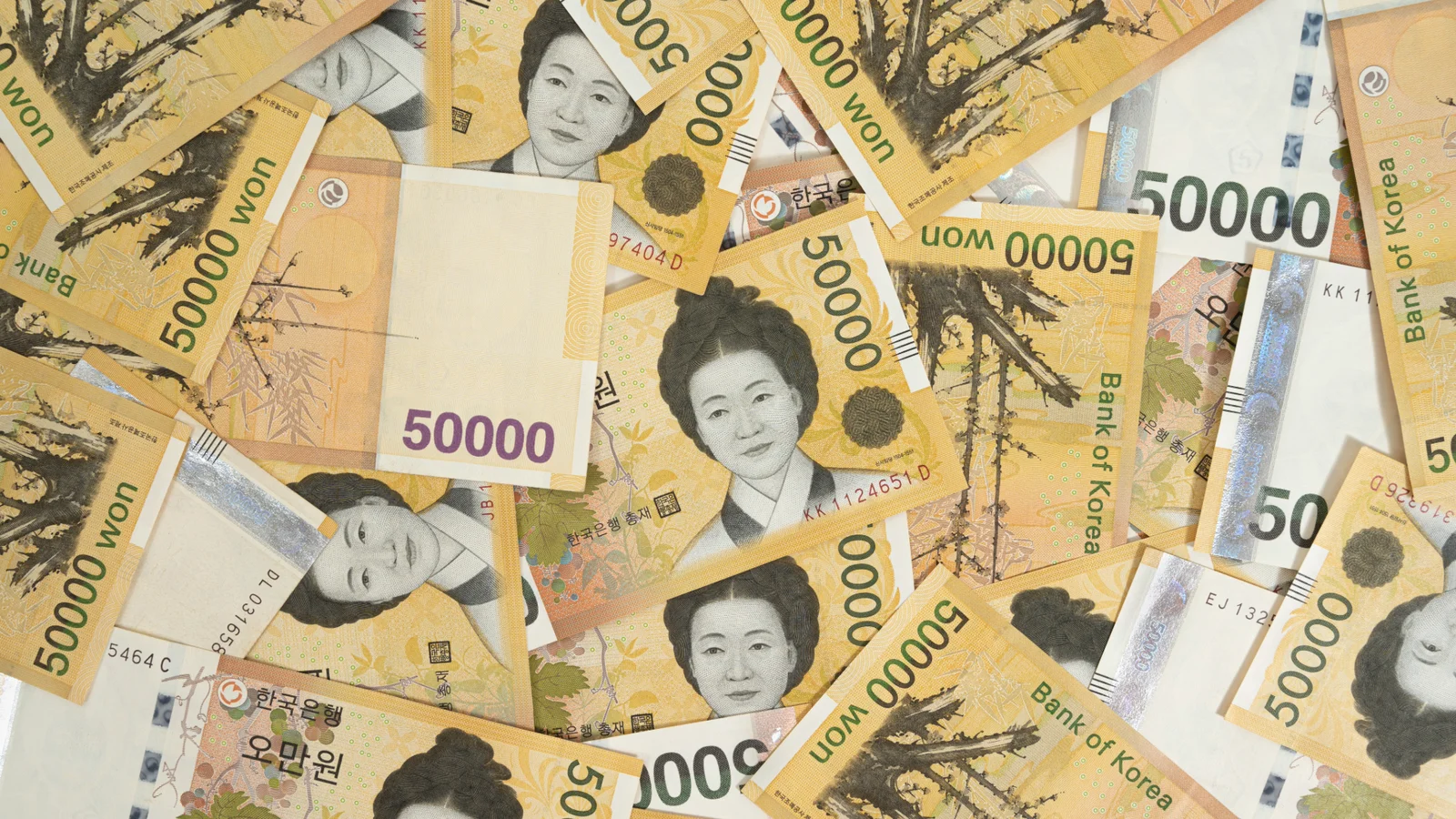
On Friday, August 7, the Korean won closed at 1,416.1 per dollar in Seoul, 7.7 won stronger than the day before. It's the won's best level against the dollar in about 10 months, since early October 2025, and for a few minutes on Thursday it was stronger still, at 1,414.5.
What makes it strange is the timing. The Kospi fell on Thursday and again on Friday, and on Thursday foreign investors sold 3.33 trillion won ($2.35B USD) more Korean stock than they bought. Friday's drop even had a reason of its own, a report that Nvidia may use less memory in its next chip, which sent SK Hynix down again. A falling market and heavy foreign selling almost always drag the won down with them. This week the won climbed through all of it.
The reason comes down to who needed dollars and who had them to sell. Foreign investors leaving Korean stocks sell won for dollars on the way out, which usually weakens it. This week a bigger flow ran the other way.
Korean exporters were holding a lot of dollars from a record run of semiconductor sales, and they sold them for won. On top of that, SK Hynix's Nasdaq listing in July is still bringing dollars into the country as money tied to its US-listed shares gets changed into won. Together the two flows put more dollars into the market than the departing foreign investors took out.
A weaker dollar everywhere did the rest. Lim Hwan-yeol, an economist at Woori Bank (우리은행), said the global picture was the main driver. "The fact that the global dollar is stabilizing lower worked as the biggest factor pulling the rate down," Lim said. The Japanese yen had strengthened at the same time, on talk of currency coordination between the US and Japan, and the won tends to move with it.
The Bank of Korea is pushing the same way
Policy is lined up behind the stronger won too. The Bank of Korea raised its policy rate to 2.75% on July 16, its first increase in three and a half years, and governor Shin Hyun-song (신현송) made clear after the decision that the bank isn't finished. "There's a need to continue the rate-hike stance going forward," Shin said, adding that the timing would depend on prices and growth. A central bank that may keep raising is one more reason to hold the won.
Some forecasters think it has further to go. Woori Bank expects the won could move into the 1,300s per dollar in the fourth quarter, a level it last saw before this year's long run of weakness.
A stronger won cuts both ways for Korea. It makes imported oil and raw materials cheaper, which takes some pressure off prices while the central bank is still worried about them. It also trims what the big exporters collect, since Samsung Electronics and SK Hynix sell their chips in dollars and bring the money home in won. Meanwhile, oil pushed the other way at the end of the week, rebounding on fresh tension around the Strait of Hormuz, and more expensive oil is one thing that could slow the won's rise from here.
Sources
- 서울경제, 주가 4.6% 폭락에도 원화 강세…환율 1410원대 급락 [김혜란의 FX], on why the won rose during the stock selloff
- 머니투데이, 원/달러 환율 1410원대, 10개월 만에 최저…4분기 1300원대 기대, on the August 7 close, the Woori Bank view and the fourth-quarter forecast
- Our earlier coverage: Korea's record semiconductor exports and SK Hynix's Nasdaq listing