Key points
- Kospi fell 5.72% Friday to 6,690.62, and Kosdaq fell 5.32% to 748.22. Both triggered sell-side sidecars, the fifth straight trading day this week with one, a record.
- The drop traces to Middle East tension pushing oil above $100 a barrel and a sharp rise in the odds the Fed raises rates instead of cutting them at its July 28-29 meeting.
- Samsung Electronics fell 7.59% and SK Hynix fell 8.34%, as foreign investors sold a net 3.2827 trillion won ($2.24B USD) of Kospi stocks, their biggest single-day sale in 22 trading days.
- Chinese financial outlet Yicai says Korea's leverage ETF unwind triggered an "unprecedented" simultaneous tech stock selloff across Korea, China, and the US.
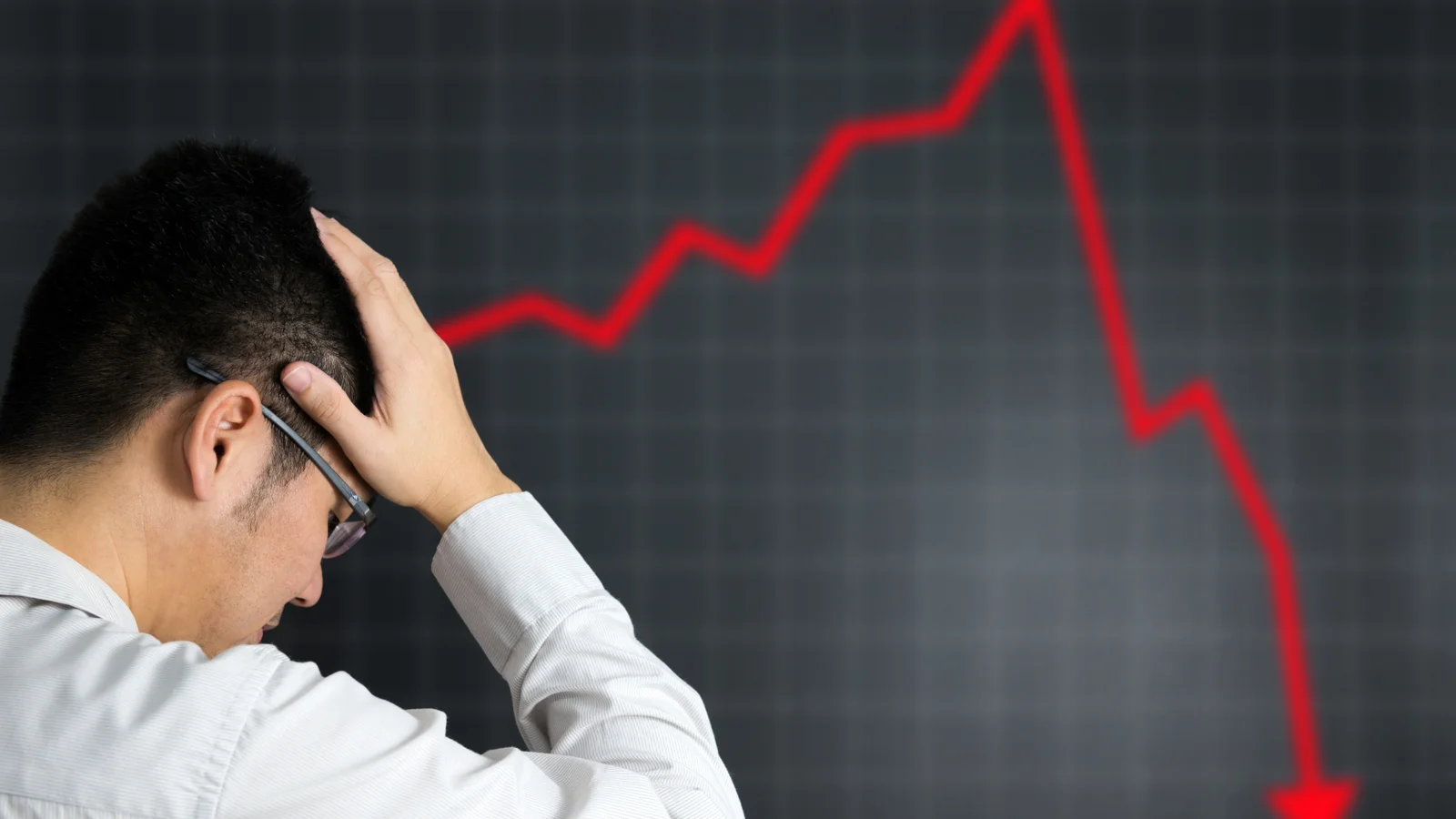
On July 24, Kospi closed down 5.72%, falling 406.27 points to 6,690.62, and Kosdaq fell 5.32% to 748.22. Both indexes triggered sell-side sidecars around midday in Seoul, a trading halt meant to slow a rapid decline, with Kospi's hitting at 11:23 a.m. and Kosdaq's at 11:47 a.m. Korea time, which is late Thursday evening in New York. It is the fifth straight trading day this week that a sidecar has fired on at least one of the two exchanges, a first for the market.
What triggered it
Unlike earlier selloffs this month tied to chip demand worries, Friday's drop traces back to the Middle East. Brent crude crossed $100 a barrel for the first time since May after Houthi rebels attacked two Saudi oil tankers in the Red Sea and President Trump threatened a strike on Iran, and that revived inflation worries just as US markets were still digesting a rough Thursday session of their own. The Federal Reserve holds its next rate decision on July 28-29, and for the first time in months, traders are pricing in a real chance it raises rates instead of cutting them. According to CME FedWatch data, the odds of a 25 basis point hike at that meeting rose from 12.8% to 33.7% over the past week, and the odds of a hike by September rose from 57.8% to 80.8%. A hike would be the Fed's first since July 2023. The Bank of Korea itself raised its own benchmark rate earlier this month, its first increase in three and a half years, adding to worries that global liquidity is tightening on multiple fronts at once. Shinhan Investment analyst Kang Jin-hyuk said, "high interest rates and high oil prices are acting as a continuous downward pressure," even with earnings season underway.
Samsung and SK Hynix took the brunt of it
Samsung Electronics closed down 7.59% at 249,500 won ($170 USD), now down 2.16% for the week. SK Hynix fell harder, down 8.34% to 1,759,000 won ($1,199 USD) and now down 4.51% for the week, giving back the gains from Thursday's Alphabet-driven rally. Foreign investors sold a net 3.2827 trillion won ($2.24B USD) of Kospi stocks Friday, the largest single-day sale since July 2, 22 trading days earlier, and the two chip giants absorbed most of it. Individual investors tried to buy the dip, picking up a net 5.1783 trillion won ($3.53B USD) of Kospi stocks, but it was not enough to offset the foreign selling or slow the index's decline.
A Chinese financial outlet says the selloff crossed borders
On July 24, Yicai, a Chinese financial news outlet, published a report that drew attention in Korean markets. Yicai wrote that "the leverage-based festival [in Korea] ended in a mass sell-off," and said the unwind did not stay contained to Korea. The outlet said it triggered "an unprecedented event: technology stocks in China, the US, and Korea falling simultaneously." Citing data from financial information provider Wind, Yicai said the Philadelphia Semiconductor Index and a Chinese industrial index had each fallen more than 22% over the past month as of July 22.
Zhaoshang Fund deputy market director Huang Liang was quoted at length in the report. He said Korea's leverage ETFs "convert local volatility in Korea's stock market into a global benchmark for pricing industry sentiment, transmitting risk between markets." He continued, "the daily rebalancing of these leveraged products triggers chain liquidation during a downturn, widening the decline of individual stocks and spreading it across the whole sector, making it a core tool of the sell-off." Huang added that the current stress looks different from a typical crisis. "Existing stock market crises usually shock the real industry, consumption, and financial systems, and have a long recovery cycle, but this time it is confined to a specific semiconductor technology sub-sector, and because derivatives are the source of the risk, the recovery cycle will not be long," he said.
Changcheng Fund chief macro strategist Wang Li offered a similar read. "The recent market volatility was triggered by leverage liquidation on the trading side," he said. He added, "investors need to track several indicators to see whether the leverage liquidation is complete, and watch US AI-related stocks and their earnings reports."
Not every stock fell
Meanwhile, 301 of the stocks on the Kospi, about a third of the index, closed higher Friday, some rotation into names seen as safer. Samsung Biologics rose 10.08% and Celltrion gained 3.14%, while defense names Hanwha Aerospace and LIG Nex1 rose 2.19% and 3.53%.
Sources
- Munhwa Ilbo (Korean language): Chinese media says Korea's leverage-based rally has ended, July 24
- Maeil Business Newspaper (Korean language): Kospi and Kosdaq fall more than 5% on oil spike and Fed rate hike worries, July 24
Figures are from South Korean market reporting as described above, converted to US dollars at the July 24 Seoul close of 1,466.8 won to the dollar. This is general market commentary and not investment advice. Always do your own research and consider speaking with a licensed financial professional before making any investment decision.