Key points
- Chinese report says parts ordered for 5,000 robots
- Tesla has not confirmed the order
- The stocks that rose were in China
- Musk shelved a plan to build 5,000 Optimus robots in 2025
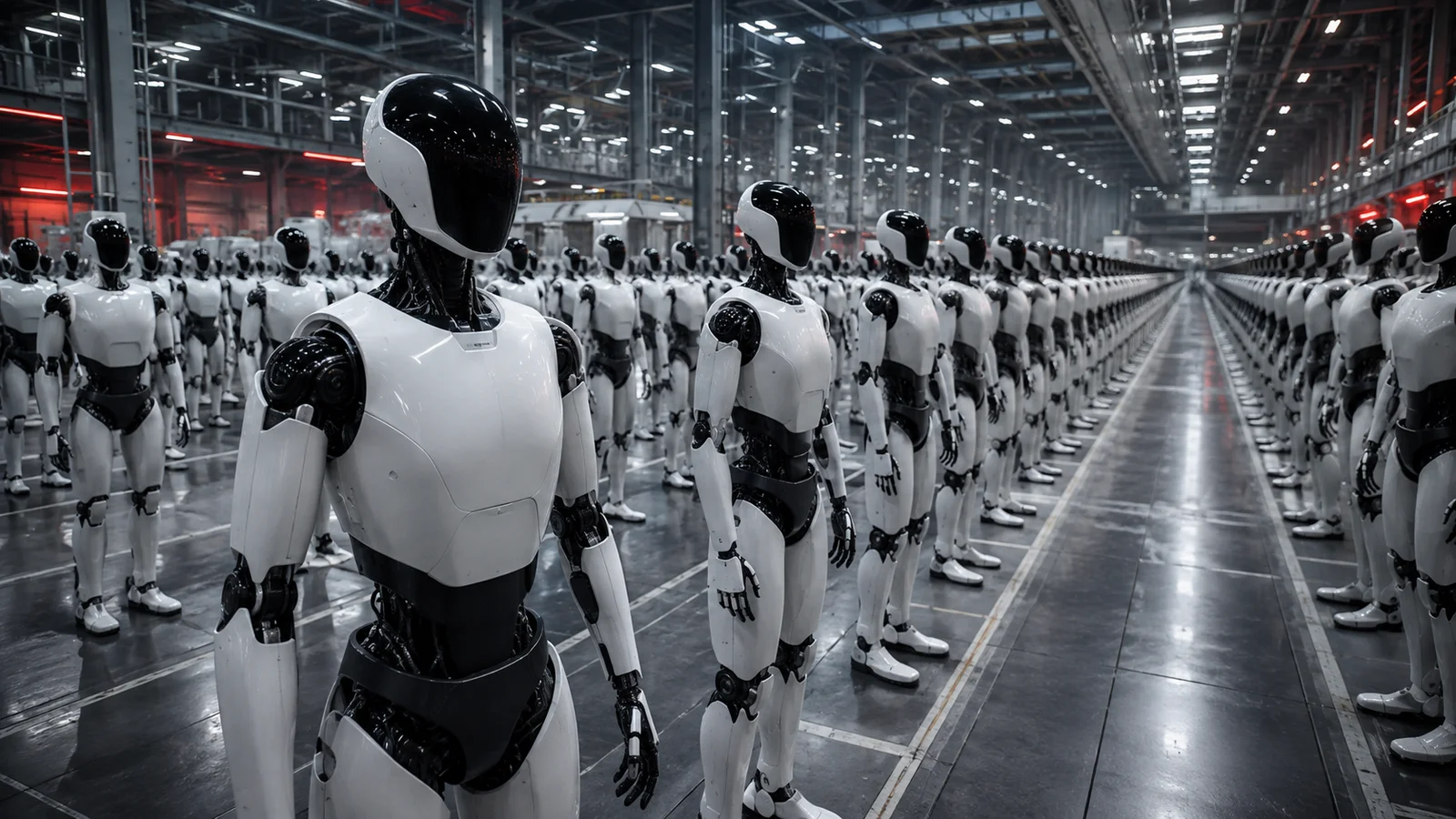
Tesla (TSLA) has ordered parts for about 5,000 Optimus humanoid robots, according to a supplier-based report published on the Youlianyun channel of the Chinese outlet Jiemian. That would be the first batch order since Tesla issued mass production guidance in April. Tesla has not announced the order.
Chinese robotics stocks rose Monday, while US markets were closed for Labor Day, and Jiemian published the report at 10:42 a.m. Beijing time on September 7.
The report attributes the order to supplier feedback and says it was divided among vendors according to each company's share of the Optimus parts list. The report called it "a key milestone signal of Tesla's humanoid robot moving from prototype validation to batch orders." Youlianyun is an investor-content channel that also promotes a robotics ETF, and the piece carries a disclaimer saying its contents do not constitute investment advice.
The main Optimus line at Tesla's Fremont plant began testing and adjustment in July and finished initial commissioning in the middle of August, according to the same report, which says yield had to improve before an order this size could be placed.
Tesla sent suppliers a component purchasing guide in July that asked them to reach 1,000 units a week by September, then 2,000 to 2,500 units a week by the end of the year, 21st Century Business Herald reported on July 10. Soochow Securities was among the brokerages that flagged the guidance at the time. Those are capacity targets for suppliers.
Who makes the parts
Chinese suppliers make some of Optimus's costliest components. Actuators account for about 35% of an Optimus bill of materials and lead screws about 18%, with reducers at about 15%, according to a supply chain breakdown published by The Paper in April. The Chinese names across those categories include Tuopu Group, Sanhua Intelligent Controls, Leaderdrive, and Wuzhou Xinchun.
The index tracked by the China Merchants robotics ETF (560770) was up 2.15% at 10:29 a.m. on Monday, which was before Jiemian published, with Orbbec and Leaderdrive among the strongest gainers. Washington has been looking at the same supply chain, which we covered when the FCC moved to ban Chinese robots in July.
The report puts Tesla's internal target for the year at 10,000 to 20,000 Optimus shipments. Tesla has not reported delivering an Optimus robot to an outside customer, and the machines built so far are meant for Tesla's own factories.
On September 25, The Information reported that Tesla had raised Optimus output to several hundred robots a week but was running into problems with the robot's hands and suppliers.
Figure and Apptronik, two of the larger humanoid builders, remain private. China's Unitree, which was also private when we mapped the buyable robot stocks in June, listed in Shanghai on August 19 and closed its first session up 460%.
Tesla said in March 2025 that it planned to build 5,000 Optimus robots that year. On the third-quarter earnings call on October 22, 2025, Elon Musk said that plan had fallen through and moved volume production to the end of 2026, 21st Century Business Herald reported the next day. He described the second-generation robot as close to impossible to manufacture and pointed to the difficulty of building humanlike hands. Tesla has never published how many Optimus robots it built in 2025.
Tesla shares closed at $354.08 on Friday, September 4, the last regular session before the holiday, down 5.9% from Thursday's close of $376.37.
Quote translated from Chinese.