Key points
- Nebius raises GPU rental rates from October 1
- Second increase in three months
- Cloud memory rental rate rises about 41%
- The stock gave back most of an 11% jump
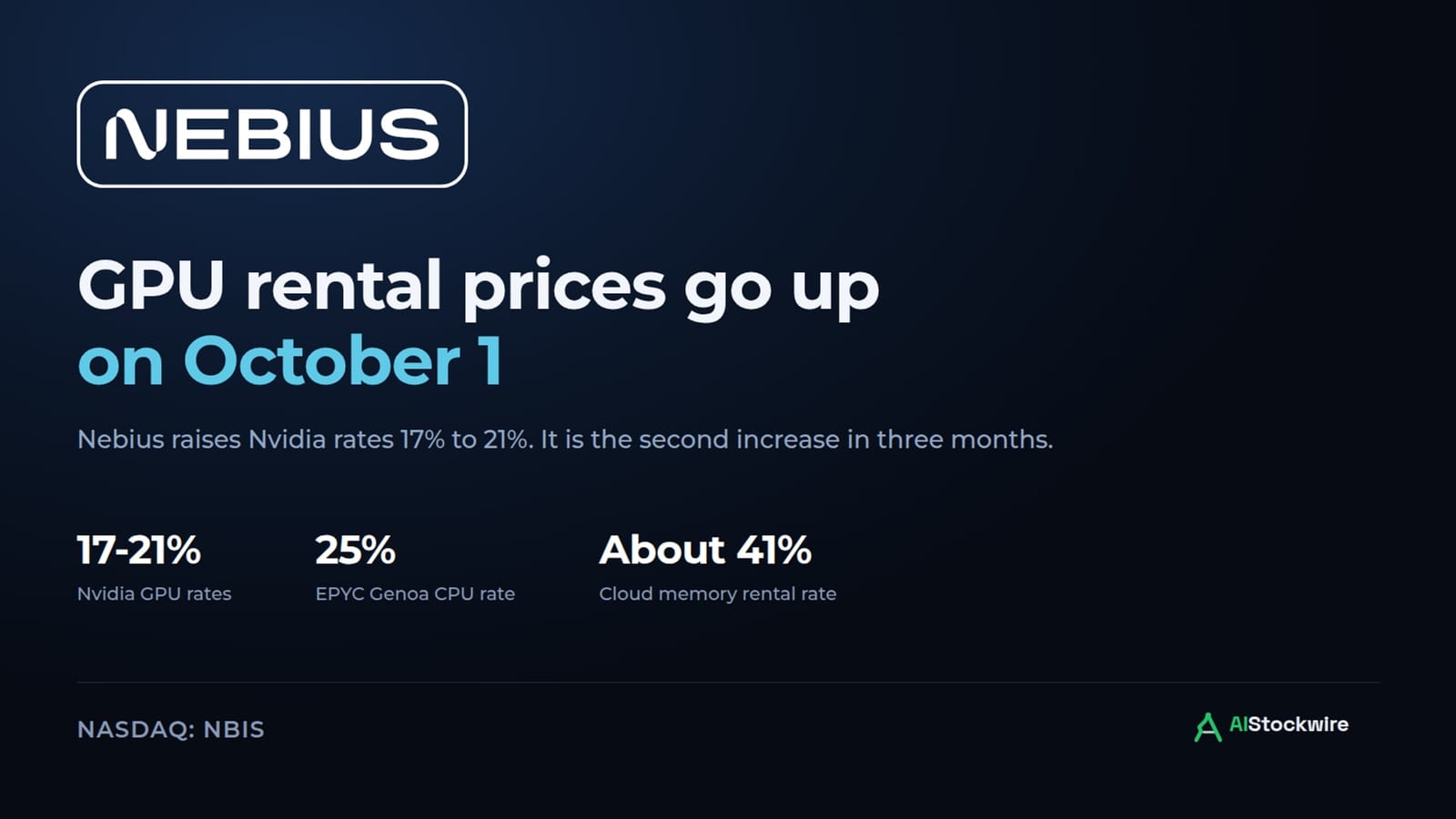
Nebius (NBIS) said Thursday it will raise pay-as-you-go prices for renting selected Nvidia (NVDA) chips from October 1, its second increase in three months, Reuters reported. The stock traded as high as $232.81 in the first half hour and gave back most of that gain, closing at $217.82, up 4.0% from Wednesday's $209.37.
The increases run 17% to 21% across the Nvidia lineup. The listed CPU and memory rates rise 25% and about 41%, respectively. Nebius's own public pricing page still listed the current rates on Thursday afternoon, with no notice of the October change.
| Instance | On-demand now | From Oct. 1 |
|---|---|---|
| H100, per GPU-hour | $3.85 | $4.50 |
| H200, per GPU-hour | $4.50 | $5.40 |
| B200, per GPU-hour | $7.15 | $8.50 |
| B300, per GPU-hour | $7.85 | $9.50 |
| EPYC Genoa, per vCPU-hour | $0.012 | $0.015 |
| Genoa memory, per GiB-hour | $0.0032 | $0.0045 |
We confirmed the current H100, H200 and B200 rates against Nebius's published price list. The B300 rate is not listed publicly, and the company quotes it through sales, so that row and the new column both come from the reporting rather than from Nebius. The steepest increase is the cloud memory rental rate rather than any accelerator, and the Advanced Micro Devices (AMD) EPYC Genoa processor rate rises more than the GPUs as well.
Nebius has the demand to ask. Reuters reported the company recently signed four customer contracts averaging more than $1 billion each, and its AI cloud revenue grew more than 500% year over year in the second quarter.
CoreWeave disclosed higher pricing the same day
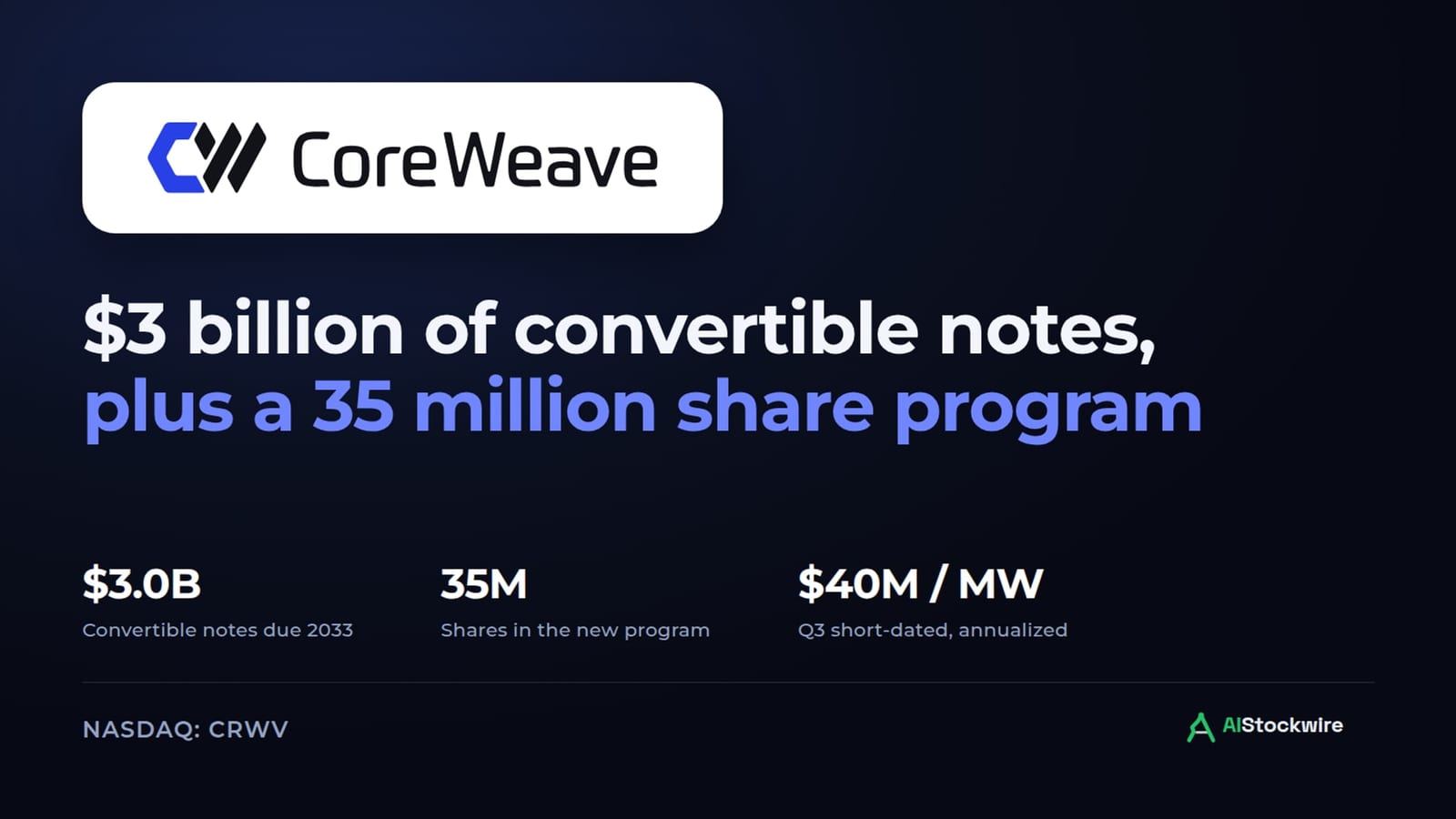
CoreWeave (CRWV) told prospective bond buyers on Thursday morning that it is charging more for capacity too. In the slide deck it furnished with a $3 billion convertible notes offering, CoreWeave put the recent pricing range for short-dated contracts it signed in the third quarter, meaning three to six months, at about $40 million per megawatt. That figure is annualized revenue divided by the power needed to run those clusters, so it is not comparable to a multi-year contract price. The same deck says prices across CoreWeave's product lines rose about 70% in July, and that more than $25 billion of net new customer commitments landed early in the third quarter.
Both companies disclosed higher pricing on the same day, although their figures cover different services and contract terms. The two stocks went opposite ways. CoreWeave closed at $79.87, down 4.2% from Wednesday's $83.35, while Nebius rose and faded. As context, CoreWeave's pricing disclosure came inside a $3 billion convertible notes offering, with a $500 million purchaser option and a program to sell as many as 35 million shares. We cannot establish what drove either move. Nebius did see its own convertible weigh on its stock in August, when a $4.5 billion deal sent the shares down about 9%.
Another listed neocloud, IREN Ltd (IREN), closed at $43.51, up 2.1%. Nebius last reported second-quarter results on August 12. The new Nebius rates take effect October 1.