Key points
- New report tallies Project Jupiter's open issues
- The power plant still lacks an air permit
- The gas pipeline's start date has slipped
- One added word changed the water limit
Oracle's (ORCL) Project Jupiter campus is under construction in New Mexico, but the infrastructure needed to power it still faces hurdles. Its planned power plant lacks an air permit, and the gas pipeline's expected start has slipped while a state-land crossing remains unresolved.
Those issues are among the findings in a 54-page report released Thursday, which also examines the project's water commitments, tax breaks, and job promises. Ethos Research prepared it for the New Mexico Environmental Law Center and the Tech Initiative, drawing on public records, court filings, and local reporting.
The law center is also challenging the project in court. The center represents residents in one lawsuit against Doña Ana County and filed another on its own behalf, according to the report.
The report arrived the same day Oracle was reported to have sent the developer a force majeure notice. Oracle told CNBC that "Project Jupiter remains on our planned schedule." Its shares were down 0.7% at $138.56 on Friday afternoon.
Power and gas remain unresolved
The campus is designed to run on up to 2.45 gigawatts of fuel cells from Bloom Energy (BE), a plan Oracle, BorderPlex Digital Assets, and Bloom announced on April 27. The fuel cells make electricity without combustion, but they run on natural gas. The plant needs an air quality permit from the New Mexico Environment Department before it can operate.
On September 17, the New Mexico Supreme Court lifted a stay that had frozen the permit case since August, Source NM reported. The department's hearing officer had recused himself in August, and no replacement or new hearing date had been named as of the ruling. In July, the developers told the department they would lose $325 million a month if the permit was not issued by November, according to the report. The report's summary was written before the September 17 ruling and describes the court's stays as still in effect. A later page notes that the court lifted them.
The report also questions the scale of the order. Bloom's largest existing project is an 80-megawatt deployment in South Korea, according to the report. At 2.45 gigawatts, Project Jupiter would be about 30 times that size.
The planned gas pipeline also faces an unresolved state-land crossing. Energy Transfer (ET) plans a $60 million pipeline to the site called the Green Chile Project. Commissioner of Public Lands Stephanie Garcia Richard has refused twice, in March and again in July, to let the line cross state trust land. Energy Transfer moved the pipeline's expected start of service from August 2026 to February 2027 in filings with the Federal Energy Regulatory Commission, the Organ Mountain News reported. Permit and pipeline timelines like these are part of what our AI Bubble Index tracks.
How the water commitment changed
The report devotes several sections to water. In September 2025, Doña Ana County commissioners signed a memorandum saying the campus would use an average of 20,000 gallons of water a day. When the bond agreements were finalized on November 1, the sentence had gained one word, according to the report: "The daily operational potable water use for the full data center campus buildout will be an average of 20,000 gallons per day." The wording limited the commitment to potable water, leaving non-potable water outside that figure.
The developers later told the state engineer that the gas turbines they planned at the time would need about 1 million more gallons a day, according to the report, which cites April reporting by the Santa Fe New Mexican. The county commission voted on April 14 to investigate. That estimate applied to the turbines, not the current plan. On April 27, the developers dropped the turbines in favor of fuel cells and said the fuel cells would use a negligible amount of water. The report says the developers have not provided evidence for that claim.
Water for construction comes from a well owned by Santa Teresa Capital, a company formed by El Paso developer Lane Gaddy. The well pumped more than 100 million gallons between April and August, according to the report. The Supreme Court's September 17 order also let pumping from the well resume after more than three weeks, the Albuquerque Journal reported. In a January protest, the Center for Biological Diversity said the well application seeks 2,400 acre-feet of water a year. The well averaged 117 acre-feet a year over the past decade, according to the protest.
Tax breaks, financing, and jobs
The county approved up to $165 billion in industrial revenue bonds for the project in September 2025. The bonds exempt the campus from property tax for 30 years, and the developers agreed to pay the county $360 million in place of taxes. Two lawsuits ask a court to void the county ordinances behind the bonds. A judge denied the county's motion to dismiss one of them in March, according to the report.
About $18 billion of loans for the campus were quoted at 89 to 91 cents on the dollar this month, the Financial Times reported.
The permanent-job requirement is not due yet. The bond agreements require 750 full-time and 50 part-time jobs within three years of operations starting. The developers' first annual report counted 2,105 construction workers as of June 30 but no permanent jobs yet, Searchlight New Mexico reported.
Oracle's share price is as of 1:52 p.m. Eastern on September 25, 2026.
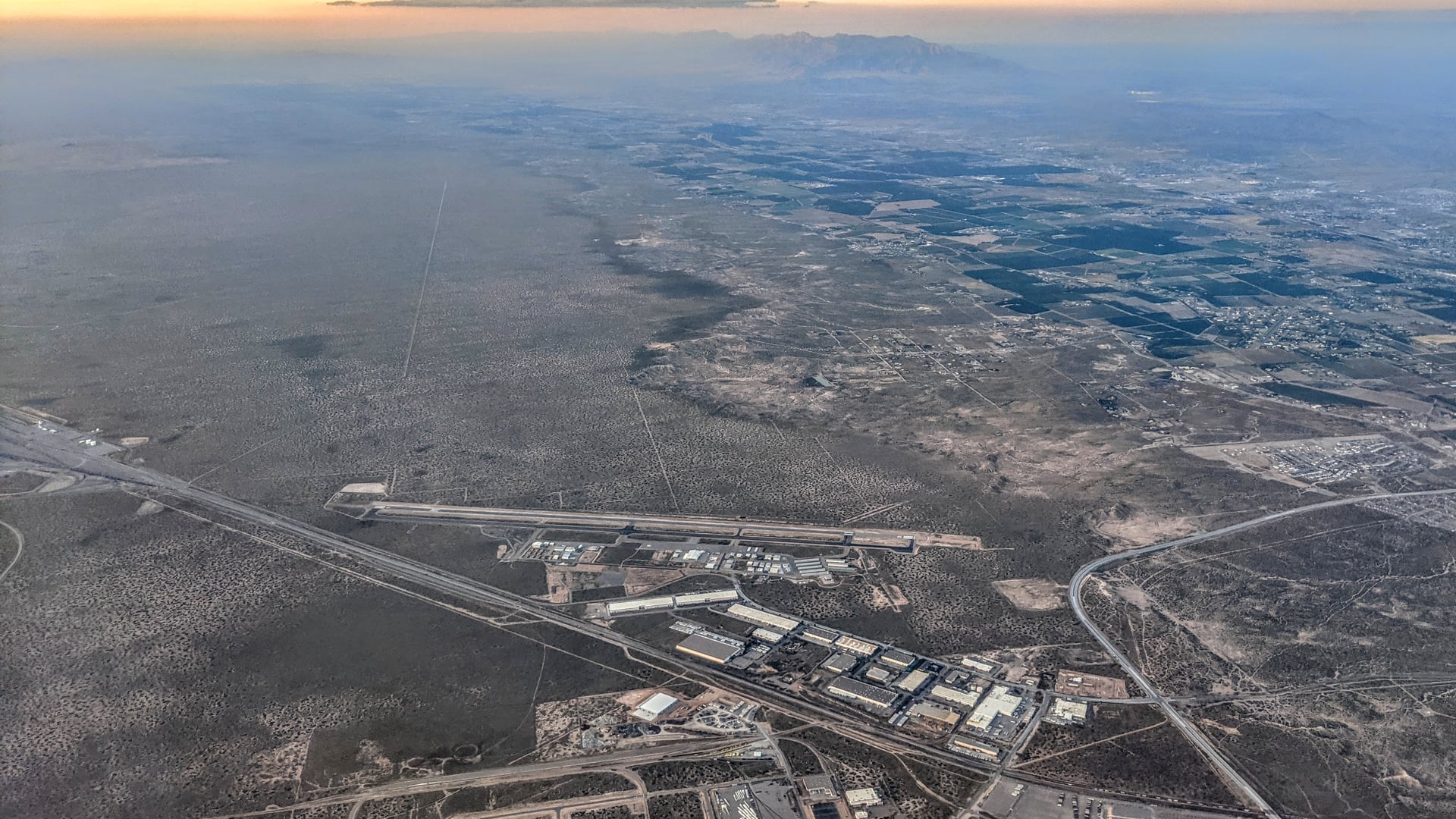
Cover: aerial view of Santa Teresa, New Mexico, near the Project Jupiter site, by Dicklyon via Wikimedia Commons, CC BY-SA 4.0, cropped. Illustration only; not the data center.