Key points
- Serve Robotics added a 2026 cost estimate to its investor deck
- It's about five times the revenue Serve expects this year
- Full-year guidance implies lower second-half sales
Serve Robotics (SERV) filed its investor presentation with the SEC again on Oct. 5, two months after the last version. Most of the 24 pages look the same. The addition that matters sits on the last page, in a small appendix table called "FY 2026 Plan," and it holds a number the August deck didn't have.
Serve expects its cost of revenue this year to be $44 million to $48 million. Its revenue guidance, unchanged, is $9 million to $10 million. Put those side by side and it works out to about $4.40 to $5.30 in cost of revenue for every dollar of sales at the sidewalk delivery robot company.
The 8-K that came with it says the deck was updated "to include additional information regarding the Company's cost of revenue for the year ending December 31, 2026." The second-half part of that figure is a preliminary, unaudited estimate, and the auditors haven't reviewed it.
How does that compare with 2025?
Cost of revenue covers the direct costs of delivering what a company sells, and it can include noncash items, so it isn't the same as cash spent. It also isn't the full cost of running the company, which spends heavily on engineering and on the people who build its software.
Last year's annual report makes the new number look a little less alarming. Serve reported $18.0 million in cost of revenue in 2025 and took in $2.65 million in revenue. That's about $6.80 in costs per dollar of sales. At the middle of this year's ranges, it's closer to $4.80. Still a substantial gap, though smaller than in 2025 on a full-year basis.
The first half of 2026 already covers about half of the cost range. Serve's quarterly filings show $24.0 million in cost of revenue through June 30, on $6.2 million in revenue.
What does the guidance say about the second half?
Here's what made me reread the revenue line. If Serve hits $9 million to $10 million for the year, and it booked $6.2 million through June, the last six months bring in only about $2.8 million to $3.8 million. Serve brought in $3.2 million in the second quarter by itself.
The same math makes the second half look more expensive per dollar, too. The first half ran about $3.90 in cost of revenue for each dollar of sales. Subtracting the first-half results from the full-year guidance gives an implied second-half range of about $5.30 to $8.60 in cost of revenue per dollar of sales.
So the guidance points to the second half being smaller than the first. Serve already said why, in an Aug. 17 filing. Delivery volume through its Uber Eats partnership came in lower than expected, and it expects less demand from July through December. That was the same week three Serve executives sold stock, about half of it to cover taxes on shares that vested.
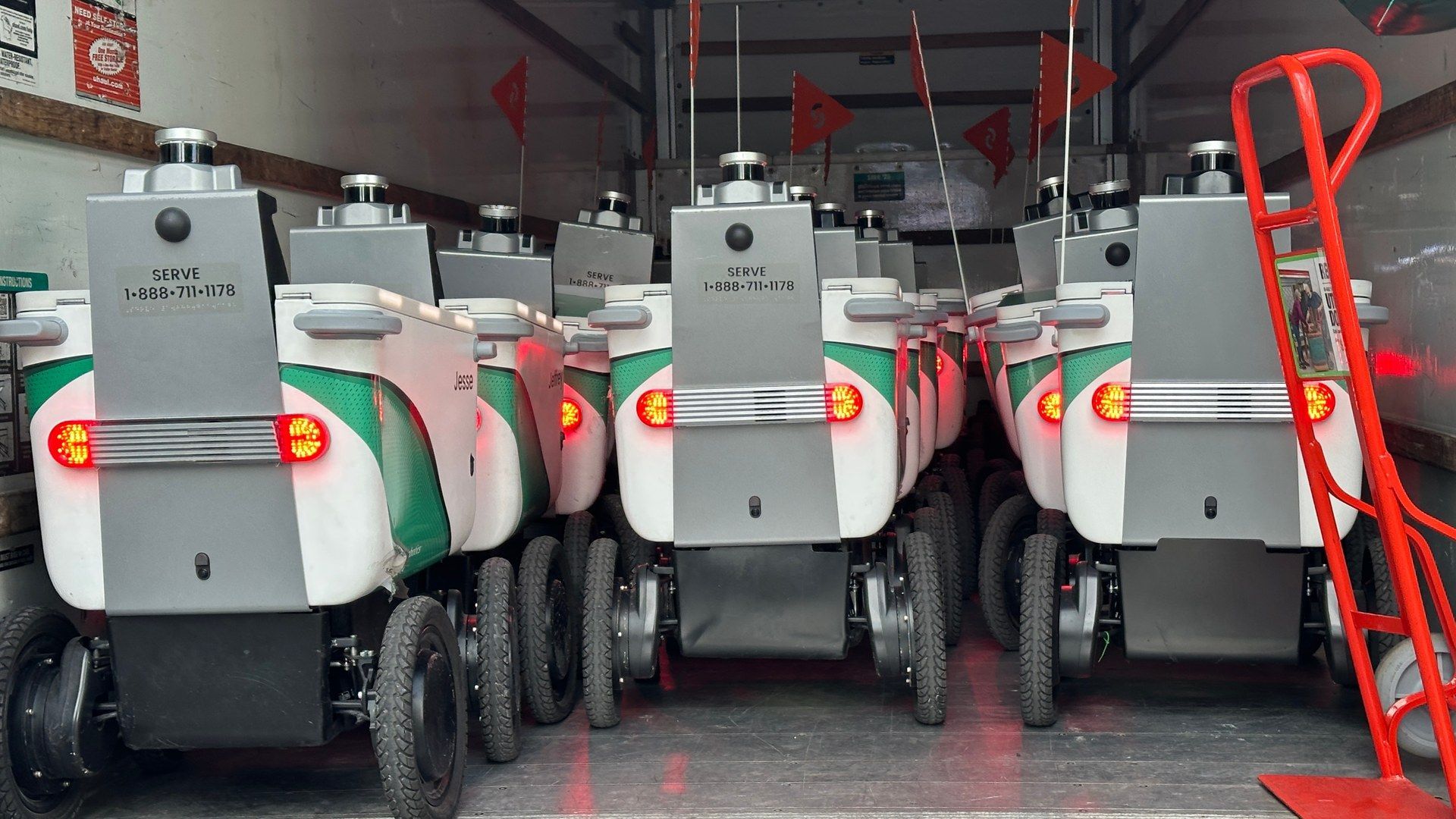
The company still has room to keep going. It had $240 million in cash and marketable securities at the end of June. It's planning $140 million to $150 million in non-GAAP operating expenses this year, which leave out stock pay and some one-time items, plus $15 million to $17 million on equipment and other long-term spending. The deck says the goal for 2026 is getting more revenue out of each robot in its fleet of about 2,000 sidewalk robots, now that it has added Grubhub and expanded with DoorDash.
The stock closed at $4.88 on Oct. 5, up about 6%, before the update came out after the close.