Key points
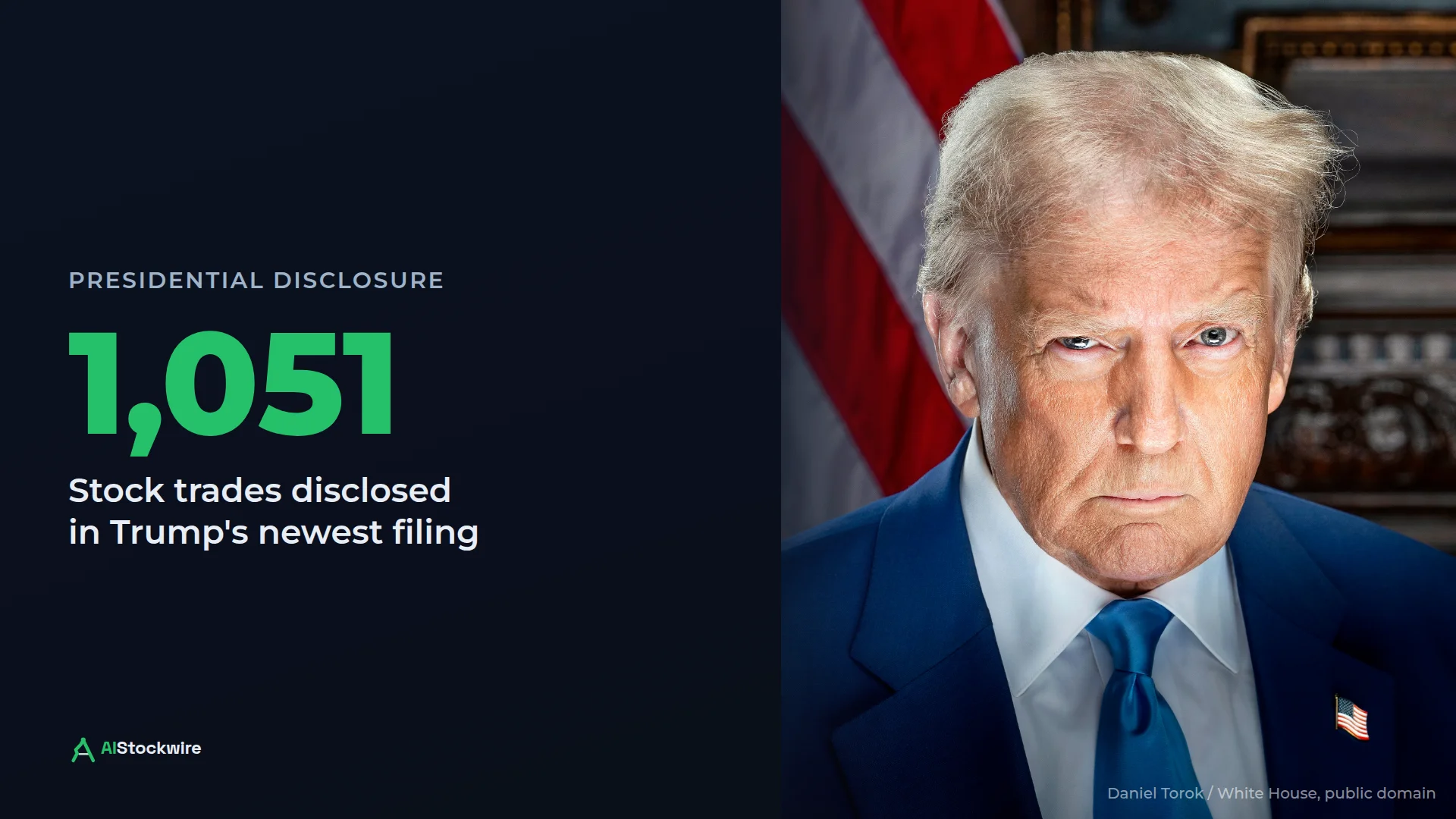
- Trump's newest Form 278-T, filed August 12 and published August 22, lists 1,051 securities transactions made in June.
- The filing shows three purchases and two sales of Berkshire Hathaway (BRK.B) over three weeks. Early coverage focused on the largest purchase.
- The reported value of all 1,051 transactions falls between $78.1 million and $263.1 million because federal disclosure forms provide ranges rather than exact amounts.
President Donald Trump's latest financial disclosure contained five Berkshire Hathaway (BRK.B) transactions spread over three weeks. Early coverage focused on a purchase worth between $1,000,001 and $5 million on June 18, but the full filing shows that Trump's reported holdings had already bought and sold Berkshire earlier that month.
The Berkshire activity is just one small part of a 34-page report containing 1,051 transactions in individual stocks, bonds and exchange-traded funds. The filing does not reveal exact transaction values, execution prices, share counts or the identity of the investment manager who directed Trump's trades.
What the filing shows
Trump signed the OGE Form 278-T on August 12. An agency ethics official reviewed it the next day, and Office of Government Ethics Director Keith Sonderling certified it August 20. OGE published the report August 22. Federal officials use Form 278-T to report certain securities transactions worth more than $1,000. The report lists 576 purchases and 475 sales, all made in June. Most occurred in clusters on June 2, June 3, June 12, June 15, June 16, June 18, June 22, June 23 and June 24.
The form assigns each transaction to a value range. The smallest range in this filing is $1,001 to $15,000, while the largest is $5,000,001 to $25 million. Bloomberg estimated the combined transaction volume at between $78.1 million and $263.1 million. That total includes purchases and sales. It is not an estimate of the portfolio's value or investment return.
Berkshire was traded five times
Trump's reported holdings bought between $15,001 and $50,000 of Berkshire Class B shares on June 3. They sold between $100,001 and $250,000 on June 12, then bought between $1,000,001 and $5 million on June 18. Two smaller transactions followed: a purchase worth between $1,001 and $15,000 on June 23 and a sale worth between $50,001 and $100,000 on June 24.
In total, the filing shows three Berkshire purchases and two sales. The widely reported June 18 purchase was the largest Berkshire trade, but it was neither the first nor the last Berkshire transaction disclosed for the month.
June 18 included more than 80 transactions
A line-by-line count of the filing shows more than 80 transactions on June 18, making it the busiest day covered by the report. Trump's reported holdings bought between $1,000,001 and $5 million each of Berkshire, Cintas (CTAS), Visa (V) and Mastercard (MA). They also bought between $500,001 and $1 million of Adobe (ADBE). The same day, the holdings sold between $1,000,001 and $5 million each of Motorola Solutions (MSI) and Meta Platforms (META), plus between $500,001 and $1 million of Palantir (PLTR).
The filing also contains repeated purchases and sales of companies including Home Depot and JPMorgan during June. The concentration of trades on a limited number of days may be consistent with periodic portfolio management, but the disclosure does not say whether the transactions were discretionary, automated or tied to a benchmark.
The largest transaction was a Vanguard ETF sale
The largest line in the report was a June 22 sale of between $5,000,001 and $25 million of Vanguard Dividend Appreciation Index Fund ETF Shares, which Vanguard markets as the Vanguard Dividend Appreciation ETF under the ticker VIG. The filing also lists sales of two Vanguard bond funds, a Vanguard international stock fund and several State Street and iShares sector and bond ETFs, each in the $1,000,001 to $5 million range. Those fund sales occurred during the same period as the individual-stock transactions. The timing may point to a broader portfolio adjustment, but the form does not provide the manager's reasoning or enough information to reconstruct the portfolio before and after the trades.
The investment manager remains unidentified
The White House has said Trump's investments are independently managed and present no conflicts of interest, according to Bloomberg's account of the filing. The Form 278-T does not name the manager or describe the rules governing the portfolio. Sen. Elizabeth Warren, D-Mass., and Rep. Robert Garcia, D-Calif., asked Trump on August 13 to identify the people or firms managing his investments and explain the timing of trades described in earlier disclosures. Their letter predates the publication of this June report and requests a response by August 28.
The latest filing adds another 1,051 transactions to the public record. It shows what was bought and sold, but not who made the decisions or how the trades fit into the portfolio's strategy.
Trump's July disclosure, posted September 22, lists trades in the companies of all four tech leaders he chose for the National Medal of Science.