Key points
- Meta's Claude Code users have roughly halved this year
- Microsoft cut its projected internal Claude spending by over a third
- Both are pushing staff toward their own AI tools
Meta (META) and Microsoft (MSFT), two major customers of Anthropic, are pushing employees toward their own AI tools as they seek to reduce internal reliance on the AI startup, The Information reported on Oct. 5.
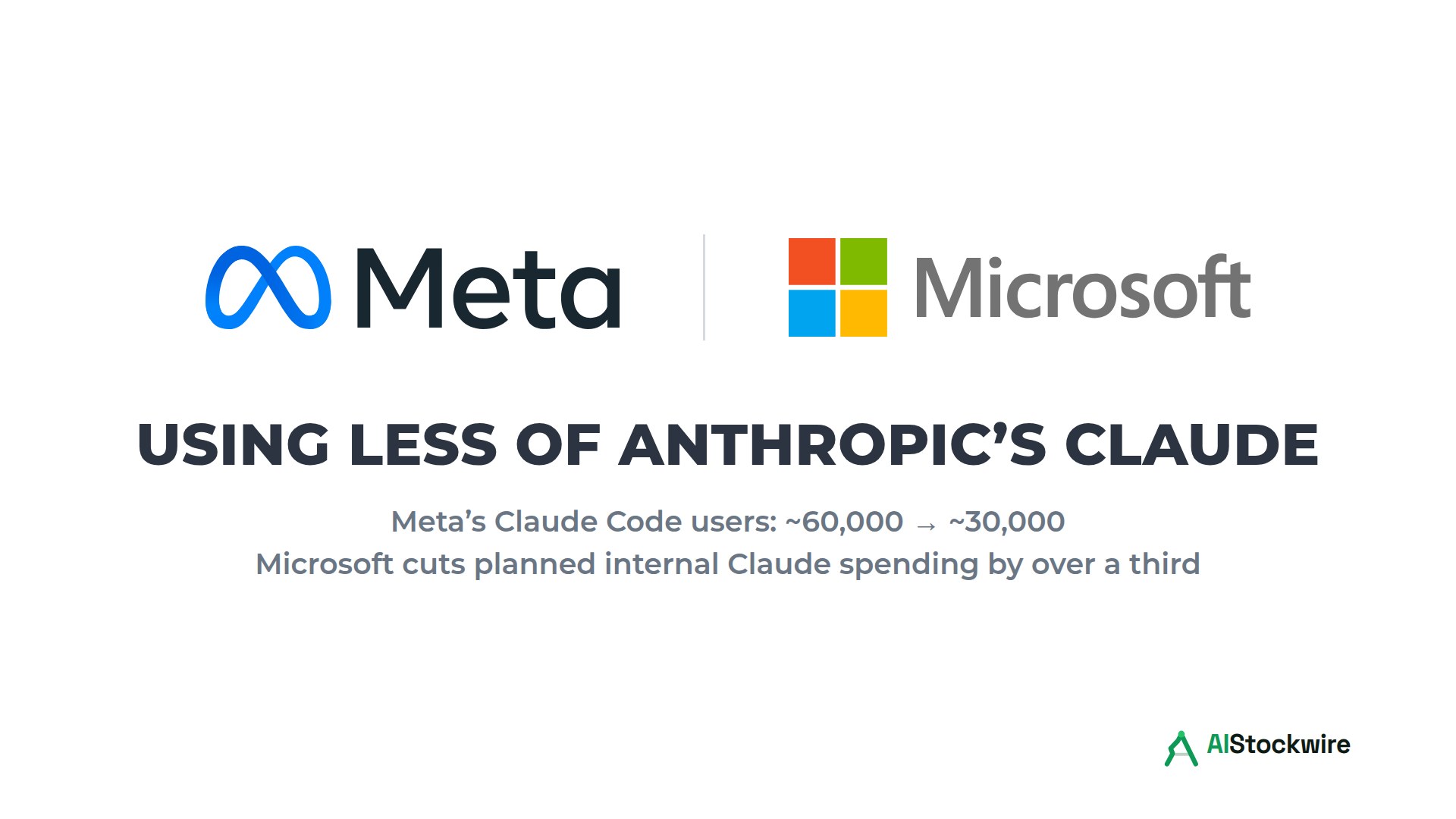
At Meta, about 30,000 employees now use Claude Code, Anthropic's coding assistant, down from roughly 60,000 earlier this year. Microsoft had projected spending at least $1 billion on Anthropic's technology for internal use, and has since reduced that projected spending by more than a third.
Meta's own coding tools are taking over
Layoffs this spring, which cut about 10% of Meta's 78,000-person workforce, account for part of the drop. But the bigger reason is Meta's push into its own AI, according to the report.
MetaCode, a coding tool built only for Meta's employees, now has more than 30,000 users. That's about as many as still use Claude Code. Muse Code, a Claude Code rival built on Meta's own models that the company started testing outside Meta in August, has more than 6,000 internal users.
The shift has been building for months. In August, the New York Times reported that Meta's internal projections showed it could spend as much as $10 billion a year on Anthropic, even as it restricted some engineers from using Claude Code. The latest report shows fewer employees using Claude Code, though it doesn't establish how Meta's total spending on Anthropic has changed.
Microsoft's cut covers its own employees, not its customers
Microsoft's leaders asked employees to use less Claude and switch to Microsoft's own AI tools to keep costs down, the report said. In May, Microsoft started canceling Claude Code licenses for thousands of its engineers. Moving away from Claude Code doesn't necessarily mean abandoning Claude's underlying models. Microsoft's replacement tool, GitHub Copilot CLI, also supports Anthropic models.
The reduction applies to Microsoft's planned internal spending. Its customers are still increasing their spending on Anthropic models through Microsoft's enterprise platforms, according to the report.
Anthropic's customers are also its competitors
Meta and Microsoft want employees using their own tools to control costs and improve their products. That puts Anthropic in the position of selling to companies working to reduce their dependence on it.
I think the spending matters more than the user count. Meta's decline in Claude Code users doesn't tell us how much revenue Anthropic stands to lose. Microsoft's lower spending projection is a clearer sign of pressure, even as demand from its enterprise customers keeps growing.