Key points
- This is a one-day snapshot: on Monday morning, as the AI build-out (chips, optics, neo-clouds) sold off, money rotated into other corners of tech rather than leaving the market.
- The biggest green groups while AI hardware fell were software and SaaS (ServiceNow (NOW) up about 5%, Adobe (ADBE) up about 3%), AI power (GE Vernova up about 4%), and the frontier: quantum (IONQ up about 5%), space (Rocket Lab up nearly 10%), robotics (Ouster (OUST) up about 17%) and cyber (CrowdStrike up about 7%).
- Rotations like this can flip within hours. By late morning the chips were already bouncing back, so read this as a clue about today, not a forecast.
Rotations are one of the most useful things to watch in a market, and this morning gave a clean one. As the AI build-out sold off hard, the money did not leave the market. It moved. Here is a snapshot of where it went on Monday, June 29, as of about 10:50 a.m. Eastern. One caveat up front: this is a single morning. Rotations can reverse in hours, so treat it as a read on the day, not a long-term call.
What money rotated out of
The selling was concentrated in the AI build-out, the picks and shovels of the boom: memory chips, optical and networking gear, and the neo-cloud companies that rent out AI computing. Names like Micron (MU), Coherent (COHR), Arm (ARM) and Applied Digital (APLD) fell 8 to 10 percent from the open before bouncing. We broke that down in this morning's piece on the AI build-out selloff.
What money rotated into
While the hardware was getting dumped, several other corners of tech went green. As of late morning, on the day:
Software and SaaS. The beaten-down software group bounced across the board. ServiceNow (NOW) was up about 5 percent, Datadog (DDOG) about 5 percent, Atlassian (TEAM) about 4 percent, Adobe (ADBE) about 3 percent, with Intuit (INTU), Workday (WDAY), Salesforce (CRM) and Snowflake (SNOW) all higher. After the brutal "SaaSpocalypse" selloff, software is the cheap, recurring-revenue corner that buyers reach for when AI-spending fears hit the hardware. We covered that group in our SaaS piece.
AI power and electrification. Data centers are increasingly limited by electricity, not chips, so the power names held up. GE Vernova (GEV), which makes the gas turbines and grid gear that feed data centers, was up about 4 percent, and nuclear name Oklo (OKLO) was higher too. We have written about the power angle in AI's power problem and nuclear.
Quantum and space. The speculative frontier trades caught a bid. In quantum computing, IONQ was up about 5 percent, with Rigetti (RGTI) and D-Wave (QBTS) higher. In space, Rocket Lab (RKLB) jumped nearly 10 percent and AST SpaceMobile (ASTS) about 11 percent.
Physical AI and robotics. The robotics theme had real standouts. Ouster (OUST), which makes the lidar sensors that give robots and self-driving systems their eyes, jumped about 17 percent, the biggest single move on our screen. Tesla (TSLA), the proxy for humanoid robots and robotaxis through its Optimus program, was up about 4 percent, and surgical-robot maker Intuitive Surgical (ISRG) was higher.
Cybersecurity and the megacaps. Security software ran, with CrowdStrike (CRWD) and Palo Alto Networks (PANW) up about 7 to 8 percent, and the megacap "AI users" held up, with Amazon (AMZN) up about 6 percent and Palantir (PLTR) up about 5 percent.
The read, for today
If there is one theme tying the green names together, it is a shift from companies that build AI to companies that use, monetize, or power it. The hardware names carry the heaviest expectations and the biggest valuations, so they are the first to get sold when the "is AI spending peaking" question flares up. The money then looks for AI exposure with less of that risk: software with recurring revenue, the power and grid names with a clear physical bottleneck, and the frontier lottery tickets like quantum, space and robotics. We sketched the whole stack in the AI stock map, and the bigger bubble-or-dip debate in did the AI bubble just pop.
The caveat that matters
This is one morning. Rotations like this can flip by the afternoon, and this one was already softening as we wrote it: by late morning the chips that had been crushed at the open, including Nvidia and the Nasdaq itself, had clawed back to roughly flat or green. A single session is a clue about where buyers are willing to go, not a forecast that the trend will hold. If the AI hardware names keep recovering, today's rotation could be a one-day blip. If they roll back over, the green corners above are the early map of where the next money is hiding. Watch which way it resolves over the next few sessions.
Nothing here is investment advice. All figures are intraday and as of about 10:50 a.m. ET on Monday, June 29, 2026, and are moving in real time. Do your own research.
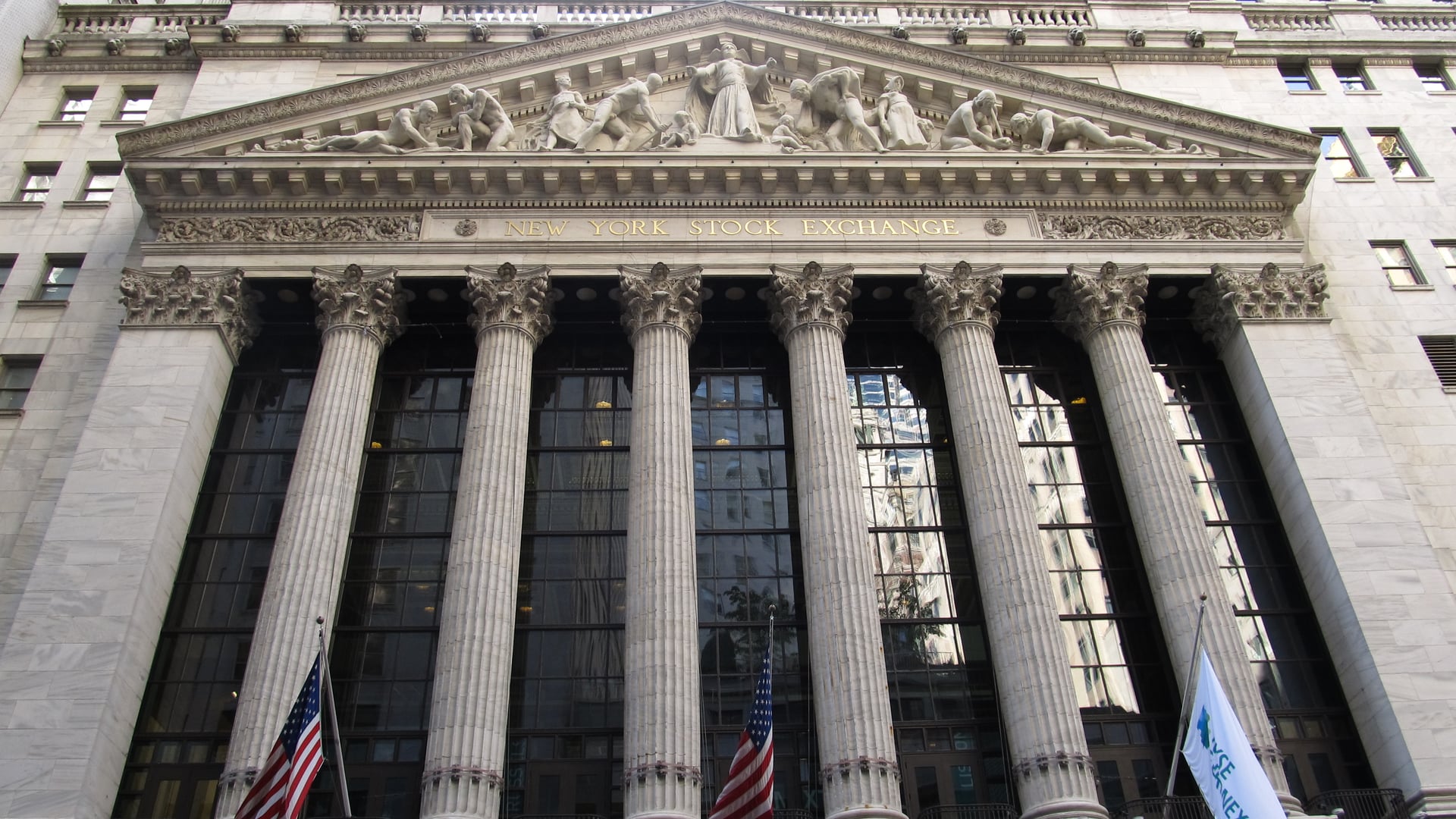
Cover photo: New York Stock Exchange by Ken Lund / Wikimedia Commons, CC BY-SA 2.0, cropped.
This is general market commentary and opinion, not investment advice. Markets can go down as well as up, and you can lose money. Always do your own research and consider speaking with a licensed financial professional before making any investment decision.