Key points
- Goldman Sachs now expects 6.48 million humanoid robots to ship in 2035, up from its earlier estimate of 1.38 million, creating a market of about $138 billion.
- Falling prices drive the revision. Goldman projects the average robot price will decline from $41,800 in 2025 to $21,300 in 2035, bringing the payback period to roughly 1.6 years.
- Amazon (AMZN) already operates more than 1 million robots, and Goldman estimates they could generate about $72 billion in savings from 2026 through 2030.
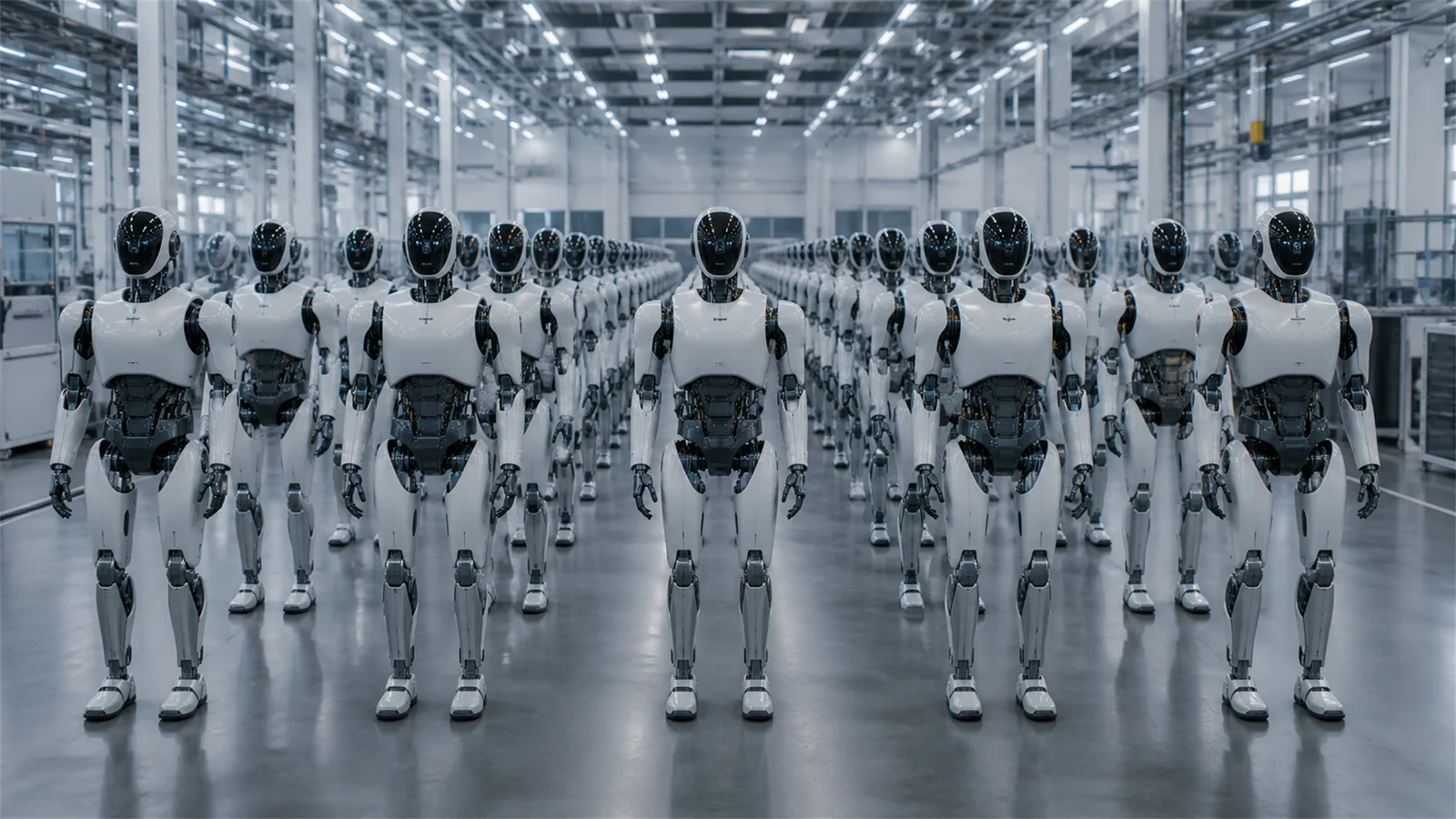
Goldman Sachs has raised its humanoid robot forecast by roughly five times. The bank now expects global shipments of about 6.48 million units in 2035, worth around $138 billion, according to its new Global Physical AI report. Its last published estimate, released in February 2024, called for 1.38 million units and a $38 billion market.
Between those two numbers is a 4.7-times revision on a ten-year view, which isn't a small thing for a bank to do in public.
For investors holding robotics-related stocks, the nearer-term estimates are more useful. Goldman expects roughly 75,000 humanoids to ship in 2026 and about 890,000 in 2030. Its previous 2030 forecast was approximately 250,000.
What actually changed?
Not the robots, mostly. The price.
Goldman expects the average selling price of a humanoid to fall from about $41,800 in 2025 to $30,800 in 2030 and roughly $21,300 by 2035, with the bill of materials dropping from around $27,700 to $13,500. That's about 7% a year off the build cost and 6% a year off the price, every year, for a decade.
Run that against wages and you get the whole thesis. Goldman figures a factory humanoid costs about 2.8 years of labor in 2026, and roughly 1.9 years by 2027. The bank's worked example is a $30,000 robot, plus 50% on top for system integration, so call it $45,000 all in. If it replaces about 0.8 of a full-time worker, it saves roughly $28,300 a year and pays for itself in about 1.6 years.
You don't need a robotics thesis to approve a 1.6-year payback. Any operations manager signs that without calling a meeting. That's the number that moves a forecast, and it's arithmetic rather than a bet on any particular robot getting smarter.
Amazon is where this already shows up
The theory's doing real work on at least one income statement. Amazon had more than a million robots across over 300 facilities as of June 2025, and Goldman models roughly $72 billion in cumulative savings between 2026 and 2030 as unit fulfillment costs fall about 11%, from around $6.40 to $5.57. The bank puts that at about 240 basis points on group operating margin and about 400 on the retail segment.
Walmart is running the same play with less noise. It's compressed a 12-step fulfillment process into five, and as of August 2026 roughly 3,100 US stores had automated freight support with more than half of e-commerce volume moving through automated facilities. Walmart's own line is that it's about halfway done.
Logistics goes first for boring reasons. Warehouses are enclosed, the tasks repeat, and nobody's solving weather or a toddler wandering into frame.
The finding nobody expected
Goldman surveyed more than 80 companies, and about 70% said what they want is a robot that handles a wide range of tasks. Only about 10% said they specifically need a bipedal one.
Read that again. After three years of humanoid demo videos, one in ten buyers actually cares whether the thing has legs. What they're buying is task coverage and reliability. The human shape is a means to an end, and most of them would trade it tomorrow for something cheaper that works.
The survey also puts adoption earlier than the hype suggests, and further along than I expected: about 34% of those companies are evaluating or piloting general-purpose robots, roughly 35% have deployed them in at least one location, and around 10% are running them at scale across sites.
Where the money lands
Goldman puts $3,000 to more than $6,000 of semiconductor content in every humanoid. Compute is $1,500 to $4,000-plus, analog and mixed-signal chips run $750 to $1,050, and memory, meaning DRAM, HBM and NAND, accounts for roughly $600 to $800. The bank calls this the second wave of AI device diffusion, with data centers having been the first.
That memory line is worth sitting with. We wrote this morning about how the market still refuses to pay up for Micron's earnings because it treats memory demand as cyclical. Six million robots a year, each carrying $600 to $800 of memory, is a demand line that doesn't care what the PC cycle does.
On the equity side, Investing.com reports Goldman named Toyota, Honda, Mitsubishi Motors, JTEKT, Aisin, MinebeaMitsumi, Renesas, and Harmonic Drive as potential beneficiaries, initiated JTEKT at Buy, and called Tesla (TSLA) and Hyundai among the most active players in humanoid robotics. Goldman thinks Toyota alone could build 190,000 to 540,000 humanoids in 2035, which would be 3% to 8% of the global market. Tesla still plans Optimus production in 2026 for internal use, external sales in 2027, and an eventual million units a year around 2030.
What Goldman is not saying
The report's careful in the places that matter. In car plants, where humanoids are supposed to be an obvious fit, Goldman estimates they can currently handle only about 2% of the tasks that aren't already automated. The other 98% needs better AI, better machine vision and better hands. Goldman doesn't pretend otherwise.
Dexterous hands are the bottleneck the bank keeps flagging, and there's still no agreed technical approach to building one. More than 35% of the companies surveyed said general-purpose robots will take over three years to meaningfully help profits.
So the forecast went up nearly five times and the honest version of the story is still that this arrives in phases: closed factories and big logistics centers first, general manufacturing and ordinary warehouses second, homes and care work last. What changed this week isn't that the robots got good. It's that the spreadsheet started working.
In September, The Information reported that Tesla had raised Optimus output to several hundred robots a week, with hand assembly and supplier quality slowing the ramp.
Goldman's public write-up of its previous humanoid forecast went up in February 2024. This one hasn't been posted publicly yet, so the figures above come from the outlets that obtained the report.