Key points
- Nvidia (NVDA) is buying $3.5 billion of convertible bonds issued by MediaTek as the two expand work across AI factories, PCs and cars.
- MediaTek will build custom XPUs on NVLink Fusion, and Nvidia's new NVHBM memory claims up to 30% more bandwidth than standard HBM4E.
- Amazon's Annapurna Labs is the first NVHBM adopter, putting it into Trainium4.
Nvidia (NVDA) is investing $3.5 billion in convertible bonds issued by MediaTek, the companies said Sunday evening US time, deepening a partnership that already spans PC chips and automotive platforms. Terms of the bonds, including the conversion price and maturity, were not disclosed. MediaTek trades in Taipei and is not listed on a US exchange.
The money is the headline. The architecture is the story.
Under the agreement, MediaTek will adopt NVLink Fusion, the Nvidia platform that lets outside chip designers build custom accelerators, which the industry calls XPUs, that plug directly into Nvidia's rack-scale AI factory systems. Customers can bring an XPU design to MediaTek and tune the connectivity, memory, packaging and power for their own workloads. Jensen Huang, Nvidia's founder and CEO, said in the release that "AI is transforming every computing platform, from the world's largest AI factories to the PC and the car."
Rick Tsai, MediaTek's vice chairman and CEO, put it in the frame Seoul and Beijing have been using all year. "NVIDIA's investment strengthens a collaboration that spans cloud AI infrastructure, local AI computing and automotive in the era of physical AI," he said. We looked at what governments are spending on that era in our physical AI spending rundown.
What is NVHBM?
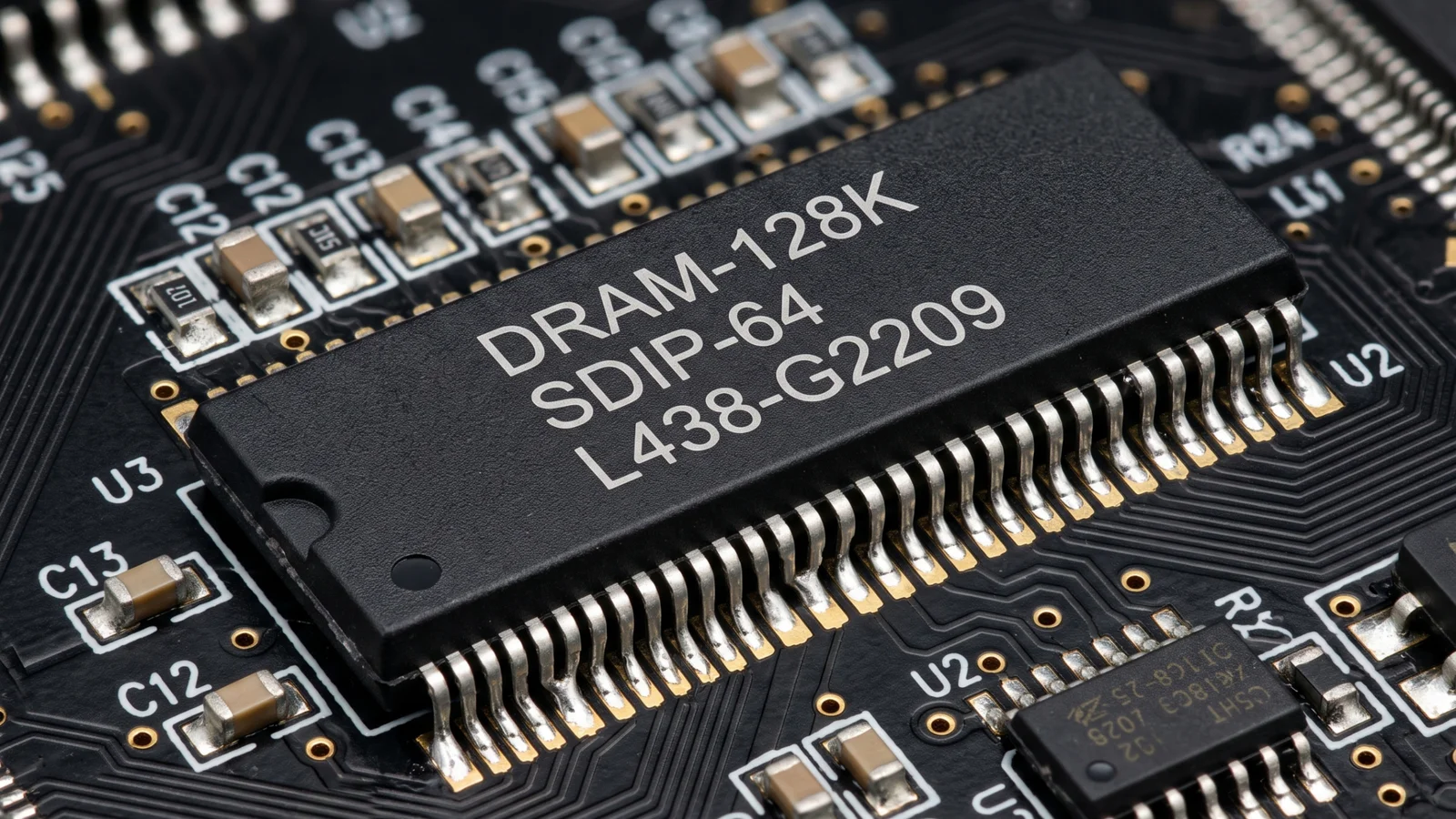
Alongside the MediaTek deal, Nvidia introduced NVHBM, a custom take on high-bandwidth memory. The change is where the memory controller lives. Traditional designs put it on the XPU die. NVHBM moves Nvidia's custom controller into the HBM base die itself, and Nvidia says the result is up to 30% more memory bandwidth than standard HBM4E, 15% lower HBM power draw, and up to 25% of the XPU die freed up for compute.
Memory makers still build the stacks. Nvidia's implementation is standardized so multiple suppliers can validate and sell compliant product, which matters for Micron (MU), SK Hynix (SKHY) and Samsung, the three companies that manufacture HBM. The base die architecture, though, is now Nvidia's design. Memory demand was already the tightest part of the AI supply chain when Elon Musk said demand could outrun supply by 200% in August.
The first customer is not MediaTek. Amazon's (AMZN) Annapurna Labs will integrate NVHBM into Trainium4, its next training chip, so AWS racks can mix Nvidia GPUs and Amazon silicon on a common architecture. "NVHBM represents a new architectural approach to advancing high-bandwidth memory performance and efficiency," said Nafea Bshara, vice president of Annapurna Labs at Amazon.
Why would Nvidia fund custom chips that compete with its GPUs?
Custom accelerators were supposed to be the threat to Nvidia. Broadcom (AVGO) and Marvell (MRVL) built multibillion-dollar businesses designing them for hyperscalers precisely because those customers wanted an alternative to buying GPUs. NVLink Fusion is Nvidia's answer: if a custom chip is coming anyway, make sure it is built with Nvidia's interconnect, Nvidia's memory architecture and a MediaTek design flow that Nvidia just financed, and make sure it slots into an Nvidia rack. The custom chip stops being an exit from the ecosystem and becomes a doorway into it.
MediaTek gets scale it could not buy alone. The Taiwanese company is best known for smartphone processors, and it already co-developed the DGX Spark desktop AI machine with Nvidia. The new agreement extends that to multiple generations of RTX Spark and DGX Spark chips for consumer PCs, developer systems and workstations, plus continued work pairing MediaTek's Dimensity Auto platform with Nvidia technology in software-defined vehicles.
The announcement landed ahead of Monday's US session, and Broadcom reports earnings Wednesday, September 2, where custom AI silicon will be the number everyone reads first.
Update, October 15, 2026: ByteDance is in advanced talks to buy custom AI chips from MediaTek for its data centers.