Key points
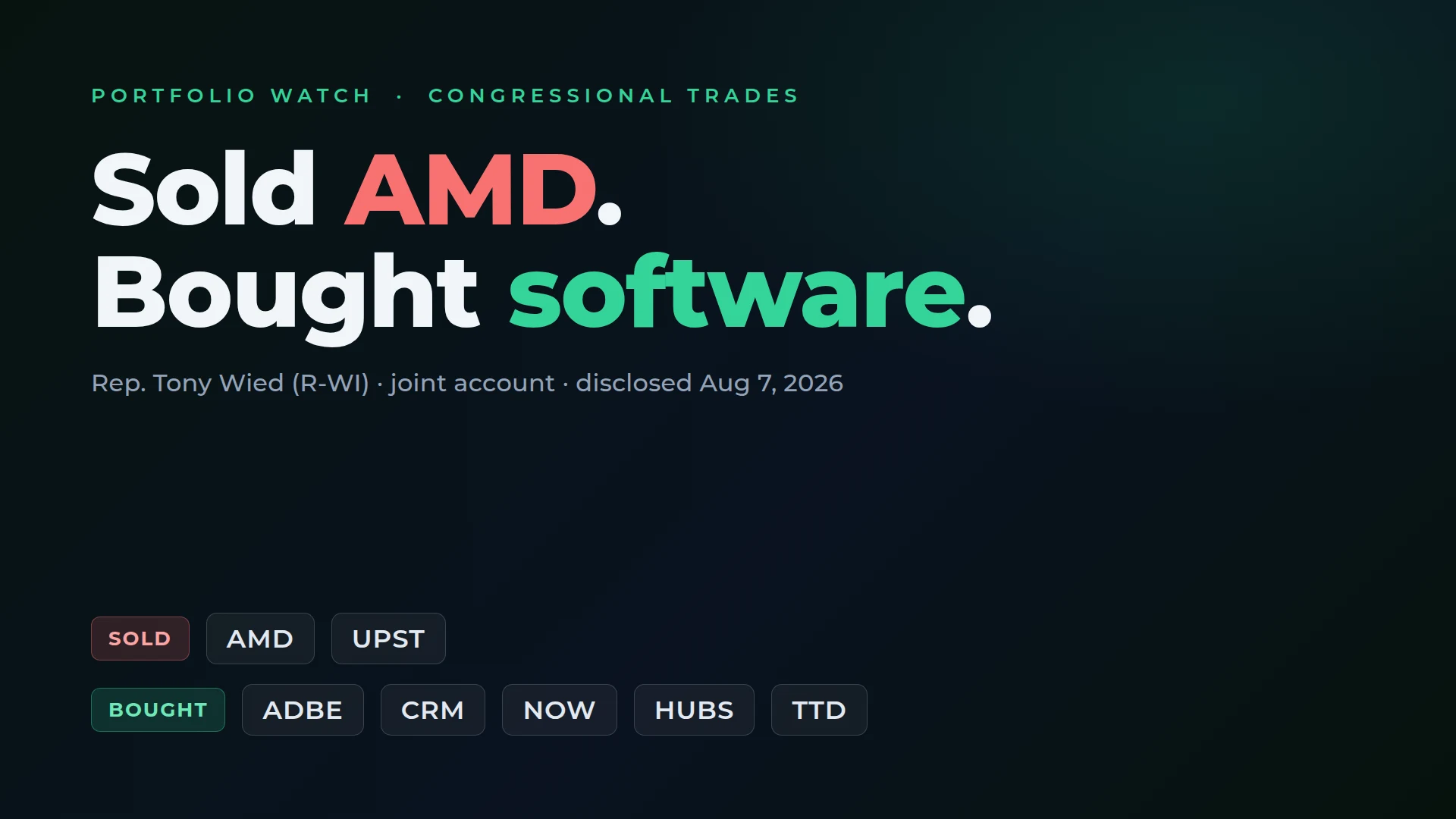
- Wisconsin Rep. Tony Wied sold up to $250,000 of AMD on June 3, then bought five software stocks on June 9.
- The buys: Adobe (ADBE), Salesforce (CRM), ServiceNow (NOW), HubSpot (HUBS) and The Trade Desk (TTD); he also sold part of his Upstart (UPST) stake.
- Held jointly; filed July 24 and posted publicly August 7. His February filing showed the same tilt, out of chips and into software.
A hobby of mine is to read congressional trading reports the way some sports fans read the box scores. Most of them are forgettable. Then one account makes the same move twice in five months, and it turns into a small story about where one investor thinks the market is headed. This week that account belongs to Tony Wied, a first-term Republican from Wisconsin's 8th district that I found on our congressional-trades tracker.
On June 3, Wied's joint account sold part of its stake in Advanced Micro Devices (AMD), a sale disclosed in the $100,001 to $250,000 range. It was the largest single trade in the report. Six days later, on June 9, the same account bought five software companies in one sitting. He filed the report on July 24, and the Clerk posted it publicly on August 7. That's when the trades surfaced.
Here's the whole filing, laid out.
| Stock | Trade | Amount disclosed |
|---|---|---|
| Advanced Micro Devices (AMD) | Sold part of stake, June 3 | $100,001 to $250,000 |
| Adobe (ADBE) | Bought, June 9 | $50,001 to $100,000 |
| Salesforce (CRM) | Bought, June 9 | $15,001 to $50,000 |
| ServiceNow (NOW) | Bought, June 9 | $15,001 to $50,000 |
| HubSpot (HUBS) | Bought, June 9 | $15,001 to $50,000 |
| The Trade Desk (TTD) | Bought, June 9 | $15,001 to $50,000 |
| Upstart (UPST) | Sold part of stake, June 9 | $15,001 to $50,000 |
Put the two dates together, and the shape is a rotation. Money came out of a chip position and went into enterprise software, all inside the same week. The five he bought are all subscription-software businesses. He sold AMD, which is a core name in the AI-chip trade. It's the same out-of-chips-into-software move a good part of the market has been making this year, except here it's one person's account doing it in a single filing.
The same move he made in February
It's not the first time either. Wied's February filing showed the same tilt. That month, the account sold parts of Broadcom (AVGO), Lam Research (LRCX) and Arista Networks (ANET), three chip and networking names, and it bought ServiceNow, HubSpot and The Trade Desk, the same software names he added to again in June. He's been leaning this way for months.
It isn't a straight line. February was a broad reshuffle, dozens of trades, and a few of them cut against the story. He bought Micron (MU), a memory-chip maker, in the same batch, and he sold part of a Salesforce position that month before rebuying it in June. Wied trades constantly. The Badger Project, a Wisconsin nonprofit newsroom that tracks his filings, calls him one of the most active traders in Congress. It reported he parked more than $1 million in Treasury bills early this year before moving the money back into stocks. So the software tilt is real, and it sits inside an account that turns over all the time.
He's not the only one on Capitol Hill reshuffling technology names, either. In July, a senator sold Apple and Nvidia and bought Coherent and Micron instead. Different names, same instinct: rearrange the tech holdings while the group is in motion.
A filing like this is a record of what happened, and it stops there. The account is held jointly, and plenty of members leave the day-to-day to an adviser, so the hand behind these picks stays an open question. The report gives the range of each trade and leaves the position size unstated. Copying a lawmaker into a stock is its own decision with its own track record. I made that case at more length in a piece on whether copying trades from Congress, hedge funds and insiders actually works.
What the filing does give you is a clean, dated record: one active investor decided, twice this year, that he'd rather own software than chips.