Key points
- Meta launches $35 billion in stock offerings
- Class C shares could support another $60 billion in sales
- Nvidia, AMD, and Broadcom express interest in investing
Meta Platforms (META) launched offerings totaling about $35 billion on Monday, October 26, to help fund its AI buildout. I'd half expected this one. When Meta laid out its plan for nonvoting Class C shares last week, its filing said management's forecasts showed a need to raise "hundreds of billions of dollars over a period of several years beginning as early as fall 2026."
The money comes in two pieces, according to Meta's announcement, which it also filed with the SEC. About $22.5 billion is regular Class A stock. The other $12.5 billion is preferred stock that turns into common stock in 2029. The underwriters also have options to buy about $5.25 billion more. Separately, Meta plans a program to sell up to $60 billion of Class C shares starting in early 2027, though it hasn't signed an agreement for that yet.
Meta shares were at $639.09 in premarket trading as of 8:35 a.m. ET, down 0.5% from Friday's close of $642.62.
How does a forward sale work?
The $22.5 billion piece has a twist. Meta doesn't get the cash right away. Morgan Stanley and Goldman Sachs are borrowing Meta shares from other holders and selling them to investors now. If Meta settles by delivering new shares, it will receive the cash at settlement, after the banks' discount and other adjustments. Settlement is due no later than November 19, 2027.
What's a mandatory convertible?
The other $12.5 billion is 250 million "depositary shares." Each depositary share represents one-twentieth of a preferred share with a $1,000 liquidation preference, giving it a $50 claim ahead of common stock in a liquidation. That priority does not guarantee repayment. Holders get a dividend, with the rate set when the deal is priced.
Around August 15, 2029, each preferred share converts into Meta stock automatically. That's the "mandatory" part. How many shares holders get depends on Meta's stock price then, within a minimum and maximum set at pricing. Meta plans to list the depositary shares on the Nasdaq under the ticker METAM.
Where the Class C shares come in
This is the part I found most interesting. Both pieces are built to switch to the nonvoting shares once they exist. After Class C stock is issued, and if certain other conditions are met, the preferred converts into Class C instead of Class A. In some cases, Meta could also settle the forward sales "through the delivery of only shares of Class C Common Stock." The $60 billion program would sell Class C from the start.
Selling new Class C shares would let Meta raise money without changing existing shareholders' voting power, including Mark Zuckerberg's. Their percentage ownership would still fall.
Nvidia, AMD, and Broadcom raised their hands
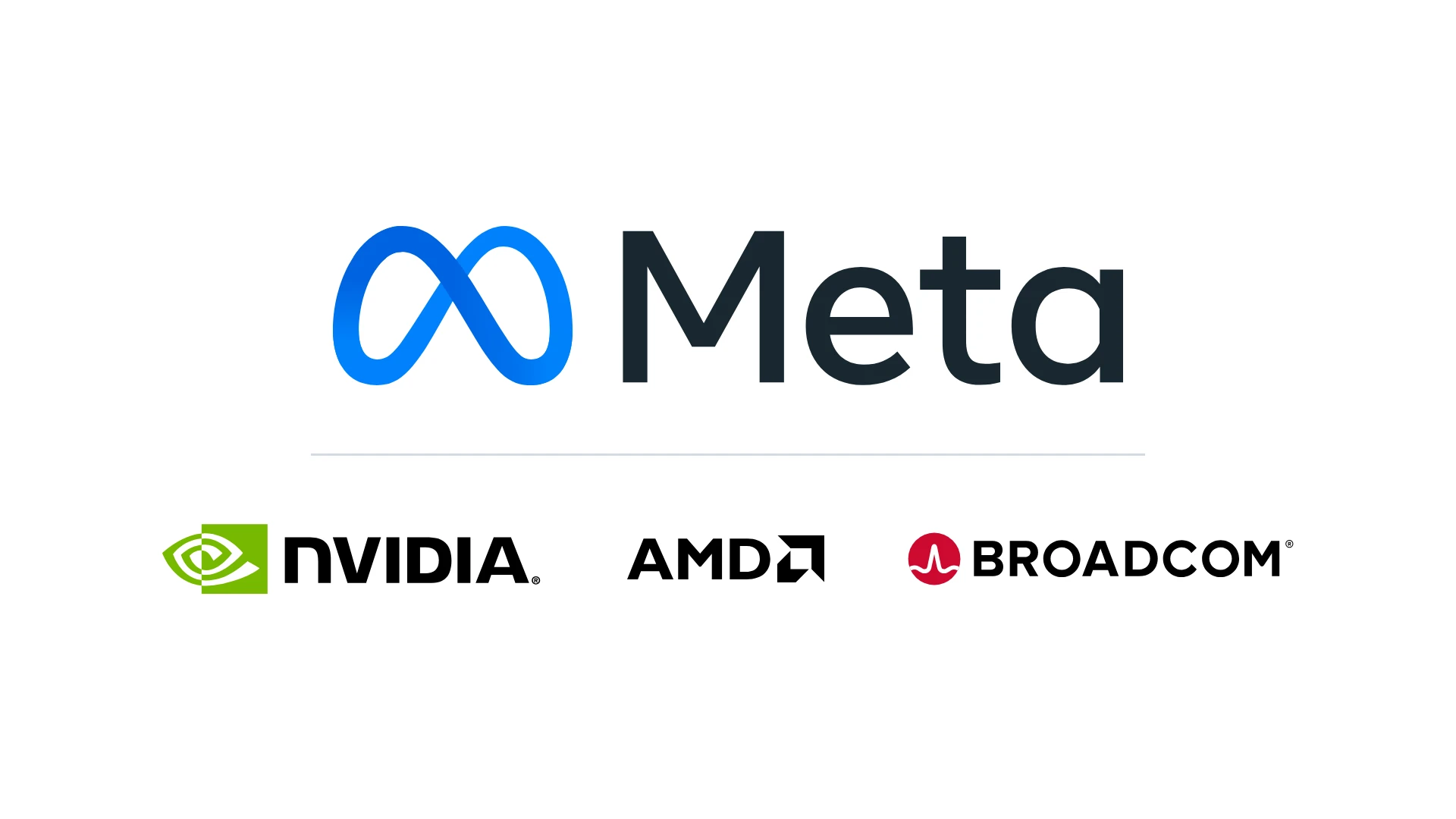
The announcement names Nvidia (NVDA), Advanced Micro Devices (AMD), and Broadcom (AVGO) as "cornerstone investors." Together, they've indicated interest in buying up to $5 billion of the Class A stock, at the same price as everyone else. The interest is non-binding, so any of them could buy more, less, or nothing at all. All three make chips used in AI data centers.
Why does Meta want the money?
Meta expects capital spending of $135 billion to $145 billion this year. In the third quarter, it spent more on buildings and equipment than its operations brought in, which put it on the capex vs. cash flow scoreboard I put together this weekend.
Meta's announcement also points to the cash it already has. It says it generated $97 billion of operating cash flow in the first nine months of 2026 and had about $82 billion in cash and marketable securities at the end of September. It called the stock sales "a complementary source of capital" alongside cash flow, debt, and partnerships. The $35 billion is about 2% of Meta's $1.64 trillion stock market value at Friday's close, by our calculations.
What's still missing from the filings?
Meta will set the offering price, the preferred dividend rate, and the conversion terms at pricing. How much stock the three chip companies end up buying is also still open. Those details should appear in Meta's final prospectus.