Key points
- Amazon, Alphabet, and Meta spent more than their operations generated
- Microsoft still has a quarterly cash cushion
- Alphabet raised $49.6 billion by selling stock
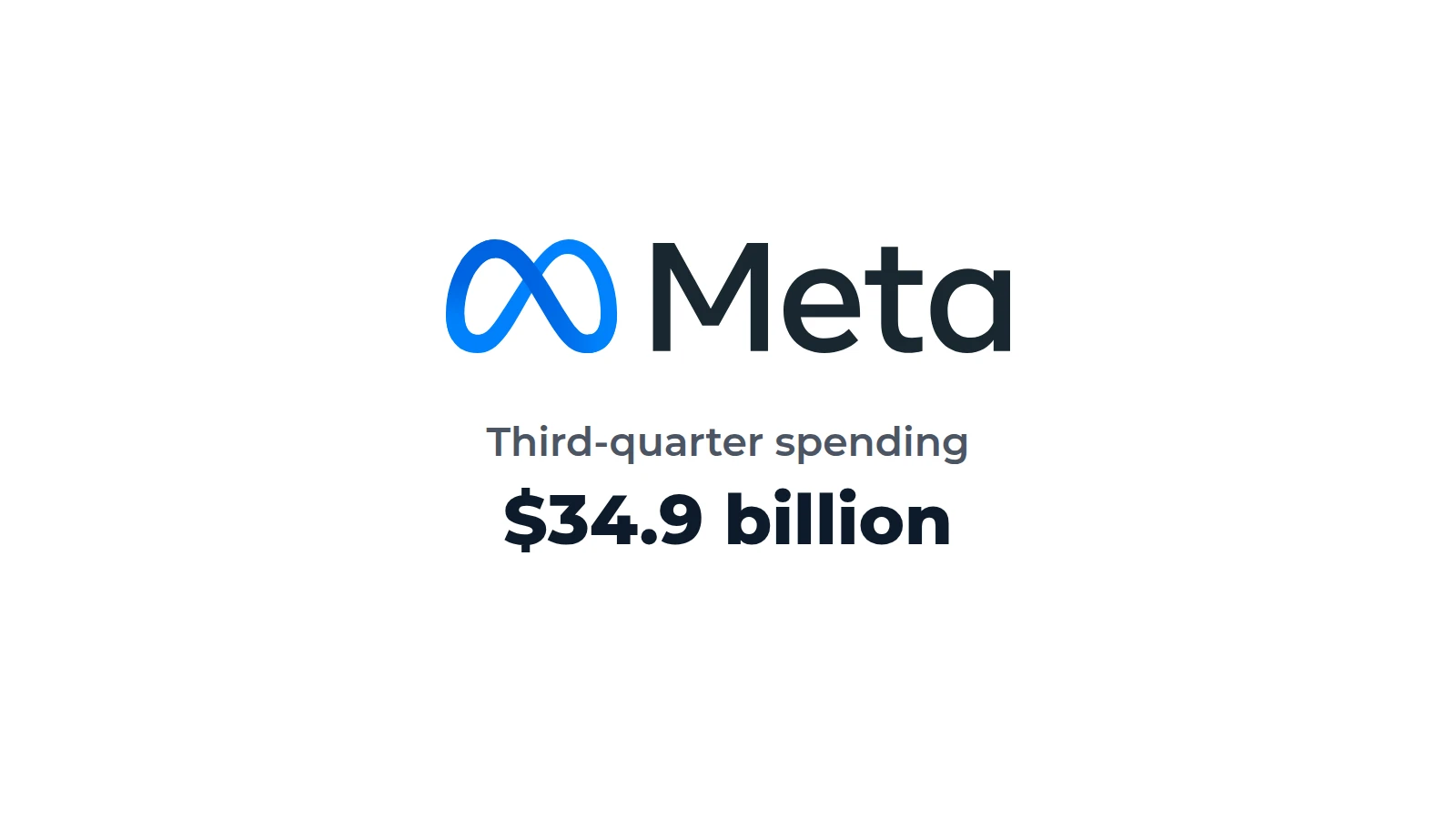
Meta Platforms (META) reported $34.9 billion in capital spending on October 21, more than the $32.8 billion its operations generated. Its negative $2.1 billion in free cash flow sent me back to the cash flow statements of the other big AI spenders.
I wanted to see who was still covering the buildout with cash from the business. I lined up the latest filings from Microsoft (MSFT), Amazon (AMZN), Alphabet (GOOGL), and Meta. Amazon and Alphabet had already spent more than their operations generated in the April-to-June quarter. Of the four, only Microsoft had a surplus in its latest reported quarter.
Two lines in the filings tell the story
The first is operating cash flow: cash generated by the business. The second is cash purchases of property and equipment. Subtract those purchases from operating cash flow, and you get free cash flow: how much remains, or how much the company needs to cover from cash reserves or other funding.
For these companies, much of that equipment spending supports data centers, servers, and chips. I compared both the latest quarter and the past 12 months to see whether the spending gap extended beyond a single quarter.
| Company | Latest quarter | Operating cash flow | Cash purchases of property and equipment | Cash remaining / shortfall | Purchases as % of operating cash flow, past 12 months |
|---|---|---|---|---|---|
| Amazon (AMZN) | April–June 2026 | $45.4B | $54.2B | −$8.8B | 107% |
| Alphabet (GOOGL) | April–June 2026 | $39.1B | $44.9B | −$5.9B | 71% |
| Meta (META) | July–September 2026 | $32.8B | $33.9B | −$1.2B | 78% |
| Microsoft (MSFT) | April–June 2026 | $55.4B | $35.8B | +$19.6B | 63% |
One filing detail explains why Meta's numbers here differ from its earnings headline. Meta includes about $1 billion of finance lease payments, a kind of long-term lease it counts much like a purchase, in its reported capital spending. That brings its total to $34.9 billion and its reported free cash flow to negative $2.1 billion. The table uses cash purchases of property and equipment for all four companies.
Quarterly gaps and 12-month percentages are our calculations from the companies' quarterly and annual SEC filings. Figures are rounded separately, so the displayed amounts may not subtract exactly. Microsoft's fiscal year ends in June.
Which companies are past the line?
Amazon's spending gap extends across the full 12 months. Over that period, Amazon spent 107% of its operating cash flow on property and equipment, and the company's own free cash flow figure for the 12 months through June was an outflow of $7.6 billion. Amazon plans to spend about $220 billion this year, CNBC reported.
Alphabet spent more than it brought in for the quarter, but over 12 months its purchases were 71% of operating cash flow. Chief financial officer Anat Ashkenazi said on the July call, "We had negative free cash flow of $5.9 billion in the second quarter, driven by our investments in CapEx [capital spending]," and that free cash flow "will remain under pressure." Alphabet raised its 2026 capital spending forecast to $195 billion to $205 billion.
Meta sits in between, at 78% over 12 months. It expects to spend $135 billion to $145 billion this year, counting those lease payments.
How are they raising cash?
The funding side surprised me more. The same filings show how the companies are raising cash and returning it to shareholders. Those flows help explain their financial flexibility, although they don't show how every dollar raised was spent.
| Company (2026 so far) | Debt raised | Stock sold | Stock buybacks | Dividends paid | Cash and short-term investments |
|---|---|---|---|---|---|
| Amazon (Jan.-June) | $67.0B | None | None | None | $123.0B |
| Alphabet (Jan.-June) | $56.2B | $49.6B | $0 | $5.2B | $242.5B |
| Meta (Jan.-Sept.) | $24.9B | None | $0 | $4.1B | $82.5B |
| Microsoft (Jan.-June) | None | None | $9.2B | $13.5B | $76.8B |
Cash and short-term investments are as of each company's latest quarter-end. Debt raised is after borrowing fees where the company reports it that way.
Alphabet's move stands out. In June it sold $30.5 billion of common stock and $19.1 billion of a preferred stock that automatically converts into common shares later, and it bought back no shares in the first half after repurchasing $28.3 billion in the same months of 2025. Meta also hasn't bought back any stock through September. Amazon, which doesn't pay a dividend and didn't buy back stock in the first half, borrowed $67 billion in six months.
Microsoft's operating cash flow still covers its capital spending, and it's still buying back stock. One detail matters for reading its numbers, though. Our table uses cash purchases of property and equipment, while Microsoft's own capital spending figure is broader and also counts finance leases. In July, chief financial officer Amy Hood said more of Microsoft's future data center leases will be operating leases instead of finance leases. Operating leases work more like ordinary rent. "Finance leases are included in capital expenditures, while operating leases are not," she said. So part of Microsoft's future buildout will show up as lease payments in its operating cash flow over time, not in its reported capital spending.
What happens next week?
Microsoft and Alphabet report on October 28, and Amazon reports on October 29. Those reports will add July-to-September figures for the three. We'll update this table when the filings land and watch the same two lines, operating cash flow and capital spending, plus how each company covers any gap. Our AI Bubble Index tracks a related question: whether the demand behind the buildout is real.