My position: I own shares of SK Hynix (SKHY). Nothing below is investment advice.
Key points
- Elon Musk told SpaceX's earnings call on August 4 that memory supply grows about 20% a year while demand grows 200%, and called memory the limiting factor on growth.
- Micron guides to about 20% bit growth in calendar 2026, so the buyer and the seller agree on the supply number.
- Microsoft put $25 billion of its 2026 capex on memory and components. Amazon raised its own budget to $220 billion and named memory prices.
- The fabs that would fix it make first wafers in mid-2027, late 2027 and the second half of 2028.
- HBM3E burns three times the wafer volume of standard DDR5, so converting a line to AI memory yields fewer total bits.
The memory shortage is real, and we've seen how high the demand is from the big tech companies.
Big tech has been complaining about memory prices for months. Tim Cook called it a hundred-year flood on Apple's (AAPL) last earnings call and said the company had reluctantly raised prices because of it. None of that is new.
What Elon Musk added Tuesday was the size of the gap.
He was on SpaceX's call. Somebody asked what's holding growth back, and he said memory.
"The memory output is increasing by around 20% per year," Musk said. "Ask yourself, is the demand increasing by 20% a year? No, the demand is increasing by 200% a year, maybe higher. If you have got demand increasing much faster than supply, Economics 101 would suggest that the price increases."
That's a buyer explaining why he expects to keep paying more. He thanked Micron (MU) and Samsung Electronics by name on Tesla's (TSLA) July call for allocating him supply.
Big tech already put a number on it
Microsoft (MSFT) guided to $190 billion of 2026 capital spending. Finance chief Amy Hood attributed $25 billion of that to memory and component costs. Amazon (AMZN) raised its own budget to $220 billion, and Andy Jassy named memory prices as the reason.
Apple went looking for a way around it and couldn't find one. It asked China's CXMT to undercut the Koreans on phone memory and got quoted at their price or higher, which we covered Wednesday. The biggest memory buyer on earth shopped for leverage and came home with nothing.
Nobody can add supply before 2027
Musk's 20% isn't a guess. Micron guides to DRAM and NAND bit shipments growing about 20% this year. Same number. That's the industry running the fabs it already owns harder, because inside one year that's the only lever there is.
New buildings are the other lever. Here's when they produce.
| Site | First wafers |
|---|---|
| Micron Idaho, first fab | Mid-2027 |
| Micron, ex-PSMC site | Second half 2027 |
| Micron New York | Second half 2028 |
| SK Hynix (SKHY) Indiana packaging | Late 2028 |
Micron's capex went from $13.8 billion in fiscal 2025 to over $25 billion in fiscal 2026. The money's moving fast. The wafers still show up in 2027 and 2028.
Industry analyst Tom Coughlin wrote in Forbes in July that large-scale new capacity is unlikely before 2028, and that producers are covering somewhere between half and two thirds of what their core customers ask for. Deloitte's estimate, cited in Korean coverage, is that construction plus equipment installation runs three to five years.
SK Hynix chief executive Kwak Noh-Jung told Reuters on July 10 that next year is "the most difficult year in the industry's history on the supply side." He expects demand to run past what his company can supply beyond 2030. He said it while announcing SK Hynix is scouting new fab sites in the US, Japan and Southeast Asia.
And high bandwidth memory is a wafer hog. Micron chief executive Sanjay Mehrotra has put it at three times: same process, same capacity, HBM3E burns three times the wafer volume of ordinary DDR5. You stack dies vertically and one defect anywhere scraps the whole stack.
So when a maker flips a line to HBM, the wafers don't change but the usable bits drop. The industry is converting the supply it already owns into a form that yields fewer bits, because that's where the money is.
That's how a shortage of AI memory turns into you paying more for a laptop.
What it means for the memory companies
Prices keep going up. TrendForce has conventional DRAM contract prices up 93% to 98% in Q1, 58% to 63% in Q2, and a forecast 13% to 18% in Q3. Records the whole way.
The stocks are a different animal, and July proved it. SanDisk (SNDK) lost 46% from June 25 and Micron lost 33%, which we walked through Monday. Nothing about the shortage changed. The rate of increase did, and these stocks trade the rate.
Then they ripped back. Micron is up 20.8% and SanDisk 40.5% from their July 29 closes.
One thing worth knowing if you're shopping this. Samsung Electronics is the biggest memory maker of the three and you can't buy it on a US exchange. It trades in Seoul. That leaves Micron, SK Hynix's Nasdaq shares and SanDisk as the ways to own this from here.
So the shortage runs on a construction schedule you can read off a page, and the tape runs on something a lot shorter. Both things are true at once, and the last six weeks were an expensive way to learn it.
Micron traded at $917.60 late Wednesday morning, up 2.8%. SanDisk was at $1,412.36, down 1.1%. It reports after the close.
This is general market commentary and not investment advice.
Sources
- The Motley Fool and Seoul Economic Daily, August 4 and 5, 2026, for Elon Musk's remarks on the SpaceX earnings call
- Micron capital spending, bit shipment guidance and fab timelines from company earnings materials and Reuters and CNBC reporting. Sanjay Mehrotra's three-times wafer ratio for HBM3E from Micron's March 2024 earnings call
- Tom Coughlin, Forbes, July 12, 2026, for capacity timing and the half-to-two-thirds coverage estimate
- Aju Business Daily, July 13, 2026, for Kwak Noh-Jung's Reuters interview remarks and the new fab site review
- TrendForce, July 3, 2026, for the 3Q26 DRAM and NAND contract price forecasts
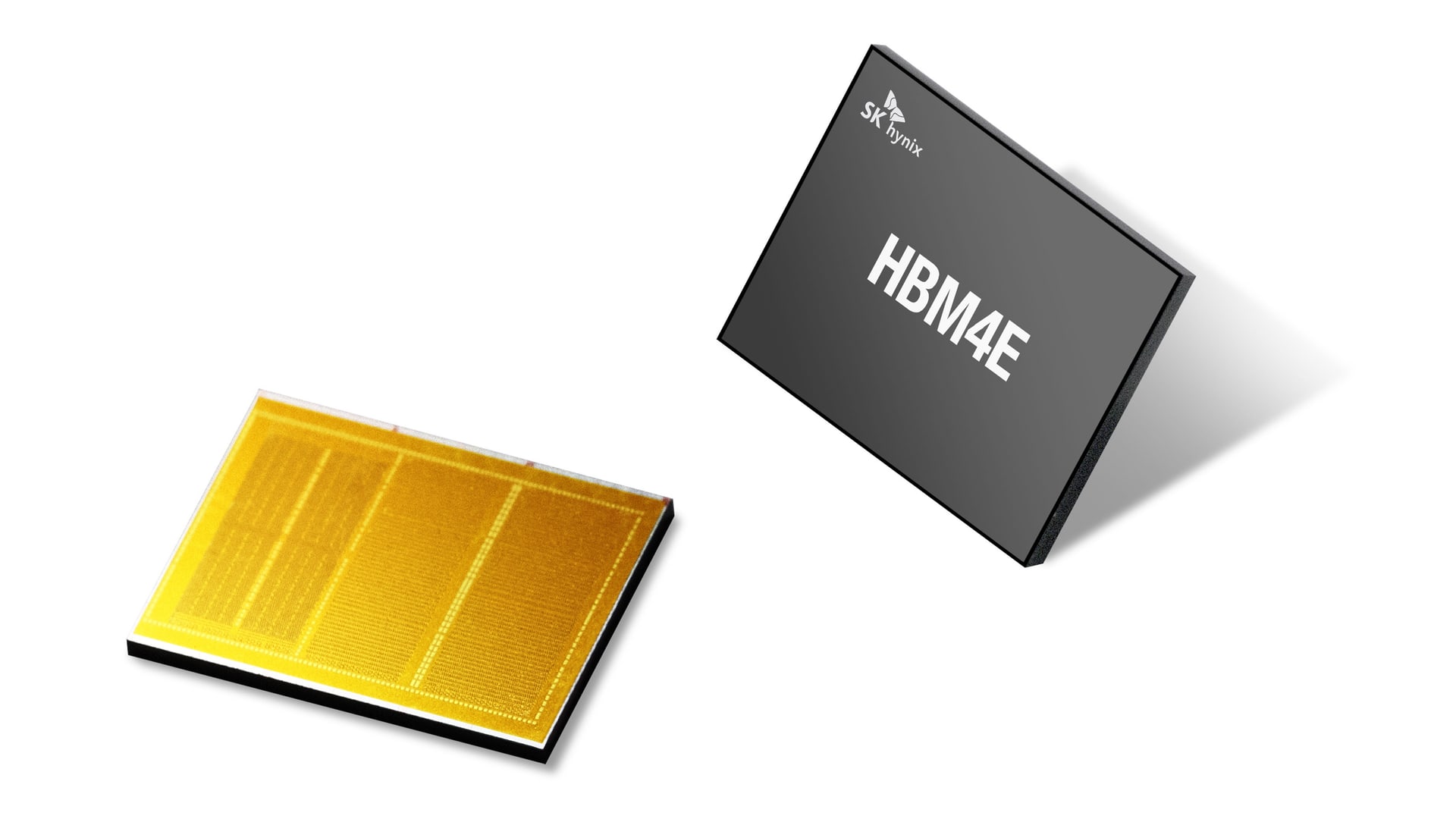
- Price data via Robinhood as of 11:11 a.m. Eastern, August 5, 2026. Cover image: SK hynix HBM4E, via the SK hynix newsroom