Key points
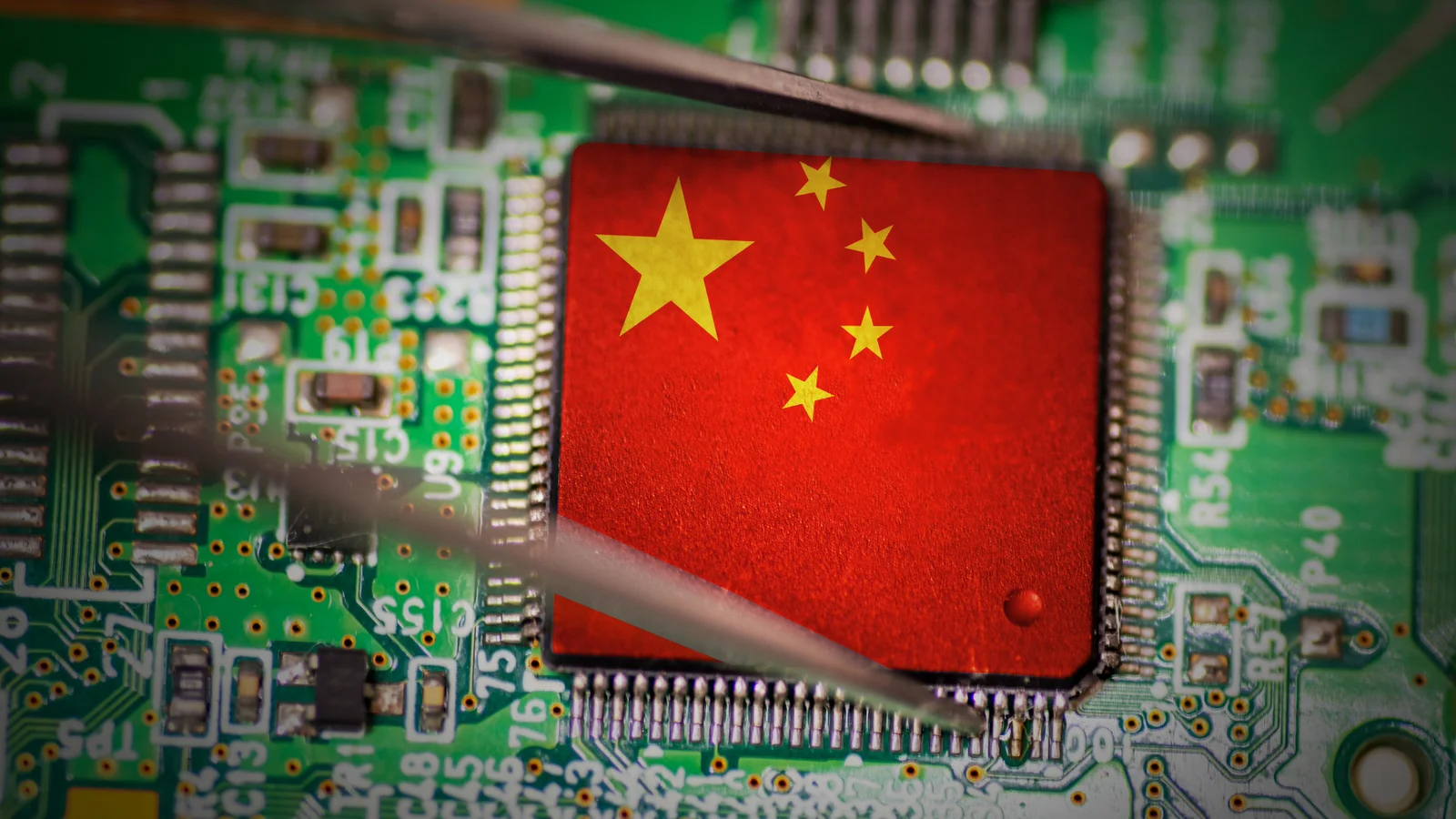
- Digital Daily reported on August 5 that Apple asked China's CXMT to lower its price on LPDDR5X mobile memory and was turned down. CXMT quoted the same as Samsung Electronics and SK Hynix, or higher.
- CXMT could refuse because Huawei, Xiaomi and other Chinese makers had already bought up its output on long-term contracts at high prices, to keep their own supply safe under US sanctions.
- It was not the first time. TechWorld reported on July 28 that CXMT also quoted Apple above Samsung's price on DDR5 server memory.
- Large buyers have used a cheaper Chinese supplier as pressure on Samsung and SK Hynix before. It did not work this time, and the floor under ordinary memory prices held.
- In Seoul on August 5, the Kospi rose 3.76% to 6,598.26. SK Hynix rose 5.77% to 1,668,000 won ($1,172 USD) and Samsung Electronics rose 2.50% to 246,000 won ($173 USD).
Digital Daily (디지털데일리) reported on August 5 that Apple asked CXMT for a lower price on phone memory and didn't get one. The Chinese company came back at the same level Samsung Electronics and SK Hynix charge, or higher.
Prices, the exchange code and our full file on the company are on the SK Hynix page.
CXMT is short for ChangXin Memory Technologies. It's the memory maker China has spent years building up as its own answer to the Korean companies. The part Apple wanted is LPDDR5X, which goes inside phones.
No contract came out of it, and neither company has confirmed it, so this is Korean industry reporting and not a disclosed agreement. Korean outlets have written about it all week anyway, and their interest is in the question sitting underneath it, which is who decides the price of memory now.
Apple buys memory in enormous quantities, and for years it's had a reliable way to bring the price down. Find a cheaper supplier somewhere else, then let the Korean makers know that the cheaper supplier exists. This time the cheaper supplier wasn't cheaper.
Why CXMT did not need the business
The explanation in the Korean reporting is that CXMT's memory was already spoken for. Huawei, Xiaomi and other Chinese electronics makers have tied up its output on long-term contracts, and they paid high prices to do it. They were buying certainty rather than a bargain, because US sanctions make a Chinese supply chain that leans on foreign chips into a risk they would rather not carry.
So when Apple arrived asking for a discount, and bringing its own quality checks with it, CXMT had very little reason to want the order.
This was also the second time in about a week that a Korean outlet reported the same thing. On July 28, TechWorld (테크월드) reported that CXMT had quoted Apple above Samsung's price on DDR5 server memory too. Server memory and phone memory are different products sold under different contracts, and CXMT gave the same answer on both.
An industry expert quoted in that report read it as Apple running out of room.
"In the end, Apple's options have gotten narrower," the expert said.
The expert also pointed at the part that a price cut would not have fixed anyway, which is that CXMT and YMTC, the Chinese flash memory maker Apple has also been looking at, are both under US restrictions.
"On top of that, with CXMT and YMTC being subject to US security regulations, diversifying Apple's supply chain has become a complex task where commercial efficiency and geopolitical risk have to be considered at the same time," the expert added.
A semiconductor industry official, quoted by Digital Daily without a name, described what that does to the rest of the market.
"A strange thing has happened, where CXMT is holding the price floor and by doing so is firmly supporting the price of ordinary D-RAM as well," the official said.
The same official expects it to show up in the Korean companies' results.
"With the floor under ordinary D-RAM unbroken, and with Samsung and SK Hynix taking the lead in high-value AI memory such as HBM4 for themselves, the operating margins and the global market control of Korea's semiconductor camp will rise more steeply in the second half," the official said.
That second part is a forecast, and it comes from a person whose name we don't have. Forecasts about memory have been wrong many times before. The first part is a description of something that has already happened, and it's the more useful half.
What the Korean makers did with the room
Everyone expected a Chinese memory company to come into this market the way Chinese companies came into solar panels and batteries, by selling under everyone else until the price fell. That's what the worry about CXMT was really about. Instead CXMT has priced itself right alongside the two Korean makers, which leaves the bottom of the market where it already was.
Samsung and SK Hynix have used that room to move production away from ordinary memory and toward the expensive kind, HBM4 and LPCAMM2 and enterprise SSDs, where the margins are much better and the competition is thinner. A company that steps back from a product category would normally lose ground in it. That hasn't happened here, because no one underneath them cut price.
Seoul had a strong session on the day the story ran. The Kospi rose 3.76%. SK Hynix rose 5.77% to close at 1,668,000 won ($1,172 USD), its second rise in a row, and Samsung Electronics rose 2.50%. The buying was broad and there were other reasons for it, so I wouldn't give this one report the credit. I wrote about the 5% fall two sessions earlier, which shows how much these days have been swinging.
The longer question started on July 27, when CXMT listed in Shanghai and foreign investors sold Korean chip shares on the news. I covered that day. The fear was that a new competitor with the Chinese government behind it would break memory prices. Nine days later, the same competitor turned down Apple over price.
Meanwhile, Korea's July trade figures already showed what the memory shortage is doing to the country's export numbers. Semiconductors were 41.5% of everything the country sold abroad that month.
Sources
- 디지털데일리, 中 CXMT 배짱이 쏘아 올린 공…삼성·SK 'D램 협상력' 강화, on the Apple negotiation over LPDDR5X, the Huawei and Xiaomi contracts, and the industry official's remarks
- 테크월드, CXMT, 애플에 "싸게 줄 이유 없다"…삼성·SK하이닉스보다 비싼 값 제시, on the earlier DDR5 server memory quote
- 한국경제, on the August 5 closing prices for the Kospi, Samsung Electronics and SK Hynix
Quotes are translated from Korean. Won figures are converted at 1,423 won to the dollar. This article is for information only and is not investment advice.