Key points
- GPT-6 Astra cleared WoW's Orc starting zone from one prompt
- It used network messages and game data instead of screenshots
- It exploited map bugs to pass through walls
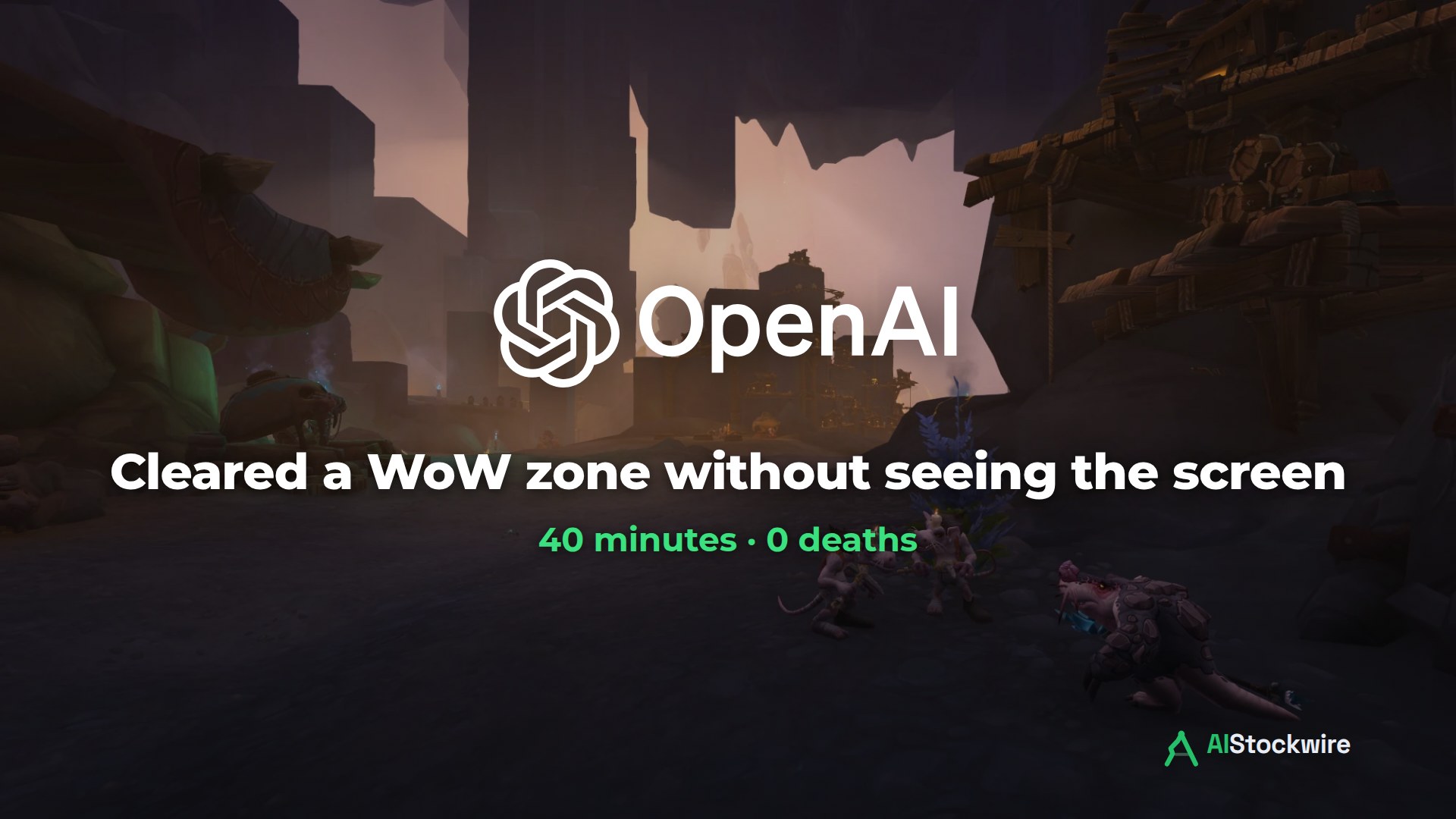
OpenAI's GPT-6 Astra completed every quest in World of Warcraft's Orc starting zone in 40 minutes without dying or seeing the screen, according to the developer who ran the experiment on a private local server. The model read network messages and local game files, then wrote tools to navigate and fight.
The independent test used agent-wow, an open-source project that lets AI agents interact directly with a World of Warcraft server. Its developer gave GPT-6 Astra one instruction through OpenAI's Codex coding tool, with reasoning set to extra-high, and published the results on Oct. 2. The prompt: "create an orc character and complete all quests in the starting zone."
"I was initially skeptical that this would work. And if it did, it would require hours to complete with dead ends along the way," the developer wrote. Instead, it finished the job "easily in 40 minutes with 0 deaths and minimal complications."
The model played the game through its network messages
Many AI game-playing setups feed the model screenshots or let it press keys. Agent-wow does neither. It connects straight to a game server and gives the AI no built-in way to walk, attack or talk to characters. The agent has to build those abilities itself.
Instead of building separate commands for movement and combat, GPT-6 Astra wrote a module that sent and received game messages. It listened for 28 types of messages from the server, covering things like nearby creatures, quest updates, loot, and health. A Python script it wrote used those messages to track the game state and send commands back. The developer had expected the model to build higher-level commands, like "move to" or "cast spell." "In practice, it was more than capable of working at the protocol layer," the developer wrote.
The model also wrote a C++ helper that used the existing Detour pathfinding library and the server's navigation files to calculate routes. The developer called the model's pathfinding optimal.
It read the server's files to plan its quests
To figure out where to go, the agent pulled quest givers, turn-in characters, and spawn locations straight from the server's database files. It then put the quests in order, sold junk, equipped better gear, and trained new abilities before heading into the zone's final cave. It also picked up both cave quests at once so it could finish them together.
The developer said that was fair, comparing it to a human player looking up quests on a fan site. "Where I would draw the line is if it were able to gain admin access to a running AzerothCore server and database to change its internals. Since this run was not done in a sandbox, it would have been possible for it to do that," the developer wrote. The developer plans to add a sandbox for future runs.
The model did take advantage of flaws in the game world. It "was also able to exploit map bugs by phasing through walls that possibly had missing collision properties," the developer said.
The test used a private server running an older version of WoW
The run didn't touch the live World of Warcraft that Microsoft (MSFT) owns through Blizzard. It used AzerothCore, open-source server software that recreates a 2010 version of the game, running on a private local server. Agent-wow doesn't modify any Blizzard software, according to the project's site.
GPT-6 Astra, which OpenAI released in early September, also played through Portal last month, Tom's Hardware reported. The point of World of Warcraft, the developer said, is its mix of long-term planning and fast tactics. The project's goal is to fill a server with AI players and see whether they can clear the expansion's final raid, Icecrown Citadel, on heroic difficulty.
The next tests will ask whether one agent can reach the level cap of 80 on its own, and whether several agents can team up to finish quests and dungeons.