Key points
- Spot HBM3E sells near $2,100 a chip, 4 to 5 times the long-term contract price.
- Korea's average HBM export price hit $76.13 at the end of July, up 9.5% in a month.
- Samsung has about 70% of its capacity in long-term deals running through 2031.
The five-year supply contracts Samsung Electronics and SK Hynix signed with global tech companies this summer have split the memory market into two prices. Customers inside those contracts, a group Korean coverage says includes Microsoft, Nvidia, and the biggest cloud operators, pay a rate that was fixed when they signed. Everyone else buys on the spot market, and new trade data reported August 31 shows they're paying 4 to 5 times more for the same chip.
We keep a running list of HBM stocks, graded by how direct each company’s exposure actually is.
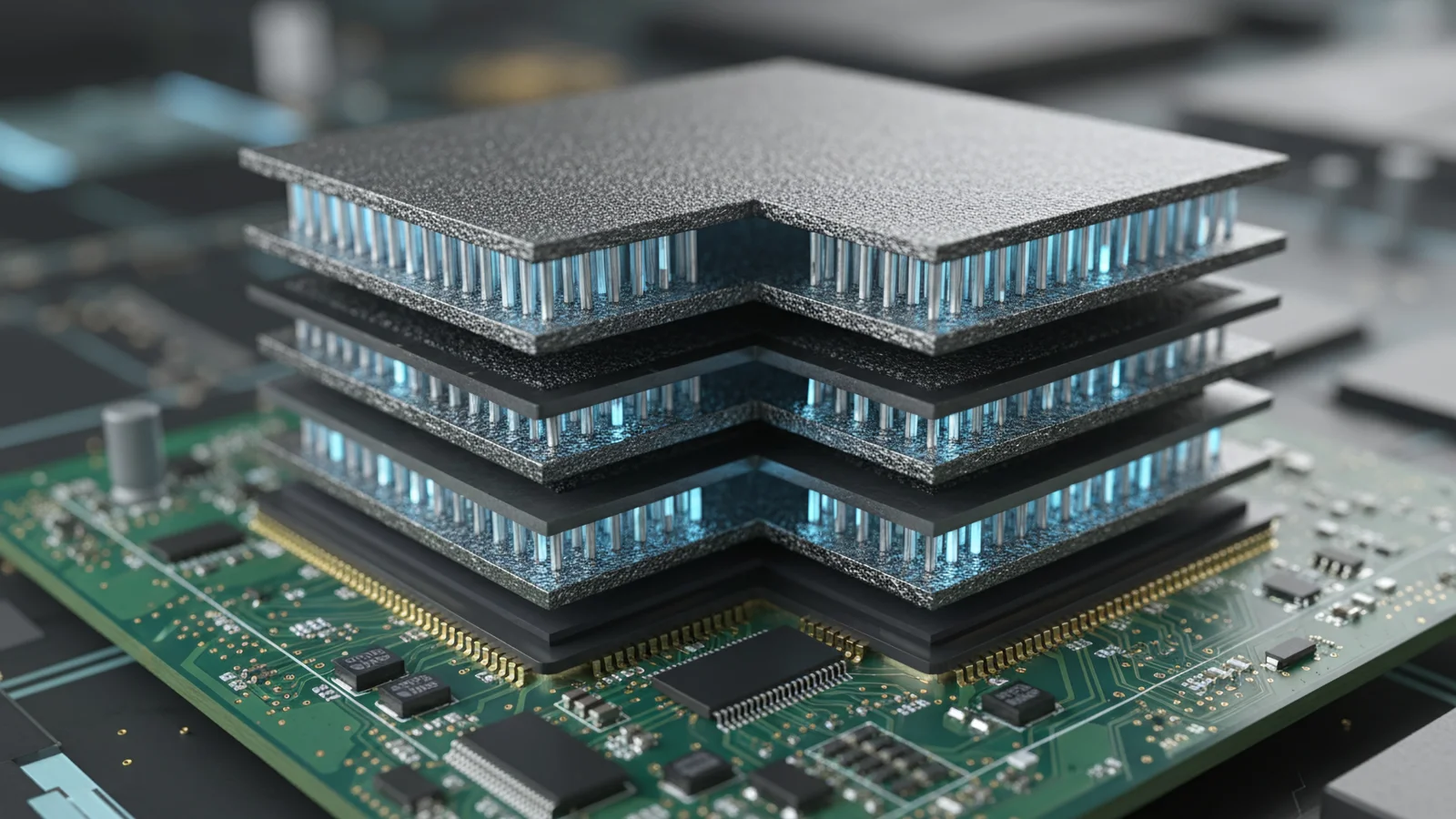
Seoul Economic Daily reported the data Sunday, citing the Korea International Trade Association. A 36-gigabyte HBM3E chip now sells for about $2,100 on the spot market. Under a long-term agreement, that same chip goes for 500,000 to 700,000 won ($360 to $500 USD). The newer HBM4 chips, the ones headed into Nvidia's next generation of AI accelerators, are quoted near $3,500 each.
The export numbers tell the same story from the other side. Korea's average HBM export price reached $76.13 per chip at the end of July, up 9.5 percent in one month and above $70 for the first time. The average DRAM export price was $22.90 in July, up 24.3 percent from June. Korea actually shipped fewer memory chips in July than in May, and still collected 18.5 percent more money for them.
Do Won-bin, a senior researcher at the Korea International Trade Association, said the reason is simple. "Semiconductors are all being exported the moment they are produced," he said. "It is hard to expand production capacity in a short period, so unit prices have no choice but to stay high for a while."
What the contracts left behind
The long-term agreements are why the spot market got so thin. Samsung said on its second quarter call that it completed long-term contracts with the five largest global data-center customers, and Seoul Economic Daily reports the company has set aside about 70 percent of its production capacity for those deals through 2031. SK Hynix has signed its own five-year agreements, including a memory supply deal with Nvidia. We looked at what HBM4 may cost Nvidia earlier this month.
When that much capacity is promised in advance, what's left for the open market is very little. Buyers who didn't sign a long-term deal, smaller cloud companies, server builders, and anyone who needs chips this quarter, have to pay the spot price. That's also why prices keep rising even while shipment volumes fall. The chips exist, but most of them already have an owner before they leave the factory.
Yields add another layer. Ahn Ki-hyun, standing executive director of the Korea Semiconductor Industry Association, told the paper that production gets harder with each step up. "The more advanced the HBM generation, the lower the yield tends to be," he said. The industry expects HBM4 to sell for around twice the price of the generation before it.
For Samsung and SK Hynix this points to record third-quarter results, and Korean brokerages raised their estimates for both companies through August. For everyone downstream it means memory stays expensive. Prices for ordinary DRAM and flash have been setting records since spring, and even China's ChangXin, which turned a $10.8 billion profit in the first half, is no longer the cheap alternative.
Meanwhile, both companies are looking for ways to add capacity. Seoul Economic Daily reports Samsung is considering converting part of a Pyeongtaek foundry line to memory production, and SK Hynix is weighing a chip plant in Japan. The demand behind those prices kept building. In the first 20 days of September, Korea's chip exports rose 259%.
The analyst comments are translated from Korean. Figures are from South Korean trade data and market reporting as described above, with won amounts converted to US dollars at about 1,400 won to the dollar.