Key points
- Starship reached orbit on its 14th flight
- All 26 V3 Starlink satellites deployed
- The ship came down hours early in a fiery splashdown
SpaceX (SPCX) sent its Starship rocket into orbit for the first time on Monday and deployed all 26 of its new Starlink V3 satellites, the larger design the company is counting on to expand its internet network's capacity. SpaceX spokesperson Dan Huot said the company had made contact with each of them, CNN reported.
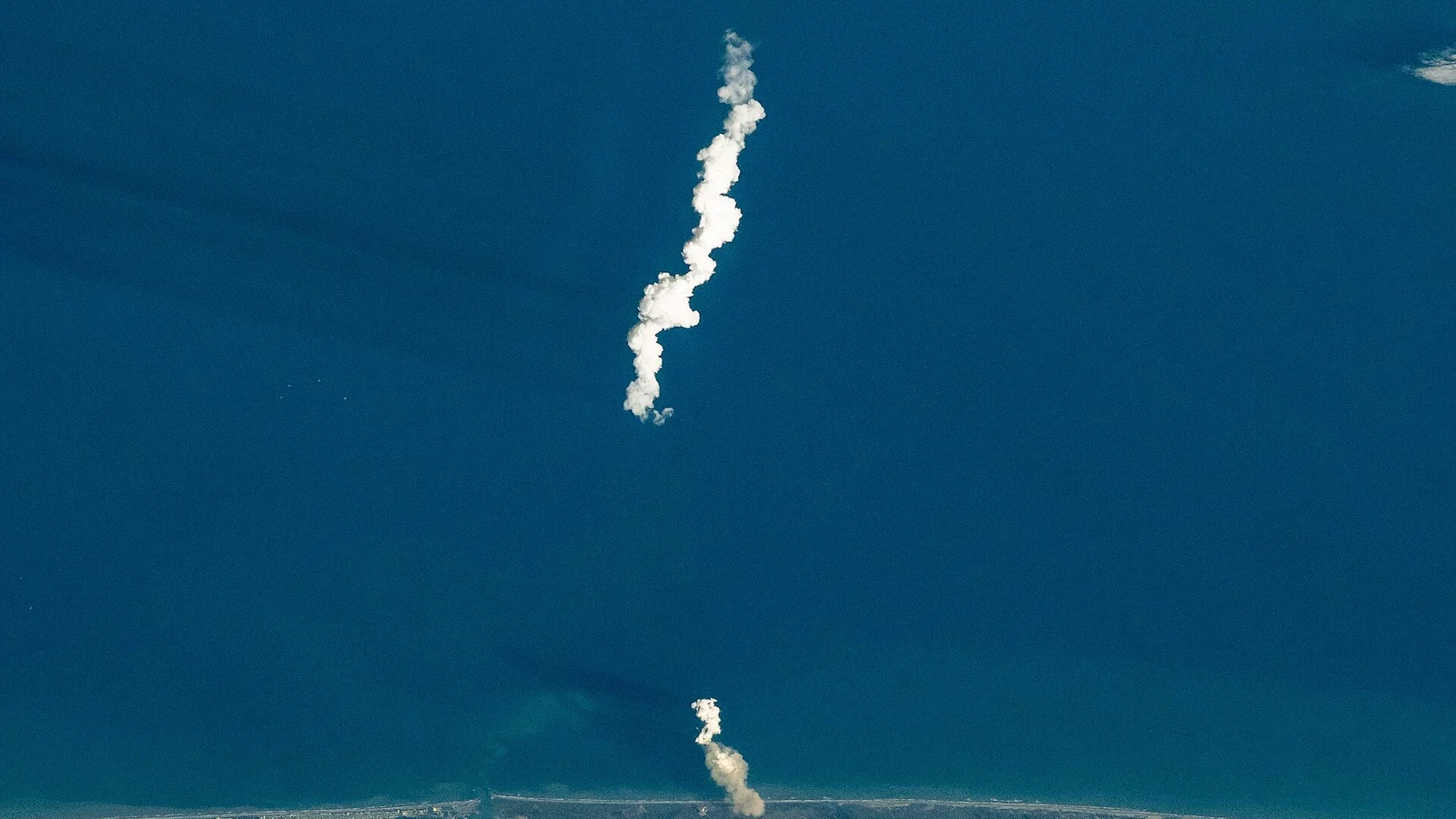
Starship lifted off at 8:48 a.m. Eastern from Starbase, Texas, on its 14th test flight. SpaceX then decided to end the flight hours early, and the ship splashed down in the northern Pacific shortly before noon Eastern.
One of the ship's three vacuum engines shut down early during its first burn, Huot said on the company's webcast. Huot first said SpaceX wouldn't attempt the orbital insertion burn, but flight controllers decided to go ahead about 22 minutes into the flight, NPR reported.
"All three of our center engines, the Raptor sea levels, the ones that we need for the orbital insertion burn and for the deorbit burn at the end of the mission, we're looking healthy," Huot said, according to CNN. He said SpaceX doesn't need to fire the vacuum engines again during this mission.
SpaceX confirmed that the Super Heavy booster splashed down in the Gulf off Starbase, CNN reported. The company didn't try to catch it this time.
What the V3 satellites add
"Each Starlink V3 satellite will add 1 Tbps of capacity to the constellation, for a total of 26 Tbps of capacity added on this mission alone," SpaceX said on its Flight 14 mission page. SpaceX put that at about 10 times the capacity of a single Falcon 9 launch of V2 Mini satellites.
The satellite-to-satellite comparison is different. Starlink's V3 page says each satellite is designed for 1 Tbps of downlink and 160 Gbps of uplink, about 10 times the downlink and 22 times the uplink of a Starlink V2 satellite. Each V3 has 2,048 beams in each direction, compared with 192 downlink and 144 uplink beams on V2.
SpaceX chose to fly 26 satellites this time. One Starship can carry 60 of them, the company has said, and Starlink's page says that works out to about 20 times the capacity of a Falcon 9 launch of V2 satellites.
The satellites will raise their own orbits and, after checkouts, "should begin serving customers as soon as a few weeks after launch," SpaceX said. Three of them carry cameras to scan Starship's heat shield.
These are the first V3 satellites headed into the working network. On Flight 13, Starship released 20 V3 satellites on a suborbital path, and they burned up after testing, according to NASASpaceFlight.
Coming home early
The mission was planned to last nearly 10 hours, with about six orbits at an altitude near 275 kilometers and a splashdown in the Pacific Ocean west of Chile. At its first checkpoint, about an hour and a half into the flight, SpaceX chose to cut that short.
"We are looking like we are going to take our first checkpoint and come back early," Huot said, according to CNN. He said the deorbit burn would come about 2 hours and 12 minutes into the flight, around 11 a.m. Eastern, with a landing in the Pacific "a little over three hours into the mission." SpaceX's plan uses a single Raptor engine for that burn. The early option was a splashdown north of Hawaii, NASASpaceFlight reported before the launch.
Update, 12:20 p.m. Eastern. Starship completed its deorbit burn, made it back through the atmosphere, and relit its engines for a landing burn before splashing down in the northern Pacific. The landing was harder than on the July flight and set off a large fireball on the water, CNN reported, though the ship appeared to stay at least partly intact.
The commercial stakes center on Starlink. The Connectivity business was the company's largest segment and its only profitable one as of the second quarter, CNBC reported. We covered SpaceX's second-quarter results in August. The V3 solar array technology will also help power Starmind, the orbital AI data center plan, according to Starlink.
SpaceX shares traded at $147.07 at 12:17 p.m. Eastern, down 1.1% from Friday's close of $148.68.