Key points
- Alphabet sold €6 billion of bonds in Europe
- Alphabet's spreads over German bonds rose from May
- A proposed $1.5 billion California energy deal names Alphabet
Something caught my eye while we were updating our AI debt tracker: Alphabet (GOOGL) is involved in another municipal bond deal. The Google parent is named as the funding recipient on a proposed $1.5 billion prepaid energy bond offering from the California Community Choice Financing Authority, according to preliminary documents cited by Bloomberg. Goldman Sachs is arranging it. It's Alphabet's second deal of this kind this year.
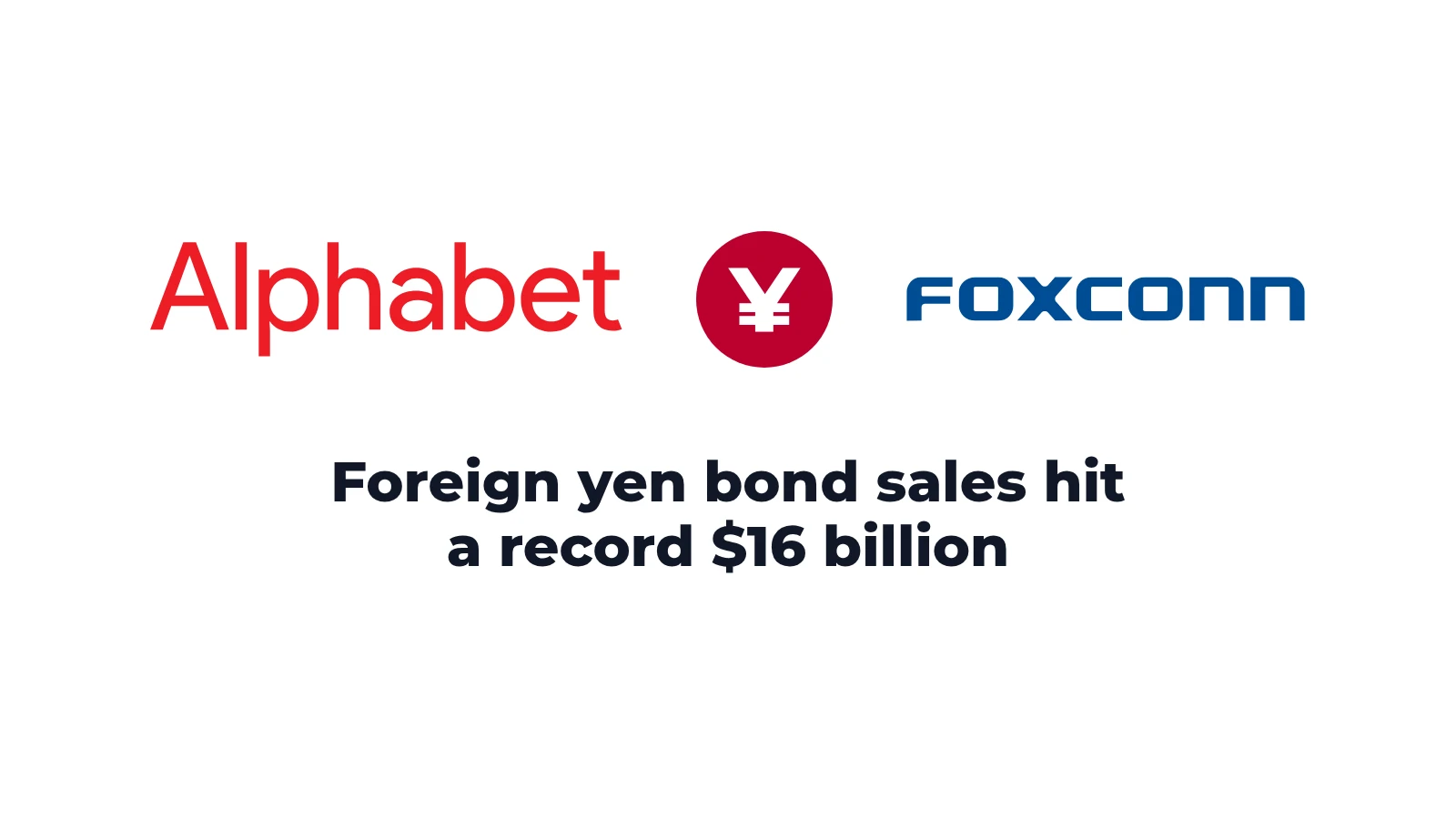
The proposed energy deal came a day after Alphabet sold €6 billion of bonds in Europe, about $6.7 billion. Those bonds cost Alphabet more than its May euro bonds at every maturity the two sales share.
Alphabet shares were at $279.76 as of 12:15 p.m. ET on November 3, against a $278.99 close the day before.
How much more did the euro bonds cost?
The final terms Alphabet filed with the SEC on November 2 list seven parts. They run from a floating-rate note due in 2028 to a 5.25% bond due in 2045. Four of them come due in the same years as bonds from Alphabet's May euro sale. The maturity dates moved six months along with the sale dates, so each pair had the same time to run. The May 2030 notes were sold on May 5 and mature May 11, 2030. The November 2030 notes were sold on November 2 and mature November 5, 2030. Both run four years from the day they settled.
The easiest way to compare them is the extra yield Alphabet pays over German government bonds, which both term sheets list for each fixed-rate part. German bonds are the benchmark for safe euro debt. Here's how that extra yield moved:
| Bond due | May 5 sale | November 2 sale |
|---|---|---|
| 2030 | 0.48 point | 0.96 point |
| 2032 | 0.67 point | 1.12 points |
| 2039 | 0.85 point | 1.46 points |
| 2045 | 1.03 points | 1.67 points |
That's 0.45 to 0.63 percentage point more over German bonds, six months apart. The longest bonds moved the most. The 2045 bonds from November carry a 5.25% interest rate, up from 4.5% on the 2045 bonds from May. Most of that change came from the extra yield on top of German rates. The German bond the November 2045 notes are measured against yielded 0.13 point more than the one used in May, while Alphabet's extra yield on top grew by 0.63 point.
The sale was also smaller. Alphabet sold €9 billion in May and €6 billion this time.
The sale came five days after Alphabet reported its third-quarter results on October 28. Moody's and S&P rate the new bonds Aa2 and AA+, both with a stable outlook, according to the term sheet.
What is a prepaid energy bond?
Alphabet's June deal shows how the setup works. The same California authority sold green bonds, its Series 2026E, to pay in advance for electricity. Alphabet's law firm, Cleary Gottlieb, described Alphabet's part: a $1.2 billion senior unsecured term loan from Aron Energy Prepay 66 LLC, a Goldman subsidiary. Alphabet makes monthly payments to Aron at a fixed rate. That deal launched June 2, priced June 4, and closed June 18.
The utilities lock in cheaper electricity or gas for decades. The company in the middle can use the money as it chooses, and in return it makes regular payments that help pay for the energy delivered to the utilities, according to a June report on Alphabet's first deal. Companies get cheaper money and a new set of lenders. Muni investors accept lower yields because the bonds are tax-exempt.
"It works well for corporations because they can lower their funding costs by borrowing in the tax-exempt market," Jeremy Holtz, a portfolio manager at Income Research + Management, said in that piece. Jonathan Pong, chief financial officer of Realty Income, said the real estate company's March prepay deal came in about 0.10 to 0.15 percentage point cheaper than its traditional funding costs.
The authority's members are 11 California community power agencies, including San Diego Community Power and Silicon Valley Clean Energy Authority. We'll add the interest rate and maturity of the $1.5 billion deal when it prices.
How much has Alphabet borrowed this year?
Alphabet's third-quarter 10-Q says it sold $45.0 billion of dollar bonds and $35.8 billion of bonds in other currencies during 2026, through September 30. The other currencies are pounds, Swiss francs, euros, Canadian dollars, yen, and Australian dollars.
Add the November euro bonds and it comes to about $87.5 billion of bonds this year. The energy deals are small next to that: $1.2 billion in June and $1.5 billion now. The deals could give Alphabet access to cheaper money from a different set of investors, at a time when its regular euro bonds cost more than they did in May.
Both the November euro sale and the June energy loan are in our AI debt tracker, next to Alphabet's earlier sales.
Euro amounts are converted at 1.1216 dollars per euro, the European Central Bank reference rate for November 2, 2026. Percentage-point figures are the spreads over German government bonds listed in Alphabet's May 5 and November 2 term sheets, rounded to two decimals.