Key points
- Apple's earnings beat estimates as iPhone sales rise 17.5%
- Apple forecasts slower holiday-quarter growth than analysts expected
- Apple's inventory is now 2.5 times what it was a year ago
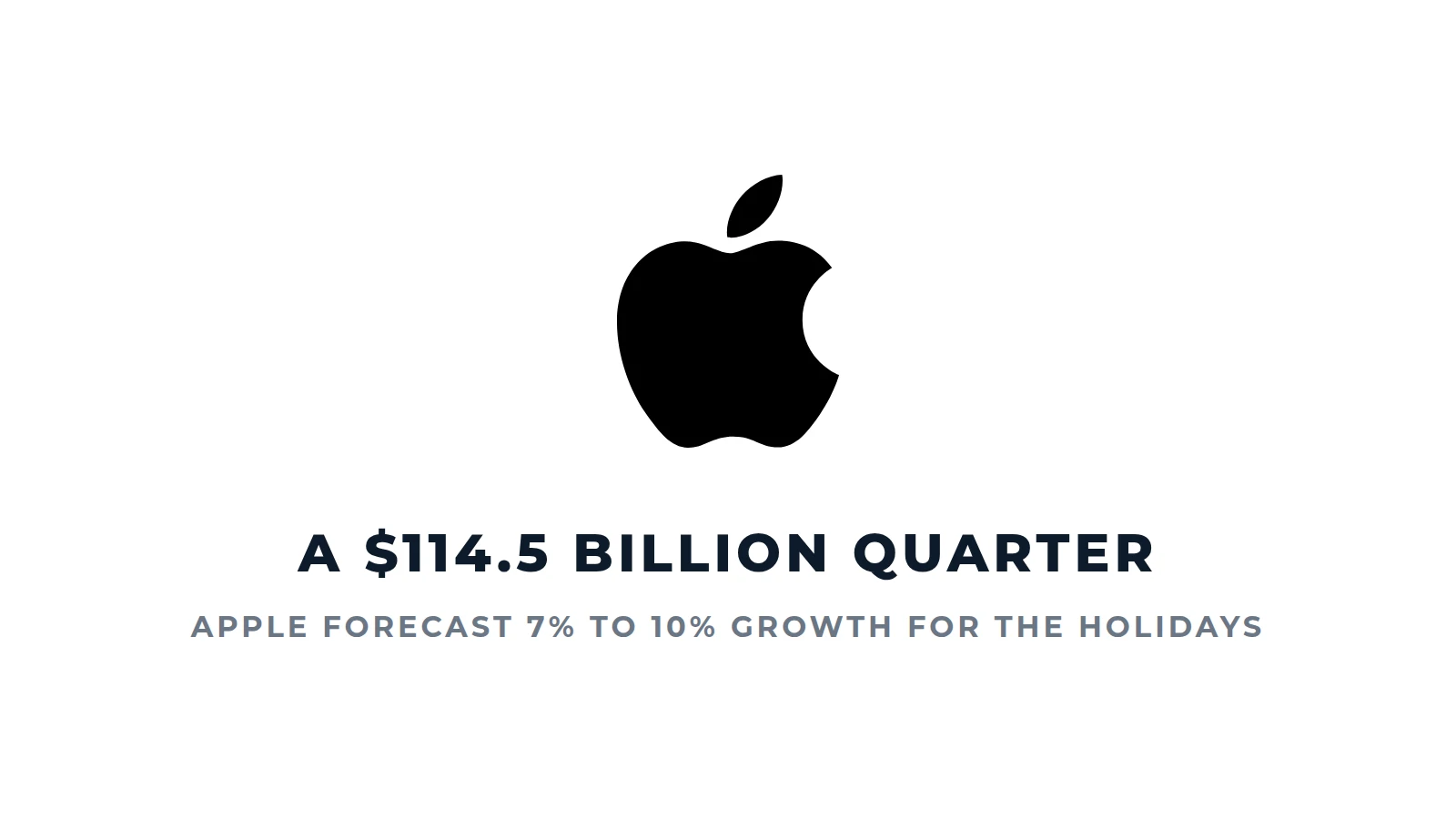
Apple (AAPL) reported fiscal fourth-quarter revenue of $114.5 billion on November 2, up 12% from a year earlier and above the $113.39 billion analysts expected, according to LSEG data cited by CNBC. Earnings came to $2.10 a share, ahead of the $1.98 average estimate in Robinhood's data, according to Apple's earnings release. That figure includes a 5-cent benefit from tariff refunds.
iPhone revenue rose 17.5% to $57.6 billion in the quarter that ended September 26, also a September-quarter record. Apple shares were at $324.46 in after-hours trading as of 5:43 p.m. ET.
For the December quarter, Apple forecast revenue growth of 7% to 10% from a year earlier. Analysts polled by LSEG had expected 11.4%, and Apple shares fell after the forecast. Apple expects gross margin of 45% to 46%, down from 47.9% in the September quarter, Services growth of 8% to 9%, and operating expenses of $20.4 billion to $20.8 billion.
Apple beat the forecast it gave in July
In July, Apple had forecast revenue growth of 9% to 11% and iPhone growth in the mid-teens. Revenue grew 11.7% and the iPhone grew 17.5%, by our calculations. Gross margin was 47.9%, at the top of the 47% to 48% range Apple had forecast. Apple said tariff refunds added about 1 percentage point.
Gross margin was down from 50.1% in the June quarter, by our calculations from Apple's filings, and memory chips are a big reason. Excluding tariff refunds in both quarters, "both company and products gross margin would be down about 1 point sequentially, primarily driven by higher memory costs," Kevan Parekh, Apple's chief financial officer, said on the call. He added that Apple has now received "the vast majority of the refunds related to tariffs paid," so that boost is fading.
Operating expenses were $19.19 billion, inside the $19.1 billion to $19.4 billion range. Research and development spending rose 32% from a year earlier to $11.73 billion.
This was John Ternus's first earnings report as CEO. "Our record September quarter capped off a strong fiscal 2026, with all-time record revenue of $479 billion and double-digit EPS growth," said Parekh.
Mac and China grew while iPad and wearables shrank
Mac revenue rose 23.7% to $10.8 billion. Services, Apple's second-biggest business, grew 9.8% to $31.6 billion. iPad revenue fell 10.4% to $6.2 billion, and wearables, home, and accessories fell 7.9% to $8.3 billion.
Sales in Greater China rose 21% to $17.5 billion, short of the $18.75 billion analysts expected, according to Bloomberg consensus estimates cited by Yahoo Finance. Apple plans to bring Apple Intelligence to iPhones there using Alibaba's Qwen models.
Apple's inventory has more than doubled
Apple ended September with $14.5 billion of inventory, up from $11.1 billion at the end of June and $5.7 billion a year earlier. Inventory had stayed between about $5.7 billion and $7.3 billion in every quarter from September 2024 through December 2025, according to Apple's filings.
Apple hasn't said what's in the inventory. But Ternus told CNBC that higher memory costs in the quarter were "partly offset by the benefit of carrying inventory and lower costs on non-memory components."
Apple returned $28 billion to shareholders in the quarter and declared a dividend of 27 cents a share. For the full fiscal year, revenue reached $478.8 billion, up 15% from $416.2 billion.