Key points
- Trump says Korea's fund will finance eight US reactors
- Seoul has agreed only to a Texas gas plant
- Reactor plans still need talks, with no sites confirmed by Korea
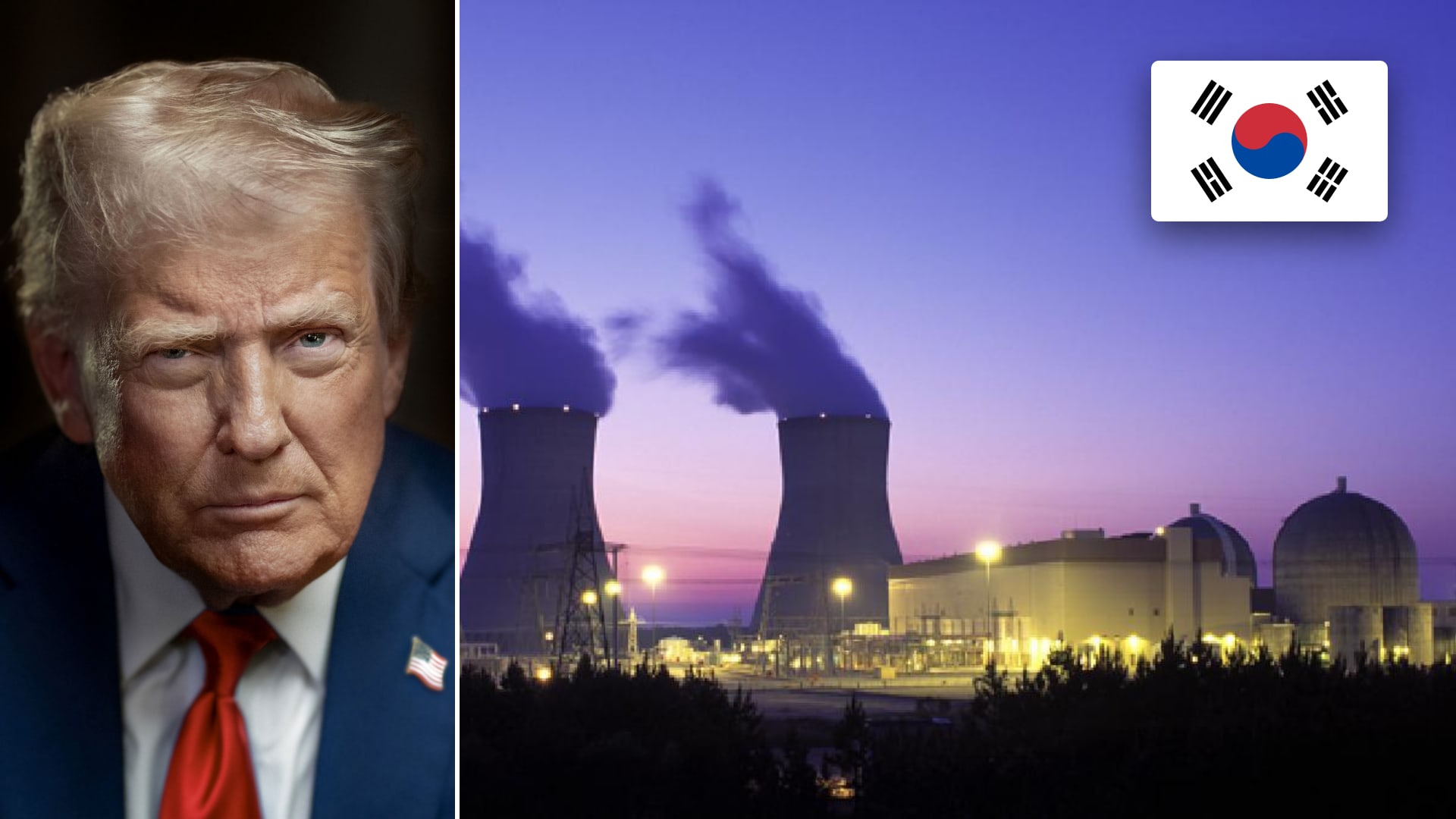
President Donald Trump said on September 30 that Korea's US investment fund would finance eight large nuclear reactors. Seoul, however, has agreed only to a gas-fired power plant in Texas. The reactors remain subject to further talks.
Commerce Secretary Howard Lutnick, who joined Trump at the White House, put the reactor projects' cost at about $120 billion. Trump also named Alaska LNG as a project for the fund, following reports we covered before the announcement.
What would the reactors be?
The framework Industry Minister Kim Jung-kwan (김정관) laid out at a September 22 briefing calls for up to $120 billion for eight units. Two would be Korea's APR1400 design, and six would be Westinghouse AP1000 reactors. About $100 billion is for construction, and $20 billion is a reserve for higher building costs. The ministry said at the briefing that the reserve counts toward Korea's investment total even if it isn't spent.
Lutnick said the reactors would be built in states including Ohio, Tennessee, South Carolina, and Kentucky. Korea hasn't confirmed any sites.
What has Korea agreed to?
At the September 22 briefing, Kim identified a gas-fired power plant in Encinal, Texas, as the first project. The $22.3 billion plant would supply about 6.5 gigawatts of power for AI data centers. Its first phase is scheduled to begin commercial operation in 2029, with the full plant operating by 2032.
The projects would be financed through Korea's $200 billion strategic investment fund. That fund and a separate $150 billion commitment to shipbuilding cooperation make up the country's $350 billion US investment package.
Kim said payments into the fund would be capped at $20 billion a year and $200 billion overall, with both limits written into a legally binding operating agreement. Korea and the US would split profits equally until Korea recovers its principal and interest across the fund as a whole, rather than on each project separately.
Korea promised $350 billion in US investment last year in exchange for a lower US tariff, cut from 25 percent to 15 percent. "The US side has said it will keep the tariff rate at the 15 percent level, whether under Section 301 of the Trade Act or in any other form," Kim told reporters.
Kim Jung-kwan's comments are translated from Korean.