Key points
- Microsoft will use Intel's EMIB packaging for in-house Azure chips
- Intel confirms years of Xeon server chip supply for Microsoft's Azure
- Intel Foundry has been seeking outside packaging customers
Microsoft (MSFT) will use Intel's (INTC) EMIB packaging technology for chips Microsoft designs for the Azure cloud, under a long-term agreement the two companies announced on Nov. 18. The release calls Microsoft "the first company to announce use of Intel Foundry's EMIB ... advanced packaging technology for Azure first-party silicon," meaning the chips Microsoft designs for Azure.
The agreement also confirms that Intel will supply Xeon server processors to Azure for several years, including the next generation of the chips, code-named Diamond Rapids. Neither company disclosed what the agreement is worth. The release also didn't say which Microsoft chips will use EMIB.
Intel shares were down 1.9% at $54.14 at 2:06 p.m. ET on Nov. 18, from the Nov. 17 close of $55.17. Microsoft was up 0.5% at $508.55.
What EMIB does
Packaging is the step after chips are made. Advanced packaging can connect separate pieces of silicon, called chiplets, so they work together. EMIB, short for Embedded Multi-die Interconnect Bridge, connects chiplets with tiny silicon bridges set into the base of the package, a layer that's called the substrate.
Intel says other foundries may use a larger and more expensive silicon layer called an interposer. Intel's bridges go only where they're needed, which the company says cuts cost. "Only Intel Foundry can mix and match chiplets from different sources directly onto the industry's largest substrates," Intel said in a July post about Intel's New Mexico packaging plants. A newer version, EMIB-T, adds channels that deliver power through the bridge, so power goes straight to the chips instead of around the bridge.
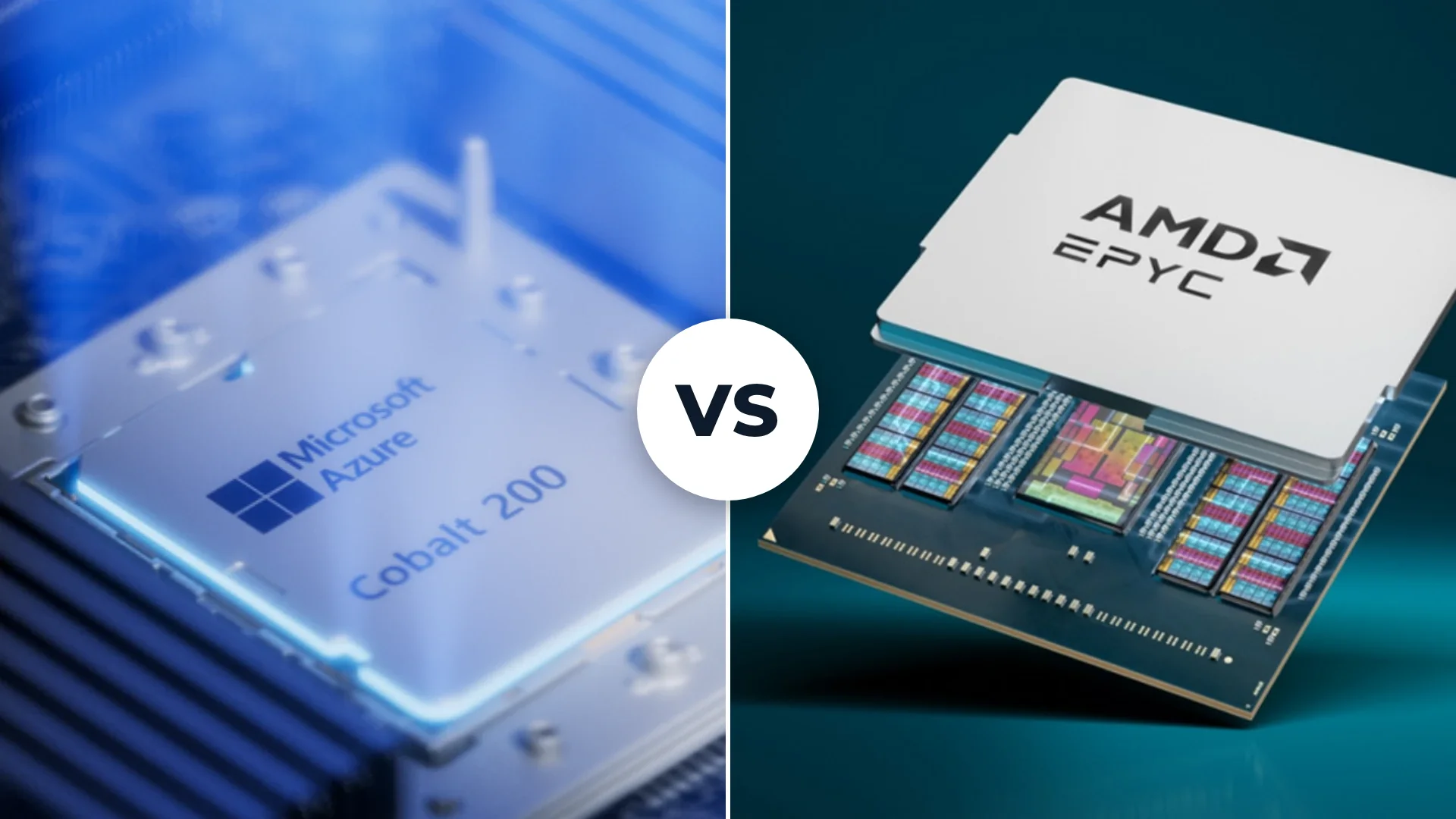
Microsoft's newest in-house chips are made by Taiwan Semiconductor Manufacturing (TSM). The compute chiplets in Microsoft's Maia 300 AI chip use TSMC's N2P process, as we reported in October. The Cobalt 200 server processor is built on TSMC's 3nm process.
"Through use of our advanced packaging capabilities with EMIB to scale future generations of Azure infrastructure, Intel and Microsoft can combine the flexibility of heterogeneous integration with the manufacturing scale required for the AI era," said Naga Chandrasekaran, Intel's chief technology and operations officer and general manager of Intel Foundry.
Intel Foundry has been courting outside customers
Intel Foundry lost $1.85 billion in the third quarter on $6.7 billion of revenue, and that revenue includes sales to Intel's own product groups, according to Intel's earnings release. We covered those results in October. In April, Wired reported that Intel was in talks with Google and Amazon about packaging their custom AI chips, according to Tom's Hardware. All three companies declined to comment at the time. Chief Financial Officer David Zinsner said at a Morgan Stanley conference earlier this year that Intel was "close to closing some deals that are in the billions of dollars per year, in terms of revenue on packaging," Tom's Hardware reported.
In February 2024, Microsoft Chief Executive Satya Nadella said Microsoft had chosen a chip design Microsoft plans to produce on Intel's 18A manufacturing process, Intel said. The new release didn't mention 18A.
The rest of the agreement
Microsoft will also work with Intel on Xeon features for memory, data handling, and security. The figures below come from tests described in the release, which says results may vary.
| Intel technology | What Microsoft says it does in Azure |
|---|---|
| CXL memory with Flat Memory Mode (Xeon 6) | Up to 2.3 times the performance in M-series v4 virtual machines, compared with a setup using regular memory only |
| QuickAssist Technology (QAT) | Up to 2.5 times faster SQL backups, on what Microsoft calls the first QAT-enabled virtual machines in the cloud |
| Trust Domain Extensions (TDX) | Keeps a confidential virtual machine's memory and processor state encrypted while it moves between servers |
Source: Microsoft and Intel release, Nov. 18, 2026. The release's footnotes list the test setups.
"Our longstanding collaboration with Intel brings together advanced packaging, custom compute, memory and security capabilities to support Azure compute and continued innovation across Azure," said Saurabh Dighe, Microsoft's corporate vice president for Azure System and Architecture.