Key points
- Gadget prices are rising on memory costs
- Subscriptions aren't the only AI bill
- Memory makers still trade at low multiples
Electronics prices are rising as a memory shortage drives up component costs. You can feel it when buying a phone, a laptop or even a streaming box, whether you use AI or not.
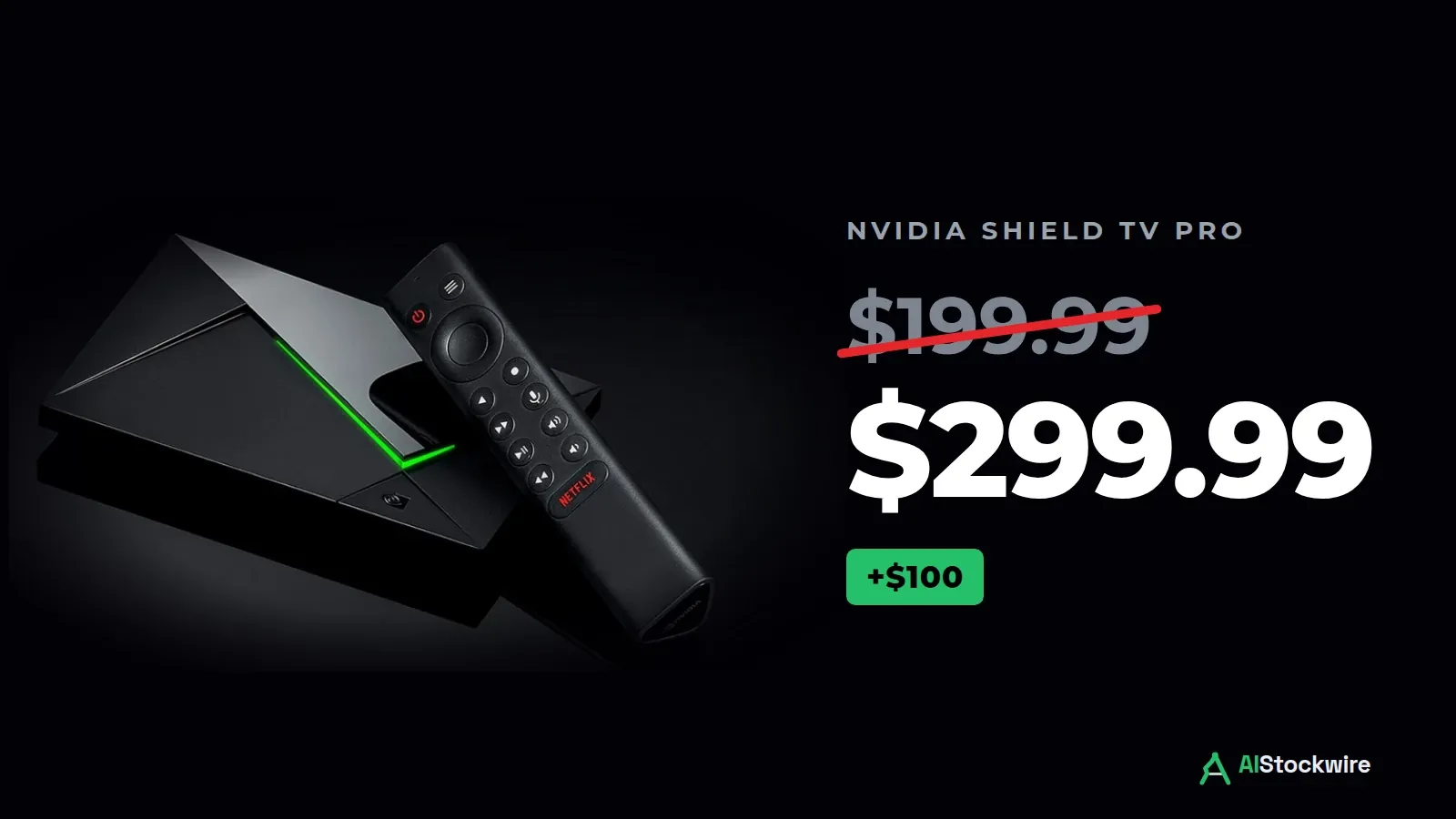
Nvidia (NVDA) raised the price of its Shield TV Pro streaming box from $199.99 to $299.99 on Oct. 2. "The cost of components, including memory, has increased substantially across the industry," Nvidia said, according to How-To Geek. We spent years hearing that AI would make everything cheaper. Now even a streaming box launched in 2019 is getting more expensive.
Phones are going the same way. Samsung raised Korean prices on its Galaxy S26, S26+ and S26 Ultra by 149,600 won ($110) on Oct. 1, about seven months after launch. In Korea, Apple's (AAPL) iPhone 18 Pro launched at 1.99 million won, 200,000 won ($147) more than its predecessor. Counterpoint Research estimates that smartphone memory prices rose more than 80% in the second quarter from the first, Herald Business reported.
At Microsoft (MSFT), the change has been toward less memory. It added 8GB base models to its Surface laptop lineup this year and removed its 32GB RAM recommendation from its website.
The money flows to the memory makers
The link between AI and your gadgets runs through the memory factories. Memory makers have been steering supply toward data center customers. Micron (MU) said in December 2025 that it would end shipments of Crucial consumer products after February 2026. "The AI-driven growth in the data center has led to a surge in demand for memory and storage," Micron Chief Business Officer Sumit Sadana said at the time. The company said the exit would "improve supply and support for our larger, strategic customers in faster-growing segments."
The demand side hasn't been subtle. "Limiting factor currently is memory," Elon Musk said on SpaceX's Aug. 4 earnings call. "Memory output is increasing by around 20% per year," he said, but "the demand is increasing by 200% a year, maybe higher."
That shows up in the margins. Memory producers are running gross margins of about 80%, more than double their historical average, according to a Goldman Sachs Research report from Sept. 23. Micron just beat estimates and disclosed a $150 billion contract backlog.
In an Oct. 1 note after Micron's results, JPMorgan analysts Jay Kwon and Sangsik Lee wrote that memory supply looks tight through 2028, with some of Micron's supply agreements now running to 2031. They estimate a 54% rise in average HBM prices in 2027. HBM, or high-bandwidth memory, is used alongside AI processors.
You don't need an AI subscription to feel the cost
What bugs me is who's paying. An April report from PNC Bank estimated that about 2% of US households paid for a generative AI subscription.
But you don't need a subscription to pay for the memory. Everyone calls this AI investment. At the checkout, it works more like a tax on gadgets.
Memory stocks trade like it won't last
So shoppers are paying more, and memory makers are booking record profits. You'd think the stocks would carry big multiples. They don't. Here are trailing price-to-earnings ratios from Robinhood's data as of Oct. 2:
| Stock | Trailing P/E |
|---|---|
| SK Hynix (SKHY) | 12.6 |
| Micron (MU) | 14.5 |
| Sandisk (SNDK) | 23.3 |
| S&P 500 (SPY) | 25.7 |
| Nvidia (NVDA) | 29.6 |
Micron and SK Hynix (SKHY) trade at about half SPY's trailing multiple, while Nvidia trades near 30. I think that investors don't expect today's memory profits to last. The industry has been through enough booms and busts to make them cautious, even with a large backlog.
Higher prices could weaken demand
In Korea, completed Galaxy phone sales on the secondhand app Danggeun rose 18% in the first nine months of the year, Maeil Business reported. That doesn't prove buyers are turning away from new phones because of price, but it's a trend worth watching.
I don't think the memory boom is close to ending yet. The contracts and profits give it support. Our AI Bubble Index read 61 out of 100 on Oct. 2, in its "Heated" band, with valuation showing the least pressure.
For memory makers, the question is whether AI orders stay strong enough to offset any slowdown in phone and PC demand. Higher prices help margins until customers buy less, choose cheaper devices, or put off replacing them. I'll be watching whether those choices start showing up in manufacturers' orders and earnings forecasts.
For shoppers, the cost is already showing up at checkout. You don't need an AI subscription to feel a memory shortage.
Won figures are converted at 1,360.59 won to the dollar, the Yahoo Finance rate on October 1, 2026. I am not a financial advisor, and nothing here is investment advice.